
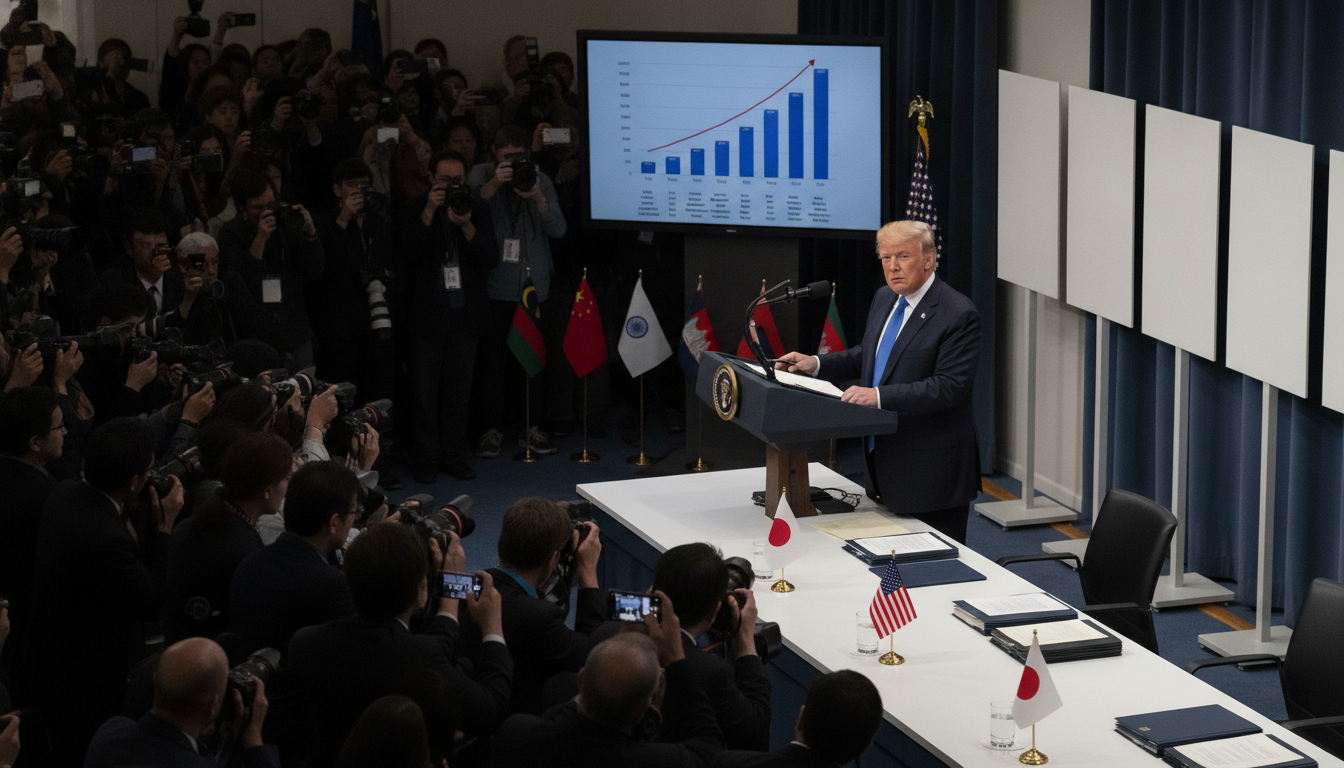
Trump tariffs: U.S. imposes 10–12.5% duties on dozens of trading partners including Japan and China
U.S. unveils ‘Trump tariffs’ on July 24, 2026—12.5% levies on Japan and China, 10% on India, Malaysia and others, signaling a major global trade policy shift.
The U.S. administration announced on July 24, 2026, a new schedule of tariffs ranging from 10% to 12.5% on imports from dozens of countries, a policy framed by officials as a revival of the "Trump tariffs" approach to trade. The measures single out a variety of trading partners, with Japan and China listed for the higher 12.5% rate and countries including India, Malaysia, Bangladesh and Cambodia assigned a 10% levy. The announcement represents a significant recalibration of U.S. trade policy and is expected to reverberate through global supply chains and diplomatic channels.
U.S. Announces New Tariff Schedule
The White House released a tariff table specifying varying rates by country and product categories, saying the move was designed to protect American industry and address perceived unfair trade practices. Administration officials described the action as a legal and strategic follow-up to earlier proposals that had faced setbacks in the courts. The tariff plan is being rolled out as an executive economic measure rather than through new legislation, and officials signaled immediate implementation on the published date.
The administration acknowledged the measures could prompt retaliatory steps and said it had weighed those risks against what it called long-term benefits for domestic manufacturing. Trade officials are expected to begin consultations with Congress and affected industries in the coming days to explain the scope and enforcement mechanisms. The announcement also noted carve-outs and exemptions may be considered for sensitive goods and humanitarian supplies.
Countries Affected and Rates
According to the published schedule, Japan and China are subject to a 12.5% applied tariff on selected imports, while India, Malaysia, Bangladesh, Cambodia and several other suppliers will face a 10% rate. Mexico, which has traditionally been a major U.S. trading partner, is among the countries listed at the 10% level for particular product lines, according to the document. The measures target a broad mix of manufactured goods and certain intermediate inputs that U.S. officials say have been linked to unfair pricing or subsidy practices.
U.S. officials stated the list covers "dozens" of partners and encompasses a range of sectors, though they stopped short of publishing an exhaustive product-by-product list at the moment of the announcement. Implementation will involve customs reclassification and updated tariff codes, a process that could take weeks to fully operationalize at ports of entry. Businesses and customs brokers are being advised to prepare for new documentation and potential delays.
Administration’s Justification
In public statements, senior administration figures framed the tariffs as a continuation of a policy stance aimed at rebalancing trade deficits and incentivizing onshore production. They argued that targeted duties would shore up domestic industries exposed to what they described as distortive practices abroad. The policy was also presented as a response to prior legal obstacles that limited the administration’s earlier efforts to apply similar measures.
Critics in the administration’s orbit cautioned that reliance on tariffs requires careful calibration to avoid harming U.S. consumers and downstream manufacturers. Officials said they had modeled estimated price impacts and planned to monitor inflationary effects, while emphasizing that exemptions for essential goods could be granted. The White House also indicated coordination with international partners would continue despite the unilateral nature of the action.
Economic Impact on Japan and China
Analysts warn the 12.5% tariff on goods from Japan and China will raise costs for U.S. importers and could disrupt just-in-time supply chains, particularly in electronics and automotive components. Japanese exporters, many of which supply key parts to U.S. manufacturers, may face reduced demand or be forced to absorb some margin pressure to remain competitive. For China, which remains a critical source of finished goods and components, the higher levy may accelerate firms’ plans to diversify production or shift sourcing to other markets.
Japanese and Chinese firms with significant U.S. exposure are likely to accelerate strategic adjustments, including pricing revisions, inventory buffering and supply-chain relocation. Economists say the short-term effect will be a period of uncertainty that could dampen investment and trade flows, with distributional impacts varying by industry and product. The longer-term consequences will depend on whether affected countries pursue trade negotiations, retaliatory tariffs, or targeted subsidies to mitigate damage.
Responses from Affected Governments
Officials in Tokyo and Beijing issued measured statements expressing concern and signaling they would review options, including consultations with U.S. counterparts and multilateral avenues. Governments in India, Malaysia and Bangladesh said they were examining the tariff schedule and assessing sectoral impacts for exporters and workers. Economic ministries in several affected capitals emphasized the need for clear implementation rules and urged dialogue to resolve disputes.
Trade associations and exporters’ groups across Asia and the Americas expressed alarm at the prospect of rising costs and market disruption. Several industry bodies asked for transitional arrangements and advance notice to adjust contracts and logistical plans. Diplomatic channels are expected to be active in the coming days as trade envoys and foreign ministries seek clarifications and press for mitigation measures.
Market and Trade Community Reaction
Global markets reacted quickly to the tariff announcement, with manufacturing indices and shipping stocks showing early volatility as investors weighed the impact on global trade volumes. Freight forwarders and port operators warned of potential congestion as importers sought to shift sourcing or expedite shipments under old tariff regimes. Currency markets may also respond if trade tensions translate into altered capital flows and growth expectations.
Trade lawyers and supply-chain consultants predict a surge in tariff classification disputes and requests for product exclusions, which could clog administrative procedures at customs agencies. Companies with complex global sourcing networks will likely accelerate scenario planning and legal reviews to limit exposure. Observers noted that the final economic effect will hinge on enforcement detail, duration of the measures, and whether affected governments retaliate or seek negotiated settlements.
The introduction of these tariffs marks a renewed, assertive phase in U.S. trade policy that will test diplomatic relationships and corporate resilience. Domestic firms, foreign governments and international traders now face a period of adjustment as the practical implications of the new duties unfold.

