
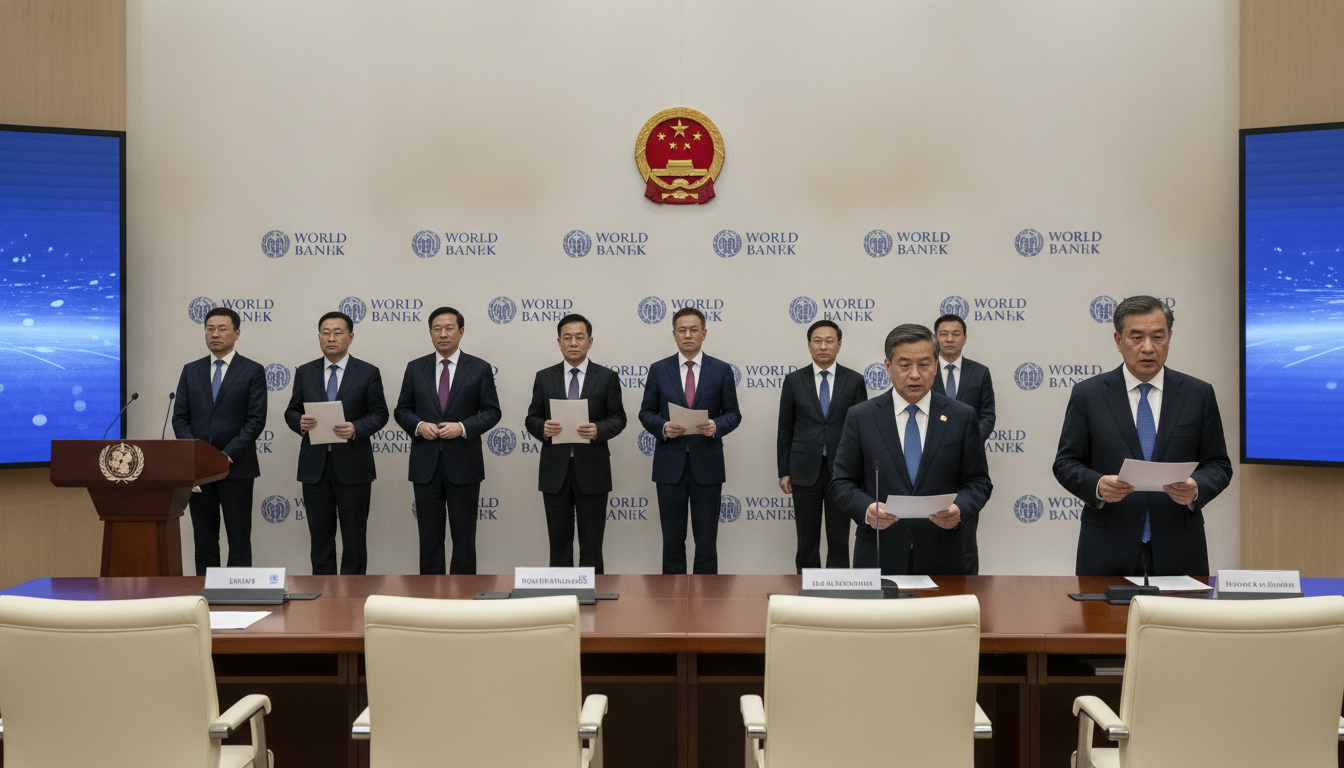
World Bank to Phase Out Lending to China, Capping Support Below $2 Billion Through 2031
World Bank to phase out lending to China by 2031, capping support under $2 billion; move reflects Beijing’s shift from aid recipient to development financier.
The World Bank announced on Thursday that it will phase out World Bank lending to China by 2031, a decision that marks a formal end to the lender’s longstanding financing relationship with the country. The bank said new concessional and non-concessional lending to China will be limited, with total support capped at less than $2 billion through 2031, reflecting the nation’s changed economic status.
The decision underscores a transition in global development finance, with China now positioned as a major provider of financing abroad rather than a primary recipient of multilateral loans. World Bank officials framed the measure as aligned with the institution’s mandate to target limited resources to the poorest countries, while recognizing China’s dramatic economic development over recent decades.
Decision Details and Timeline
The World Bank’s move establishes a clear end date for routine lending relationships with China, setting 2031 as the target year for the phase-out. The cap of under $2 billion through 2031 will govern the aggregate level of new commitments during the transition period.
Officials said the measure will affect the bank’s lending programs, though it does not signal an abrupt termination of ongoing operations. Existing projects under implementation will proceed under the bank’s normal project lifecycle and governance arrangements while new lending approvals will be tightly constrained.
Scope of the Financial Cap
The announced limit applies to the World Bank’s lending envelope to China over the coming years, reducing the universe of potential new projects to a small, carefully targeted set. The cap is intended to ensure predictability for both the bank and Chinese counterparts as the relationship evolves.
While the figure is modest relative to China’s overall finance needs, it represents a symbolic shift in the bank’s engagement model. The constrained lending window is expected to focus on niche areas where the World Bank believes it can add unique value, such as technical assistance, knowledge exchange and targeted global public goods interventions.
Rationale: China’s Economic Transformation
The World Bank cited China’s substantial economic growth and ascent to upper-middle-income status as the core reason for reorienting support. Over recent decades, China’s gross domestic product and fiscal capacity have increased markedly, reducing the need for large-scale multilateral lending from institutions set up to aid low-income nations.
That transformation has been accompanied by China’s own expansion as a financier, deploying substantial capital through policy banks and bilateral programs across Asia, Africa and other regions. The decision reflects a recalibration of where multilateral development funds are most urgently required.
Implications for Global Development Finance
Analysts say the move will shift multilateral resources toward poorer countries that lack access to alternative sources of long-term financing. The World Bank’s decision is likely to free capacity and capital for low-income nations while prompting other lenders and development partners to reassess their engagement strategies with China.
At the same time, the transition may accelerate the diversification of global development finance, as regional development banks, bilateral creditors and private financiers adjust portfolios to fill any gaps in lending that the World Bank historically covered. The change will also raise questions about coordination on cross-border projects and climate-related investments where China and multilateral institutions have previously collaborated.
Beijing’s Position and International Responses
Beijing has in recent years emphasized its role as a provider of development finance and infrastructure investment, often through policy banks and large-scale initiatives. The World Bank’s announcement highlights that shift, though immediate public comment from Chinese authorities was limited at the time of the decision.
Other multilateral lenders and creditor nations will watch closely for the operational details of the phase-out, including how the World Bank will manage existing commitments and whether it will continue to offer non-lending forms of support. Governments and development practitioners are expected to seek clarity on transitional arrangements and potential avenues for cooperation on shared global priorities.
Impact on Projects and Partnerships in China
For projects already underway, World Bank involvement is expected to continue through established project completion processes, with contracts, safeguards and monitoring maintained until closure. New project approvals, however, will be highly selective and likely centered on specialized areas such as climate resilience, pandemic preparedness and knowledge-sharing where multilateral expertise complements domestic capacity.
Chinese institutions and international partners will need to adapt planning and co-financing strategies to reflect smaller bilateral and multilateral windows. This could increase the role of domestic financing, private capital and alternative multilateral instruments in sustaining investments that previously relied on larger World Bank commitments.
The World Bank’s decision to cap and phase out lending to China by 2031 marks a milestone in the evolution of global development finance, signaling a reallocation of multilateral resources toward poorer countries while acknowledging China’s new status as a major financier in its own right. The shift will reshape project portfolios, donor coordination and financing options for both China and the developing world during the transition to a post-lending relationship.

