
South Korea $700 Billion AI Deals Deepen Semiconductor and Data Center Ties with U.S.
South Korea $700 billion AI deals with U.S. firms, led by Samsung, SK and Nvidia, pledge major investment in semiconductors and AI data centers announced
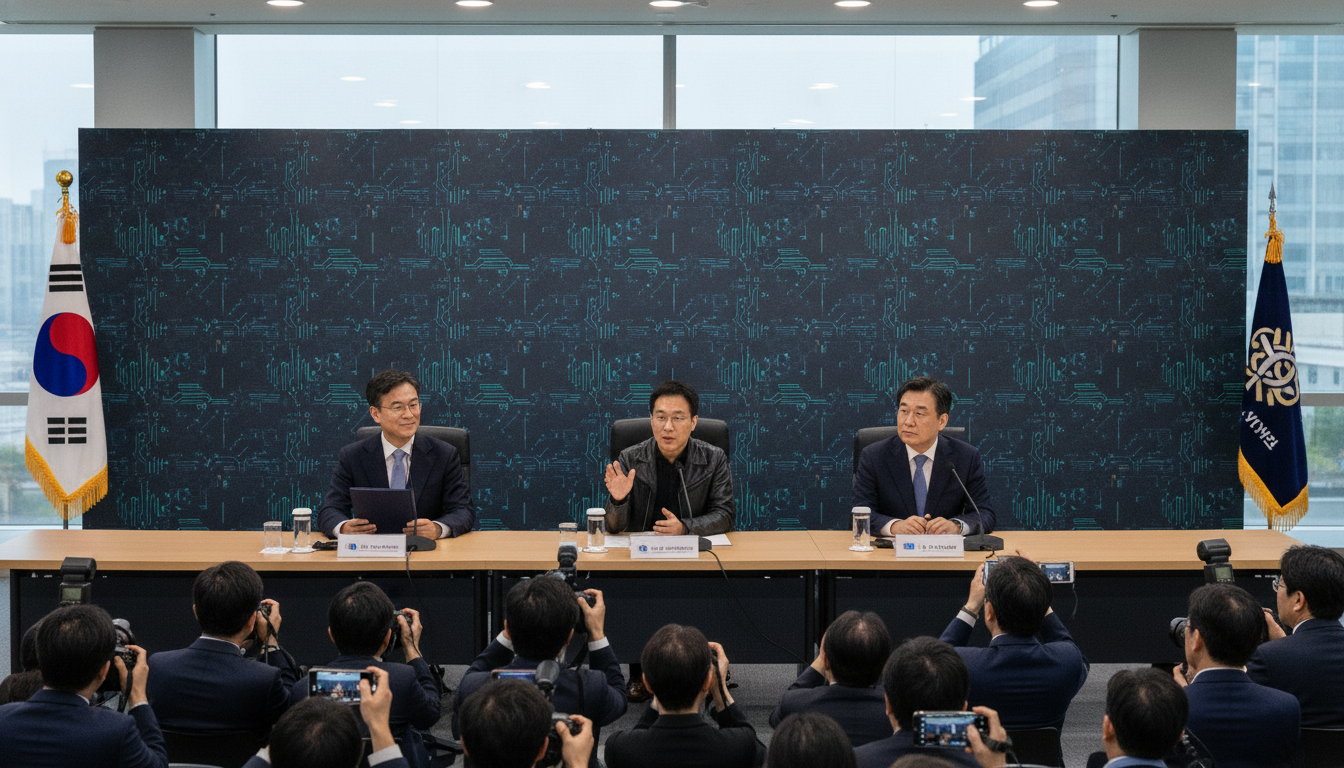
South Korea $700 billion AI deals announced at a San Francisco summit mark a sweeping round of investment in semiconductors and data centers, signaling a major step in U.S.-Korea technology cooperation. The agreements, unveiled on July 24 at an AI Summit hosted by South Korean President Lee Jae Myung, bring together Samsung Electronics, SK Group, Nvidia and other U.S. companies in a coordinated push on artificial intelligence infrastructure. Company executives and officials described the package as a multi-year commitment to chip manufacturing and cloud-scale computing capacity. Observers say the scale of the pledges reflects intensifying competition over the global semiconductor supply chain.
Deals Announced at San Francisco AI Summit
A presidential-hosted event in San Francisco served as the stage for the announcements, with South Korean and U.S. business leaders in attendance. Among those pictured at the summit were Samsung Chairman Lee Jae-yong and Nvidia CEO Jensen Huang, underscoring the prominence of the participants. The headline figure — roughly $700 billion — covers a constellation of projects focused on semiconductor production and AI data-center expansion. Officials framed the deals as both economic opportunity and strategic cooperation in critical technology.
Corporate Roles and Investment Focus
Samsung Electronics and SK Group are positioned as lead Korean investors, while Nvidia and other U.S. technology firms will provide hardware, software and systems expertise. The investments are expected to span new chip fabrication facilities, advanced packaging, high-performance computing hardware and large-scale data centers for AI workloads. Companies involved cited the need to secure supply chains for important components like GPUs and memory. Analysts say such public-private coordination aims to accelerate domestic manufacturing and deployment of AI infrastructure.
Scale, Timing and Economic Impact
The aggregate figure of $700 billion implies long-term capital flows and multi-year project pipelines rather than immediate cash transfers. Announcements of this scale typically include phased investments, partnerships, and project commitments tied to regulatory approvals and site selection. South Korean officials have highlighted potential job creation and technology transfer as benefits, while corporations emphasize operational timelines that stretch over several years. Economic planners will closely monitor how much of the pledged capital converts into concrete factory builds and data-center operations.
Implications for Supply Chains and Competitiveness
Strengthened ties between Korean manufacturers and U.S. technology firms could reshape regional supply chains for chips and AI hardware. Increasing onshore production of semiconductors and associated components is widely seen as a strategy to reduce exposure to external disruptions. The focus on data centers also reflects demand for domestic compute capacity to support large-scale AI development. Industry observers note that bolstering both production and compute addresses two choke points in the global AI economy: chip manufacturing and access to specialized processing power.
Geopolitical Context and Regulatory Considerations
The initiative arrives amid heightened geopolitical competition over advanced technologies, with semiconductor capacity a central strategic asset for many countries. Governments in Seoul and Washington have in recent years pursued policies to incentivize onshore tech investment, and the summit announcements align with that trend. Large-scale projects will still face national and local approvals, environmental reviews, and potential export-control considerations tied to advanced chips and AI systems. Policymakers will need to balance accelerated deployment with regulatory oversight and security concerns.
Next Steps and Implementation Challenges
Execution will involve site selection, supply agreements, workforce training and coordination with local authorities, and those steps can take years to complete. Companies will likely announce more detailed project timelines, production capacities and financing structures in follow-on statements. Observers caution that headline figures can overstate near-term impact if conditional commitments or memoranda of understanding replace binding contracts. Still, the announcements set clear policy and industry priorities that are likely to shape investment flows and industrial planning in the coming decade.
The combined package announced at the summit reflects Seoul’s ambition to anchor a significant portion of AI-related manufacturing and infrastructure domestically while deepening cooperation with major U.S. technology partners. If implemented as outlined, the investments would mark one of the largest coordinated pushes into semiconductors and AI data centers in recent memory, with implications for jobs, trade and the global technology balance.

