
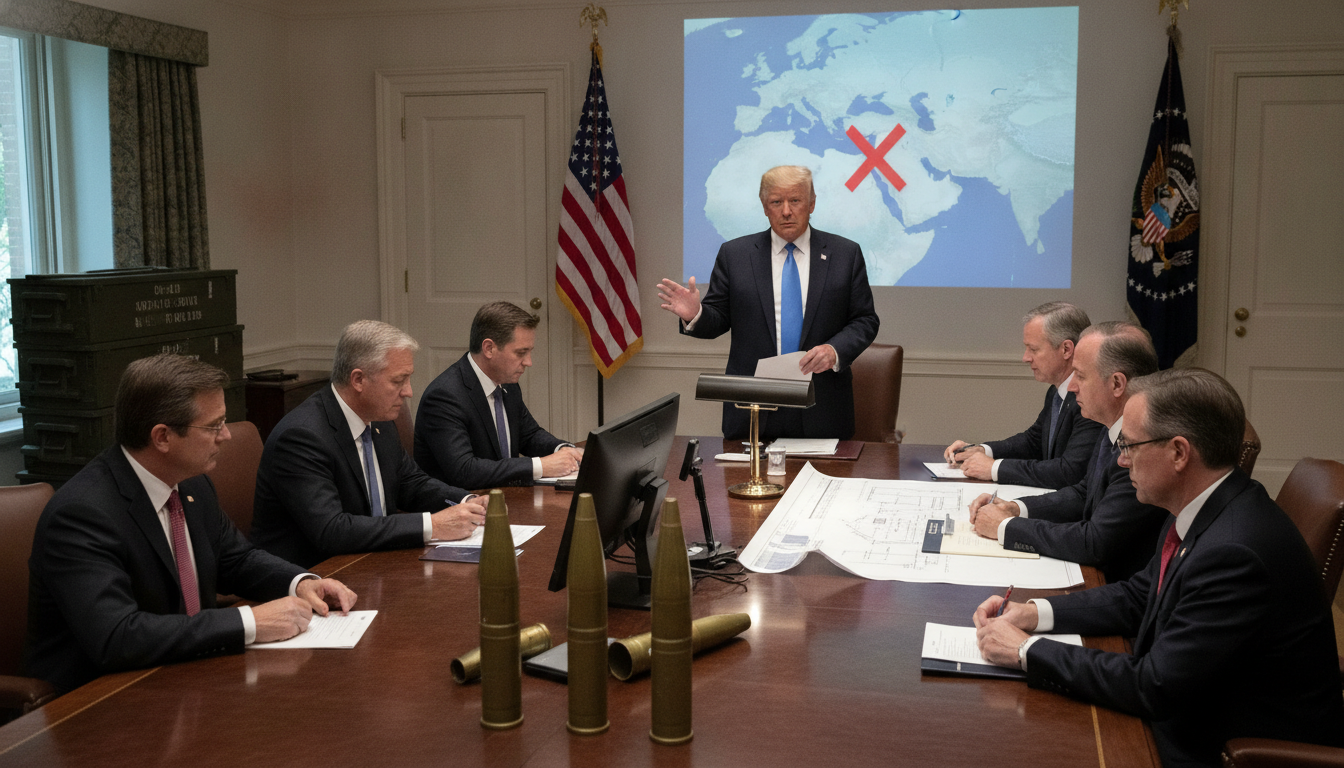
U.S. pauses airstrikes on Iran amid concerns over depleted missile stocks
U.S. pauses airstrikes on Iran after 13 days as President Trump reportedly ordered a halt amid concerns over depleted missile stocks and retaliation risks.
The United States on July 24 ordered a pause in new airstrikes against Iran, halting a sequence of daily strikes that had continued through July 23. The decision to pause, reported by Axios and described by multiple U.S. officials, came after 13 consecutive days of U.S. strikes and followed warnings from military commanders about shrinking stocks of air-defense and interceptor missiles deployed across the Middle East. Officials said the pause reflects a reassessment of operational risks and the logistical strain on regional air-defense capabilities.
Trump Orders Halt to New Airstrikes
According to media reports citing U.S. officials, President Donald Trump instructed the Pentagon not to approve additional airstrikes on July 24. The administration had been approving daily strike plans within hours of their submission, but on this occasion the president did not sign off on a proposed operation. U.S. officials described the move as a deliberate, short-term decision rather than a formal change in policy.
The decision followed public statements by President Trump on July 23 in which he said he was considering a “massive” response, language that had signaled a potential escalation. Sources told reporters that planners had prepared options for a large-scale air operation, but those plans were set aside amid concerns from military leadership.
U.S. Forces Had Conducted 13 Consecutive Days of Attacks
U.S. military operations had included daily airstrikes through July 23, marking nearly two weeks of sustained action targeting Iranian-linked sites and forces. Military officials had submitted strike plans each afternoon for presidential approval, and most were carried out within hours after authorization. The tempo of operations placed heightened demand on munitions, surveillance assets and forward logistics.
Defense analysts noted that sustained strike operations can strain supply lines and depot stocks, particularly when missions require interceptors and mechanisms to protect U.S. forces in the field. The recent pause interrupts a pattern of routine approvals and rapid execution that had characterized the past nearly fortnight.
Pentagon Warnings on Missile Stockpiles
The New York Times reported that Pentagon personnel and other U.S. officials had raised alarm about the depletion of air-defense missiles and other interceptors positioned across the region. Officials warned that continued large-scale strikes could leave U.S. forward defenses vulnerable to reprisals or degrade the ability to protect personnel and bases in the region. The logistics of replenishing these systems, they said, would take time.
Military planners argued that a rapid, high-intensity campaign risked forcing difficult choices between offensive operations and the protection of deployed forces. The stock concerns reportedly factored into advisers’ recommendations and contributed to the decision to withhold approval for further immediate airstrikes.
CENTCOM Confirms Maritime Measures Remain in Place
U.S. Central Command (CENTCOM) emphasized that while additional airstrikes were paused, maritime pressure on Iran-aligned activity continued. CENTCOM said on social media that restrictions and interdiction efforts targeting vessels entering and leaving certain Iranian ports remained fully in effect. The statement underlined that operational measures beyond airstrikes were being used to achieve U.S. objectives.
Maritime operations have been a persistent element of the U.S. approach in the Gulf, aimed at disrupting shipments and exerting economic and logistical pressure. Command officials framed the continued naval posture as a complementary tool while air operations were re-evaluated.
Regional Risks and Strategic Calculations
U.S. officials acknowledged that the decision to pause airstrikes was driven in part by strategic calculations about escalation and force protection. A senior defense official described the choice as balancing the desire to deter further Iranian action with the need to preserve defensive capacity and avoid provoking a wider conflict. Allies and partners in the region have been briefed, according to multiple sources, as Washington seeks to manage coalition cohesion.
Analysts say the pause could create a window for diplomatic channels to reopen or for back-channel communications aimed at de-escalation. At the same time, there is concern that a temporary halt in strikes might not fully eliminate the risk of retaliatory attacks or further Iranian provocations, particularly if Tehran interprets the pause as a sign of operational limits.
U.S. military spokespeople and White House officials have so far provided only limited public comment, signaling that operational discretion remains a priority as planners assess stocks, readiness and political considerations. The immediate future of military actions will likely depend on the availability of additional defensive munitions, intelligence assessments of Iranian intentions, and deliberations within the administration.
The pause in airstrikes does not equate to a cessation of all U.S. pressure on Iran, but it does mark a notable shift in the tempo of kinetic operations. How long the pause will last and whether it will lead to a broader change in strategy remain open questions that officials say will be revisited as conditions on the ground and in the region evolve.

