
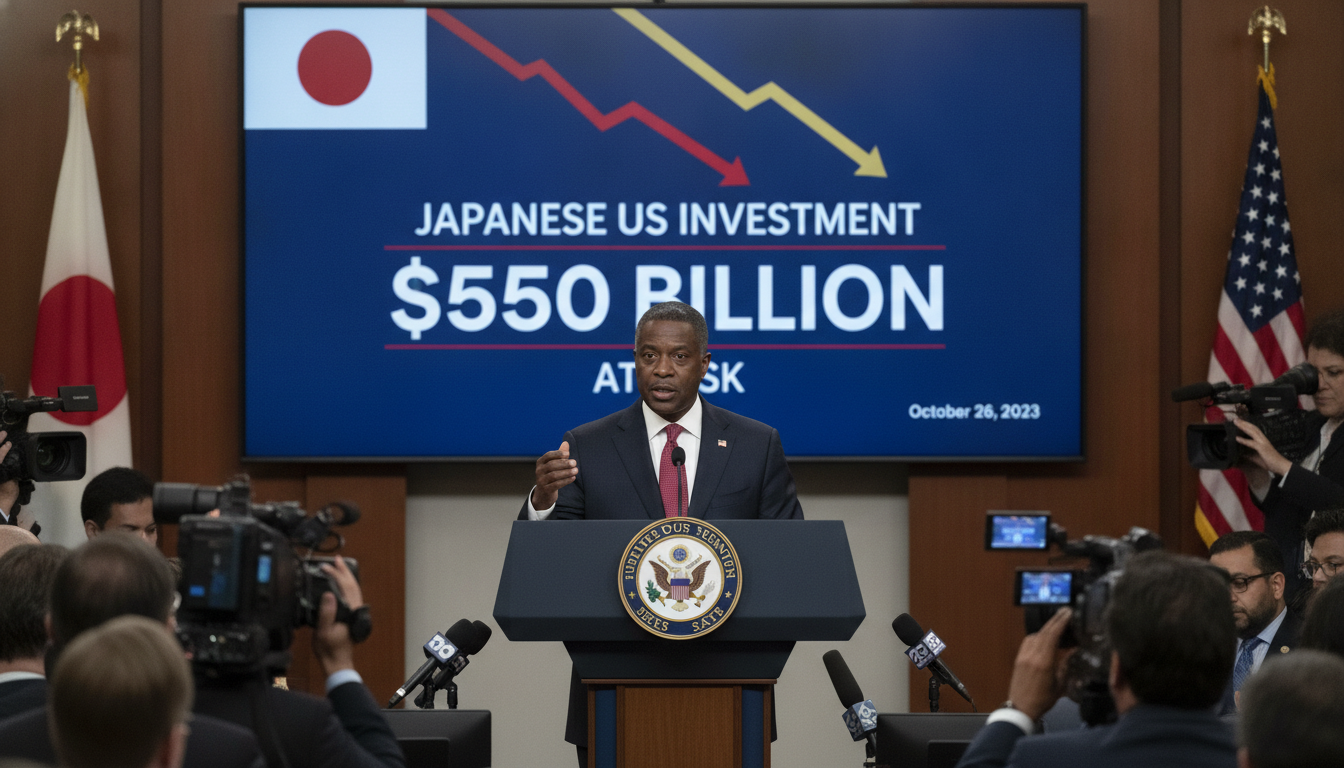
Japan’s $550 Billion U.S. Investment Must Remain Mutually Beneficial, Says Joshua Walker
Joshua Walker warns Japan’s $550 billion U.S. investment initiative must remain mutually beneficial beyond the Trump administration to sustain private-sector confidence and long-term commitments.
Joshua Walker, outgoing president of the Japan Society, urged Tokyo and Washington to preserve mutual benefit as the guiding principle of Japan’s $550 billion U.S. investment initiative, saying coercion-driven commitments will deter sustained corporate participation. Walker, who will leave the Japan Society at the end of July to become chief international officer of the U.S. Chamber of Commerce, framed his comments around the need for flexibility and market-driven incentives. His warning signals concern that the deal’s durability could hinge on how incentives are structured and perceived by Japanese companies.
Walker’s Departure and New Role
Joshua Walker’s move to the U.S. Chamber of Commerce will shift him from a cultural and policy-focused role into a prominent corporate advocacy position at the end of July. The transition places him at the center of efforts to coordinate international business engagement and private-sector responses to large-scale cross-border investment projects. Observers say his perspective—grounded in outreach to both business and policy communities—could shape how corporate interests in Japan and the United States interpret the investment package.
Flexibility and Market Signals Are Key
Walker emphasized that flexibility in implementation, rather than rigid directives, is essential to sustain the $550 billion pledge as a viable long-term initiative. He argued that Japanese firms need clear, credible market signals that investments will yield returns and not be undermined by political interference. Without mechanisms that align public goals and private returns, companies may scale back or delay projects that are otherwise strategically valuable.
Concerns About Coercion and Corporate Confidence
A central point in Walker’s remarks was the risk that perceived coercion—whether explicit or implicit—could erode corporate willingness to invest. He cautioned that commitments extracted through political pressure or overly prescriptive terms could prompt firms to reassess exposure in the United States. Maintaining corporate confidence, he said, requires transparent terms, predictable regulatory environments, and assurances that commercial decisions remain primarily market-driven.
Implications for Japanese Firms and U.S. Partners
If Walker’s assessment holds, the structure of the Japan-U.S. investment initiative will affect supply chains, technology partnerships, and local job creation in both countries. Japanese companies weighing large investments will look closely at governance arrangements, legal protections, and exit options before committing capital. U.S. states and industries seeking Japanese investment will need to present compelling economic cases that balance public policy priorities with corporate risk management.
Political Transitions and Investment Durability
Walker specifically noted the importance of designing the investment package to endure political transitions, including changes in U.S. administrations. He warned that policy arrangements too closely tied to a single political agenda could falter when leadership changes, undermining projects that require years to mature. Durable frameworks, he suggested, should anchor investments in bilateral economic interests rather than short-term political gains.
Industry Reception and Next Steps
Business groups and local officials in the United States are likely to view Walker’s comments as a reminder to prioritize clear, commercially sensible incentives if they want Japanese capital to flow. For Tokyo, the message underlines the need to consult with private-sector leaders and embed flexibility into implementation plans. Walker’s move to the U.S. Chamber of Commerce could also accelerate private-sector dialogue on how to operationalize the investment initiative so it withstands shifting political winds.
Japan’s $550 billion pledge has the potential to reshape transpacific economic ties, but Walker’s warning frames the challenge: design the initiative so that it appeals to corporate judgement as much as it serves national strategy. His departure from the Japan Society and arrival at the Chamber positions him to press that view from a new platform, urging policies that balance public aims with the commercial realities that ultimately drive corporate investment decisions.

