
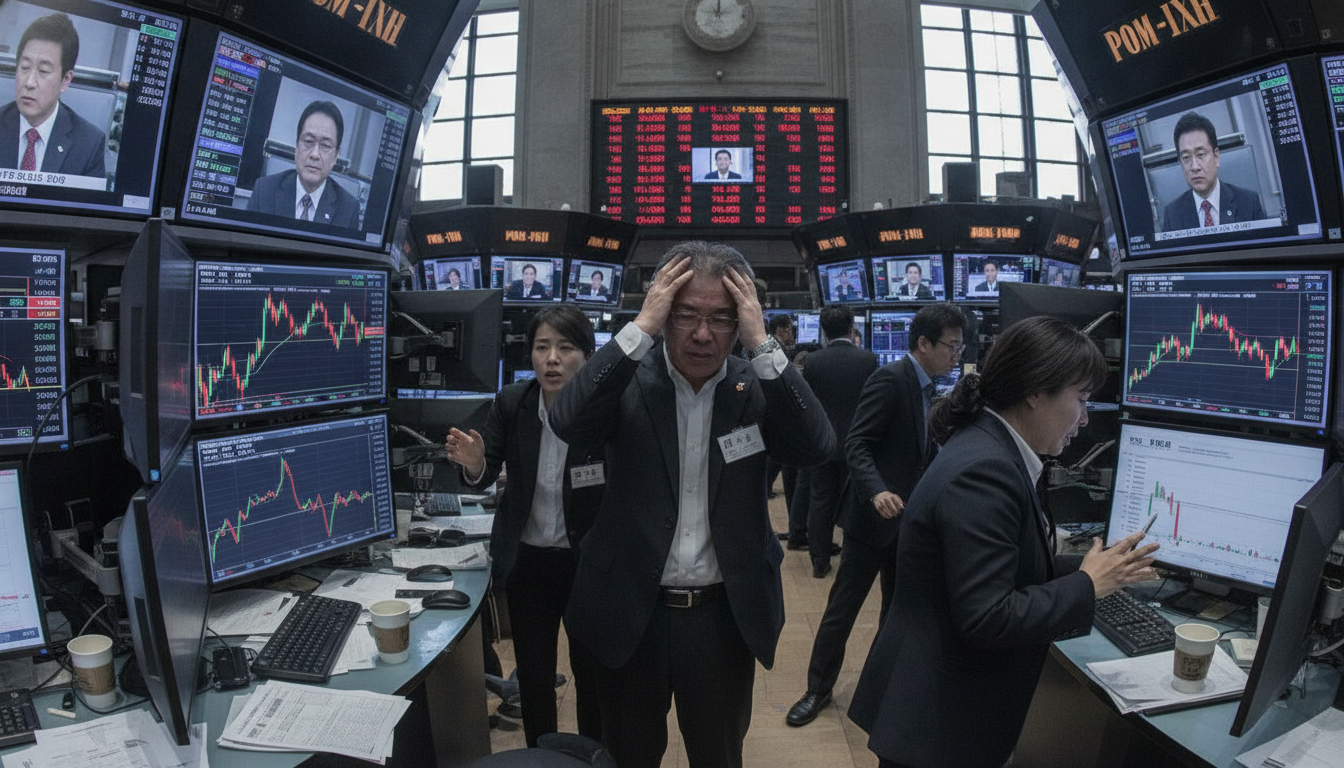
Japanese and South Korean stocks plunge as US tech sell-off and Chinese chip competition weigh on Asian markets
Japanese and South Korean stocks plunged on July 28, 2026 after a US tech sell-off and fears of rising Chinese chip competition rattled Asian markets.
Tokyo and Seoul opened sharply lower on Tuesday, with selling centered on major technology names after steep losses on Wall Street overnight. Market participants pointed to renewed concerns over the cost of large-scale capital spending in the sector and accelerating competition from Chinese semiconductor firms. The rout extended into broader equity markets as investors reassessed growth expectations for exporters across the region.
Tokyo and Seoul Markets React to US Tech Sell-off
Both the Nikkei 225 and South Korea’s benchmark indices moved decisively lower in early trading as sentiment imported from the US took hold. Traders said the spillover reflected portfolio rebalancing after US investors pared positions in high-valuation technology companies following fresh doubts about near-term returns.
Market commentary emphasized the speed of the decline rather than any single catalyst, with stop-loss orders and algorithmic selling amplifying the move. Local trading desks reported heavier-than-normal volumes as equity funds adjusted exposure ahead of corporate earnings and upcoming macroeconomic data.
Chinese Chipmakers Intensify Competitive Pressure
Analysts cited the rise of Chinese chipmakers as a structural concern that has reentered investor focus this month. As domestic Chinese firms scale production and narrow technology gaps, investors are re-pricing the outlook for incumbent suppliers in Japan and South Korea that have profited from a years-long demand surge.
The competitive pressure is most acute in memory and foundry segments where large, state-supported Chinese investments are shifting the global supply dynamic. Market participants said the prospect of intensified price competition could weigh on margins and capital expenditure plans for regional semiconductor suppliers.
Technology Sector Leads Declines Across Indices
The technology sector was the principal driver of losses as chipmakers, hardware suppliers and related equipment producers underperformed the broader market. Declines were not confined to a handful of names; instead, weakness was widespread across large-cap and mid-cap tech companies, magnifying index-level moves.
Equity strategists noted that profit-taking followed several weeks of gains for some technology groups, leaving stocks vulnerable to a reversal once risk appetite waned. The sell-off exposed concentration risk in indices with heavy technology weightings, prompting some passive investors to rebalance portfolios.
Export Reliance and Currency Movements Add to Unease
Japan’s and South Korea’s heavy reliance on exports left their markets particularly sensitive to a reassessment of global demand and competitive positioning. Traders observed that any indication of slowing overseas orders or margin compression from abroad would have direct implications for corporate earnings forecasts.
Currency fluctuations compounded the pressure, with exporters closely watching moves in the yen and the won. Even modest exchange-rate shifts can influence profit margins for overseas revenue, and market participants said FX volatility heightened uncertainty for multinational manufacturers.
Investors Watch Policy and Corporate Capex Plans
With sentiment fragile, investors turned their attention to policy signals that could stabilize markets or provide relief for technology players. Central bank commentary on growth and inflation, as well as government statements about industrial policy and semiconductor support programs, were flagged as potential market-moving events.
Corporate capital expenditure plans will also be in focus as companies disclose investment intentions for advanced fabs and R&D. Investors are weighing whether firms will proceed with costly expansion or adopt more conservative deployment in the face of intensifying competition and narrower profit prospects.
Brokerage and Fund Manager Responses
Institutional investors and brokerages adjusted positioning quickly, rotating some equity allocations toward defensive sectors and shorter-duration assets. Risk managers reported higher hedging activity as funds sought to limit downside exposure while awaiting clearer signals from corporate earnings and policy developments.
Fund managers suggested the current adjustment may create selective buying opportunities for long-term investors who can differentiate companies with sustainable cost advantages. However, several portfolio teams cautioned that the timing of any recovery will depend on how quickly companies can translate investment into cost-effective output amid rising regional competition.
Market participants emphasized that headline volatility does not necessarily presage a prolonged downturn, but it does increase the near-term hurdle for stocks with lofty valuations. Investors said they would monitor corporate guidance, supply-chain developments, and any official steps to support strategic industries for clues to market direction.
The episode underscored how tightly linked Asian equity performance is to global technology narratives and the evolving competitive landscape in semiconductors. As the trading week progresses, traders and analysts will be focused on earnings updates, policy commentary and any fresh data that could alter investor expectations for growth and investment in the region.

