
BYD Racco kei minicar debuts in Tokyo to challenge Japan’s domestic mini-car market
BYD launches the Racco kei minicar in Tokyo July 28, bringing an attractively priced electric city car to Japan and intensifying competition in the kei segment.
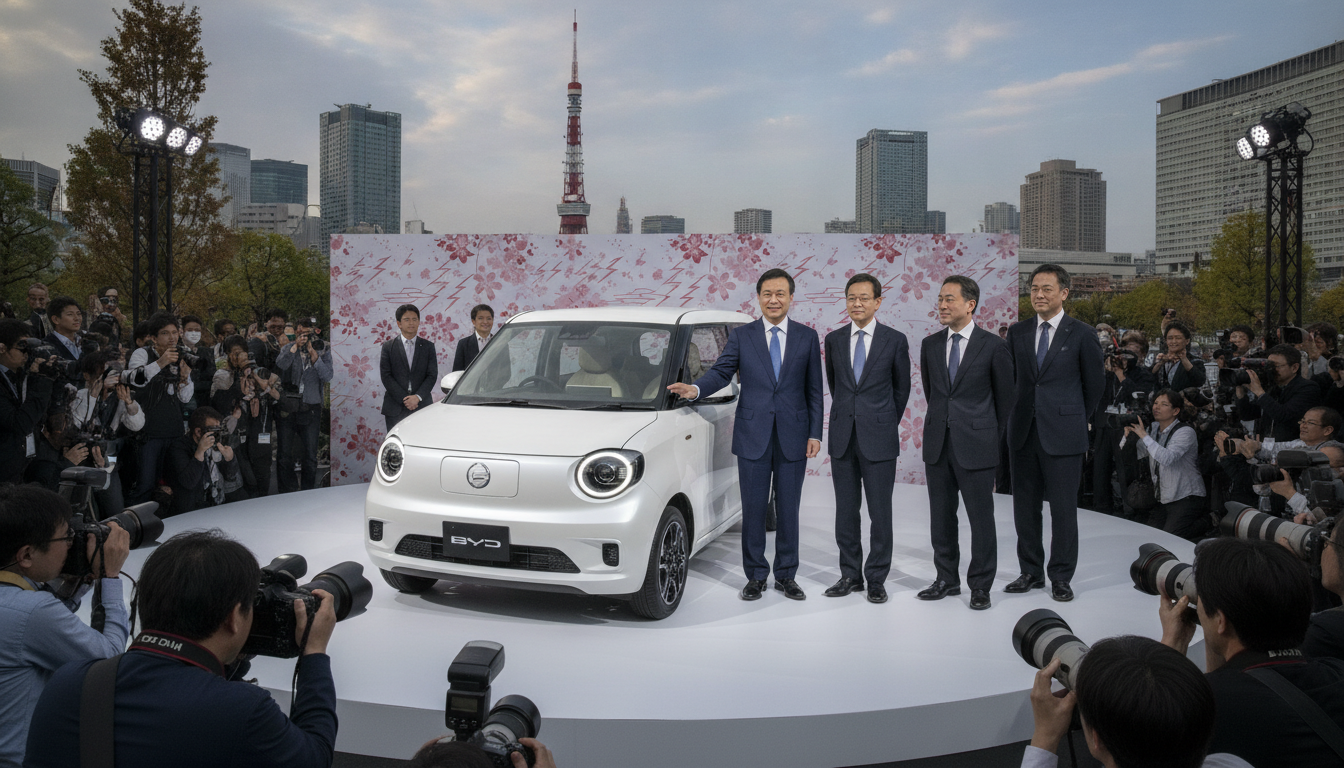
The Chinese automaker BYD began sales of the all‑electric Racco kei minicar in Tokyo on July 28, marking its formal entry into Japan’s tightly regulated small‑car category. Company executives showcased the compact vehicle at a Tokyo event, saying the Racco is aimed at urban commuters seeking an affordable electric alternative within the kei class. The launch signals a direct challenge to domestic manufacturers that have long dominated the segment.
BYD launches Racco kei minicar in Tokyo
BYD held a public launch event in central Tokyo where company representatives introduced the Racco to dealers, media and potential buyers. Liu Xueliang, BYD vice president and president of BYD Japan, and Atsuki Tofukuji, president of BYD Auto Japan, were on stage for the unveiling. The automaker framed the Racco as a purpose‑built city EV sized and configured to meet Japan’s kei car rules while offering electric propulsion and a lower sticker than many compact EV rivals.
Design and urban performance tailored to kei rules
Engineered to fit the dimensions and regulatory envelope of Japan’s kei category, the Racco emphasizes compactness, maneuverability and ease of parking for dense urban neighborhoods. Its short wheelbase and tight turning radius are positioned as advantages for city driving, while interior packaging is optimized for two to four passengers and daily errands. BYD says the car’s powertrain and battery are tuned for frequent short trips and stop‑start traffic rather than long highway runs.
Specifications, range and pricing approach
BYD has presented the Racco’s technical profile as focused on real‑world, urban usability rather than long‑distance performance. The company highlights quick charging compatibility and battery durability as selling points for metropolitan customers. Pricing for the model is advertised to be competitive in the kei market, where affordability and ownership costs are major purchase drivers, and BYD has positioned the Racco to attract buyers who previously chose fuel‑powered mini cars.
Sales strategy and dealer and service network
BYD Auto Japan plans to route sales through its expanding national network and selected retail partners aimed at providing localized sales, maintenance and warranty support. The company has indicated it will roll out aftersales services and charging solutions that align with Japanese consumer expectations for reliability and parts availability. Executives stressed investments in service capacity to reassure buyers accustomed to established domestic brands’ extensive dealer footprints.
Implications for domestic kei car makers
The Racco’s arrival adds a new dynamic to a market long dominated by Japanese manufacturers such as Suzuki and Daihatsu, which have traditionally set the tone for the kei segment. Price pressure and a wider selection of electric models could prompt incumbents to accelerate EV rollouts or bolster incentives for existing models. Market analysts say foreign entries may force a reevaluation of product positioning, supply chains and marketing strategies across the mini‑car category.
Regulatory compliance and safety certification in Japan
Bringing a vehicle into the kei car class requires compliance with specific size, power and safety regulations, and BYD indicated the Racco has been certified to meet Japan’s homologation standards. The company emphasized adherence to local safety testing procedures and required approvals ahead of retail deliveries. Japanese regulatory scrutiny and consumer expectations for crash safety and emissions‑related compliance are likely to remain focal points for both regulators and buyers.
Early reactions at the Tokyo launch showed interest from urban drivers and media, with attendees noting the Racco’s compact footprint and value positioning. Dealers at the event reported inquiries from younger buyers and older drivers seeking simpler, lower‑cost EV options for short commutes. Consumer awareness and trial opportunities will be crucial in the coming months as BYD moves from launch announcements to showroom availability.
The Racco’s market performance will test whether a competitively priced Chinese electric kei car can win share in a segment defined by habit, brand loyalty and regulatory nuance. If BYD can sustain a reliable service network and localize its offer to Japanese tastes, the Racco could prompt broader shifts in pricing and product strategy across the mini‑car market.

