
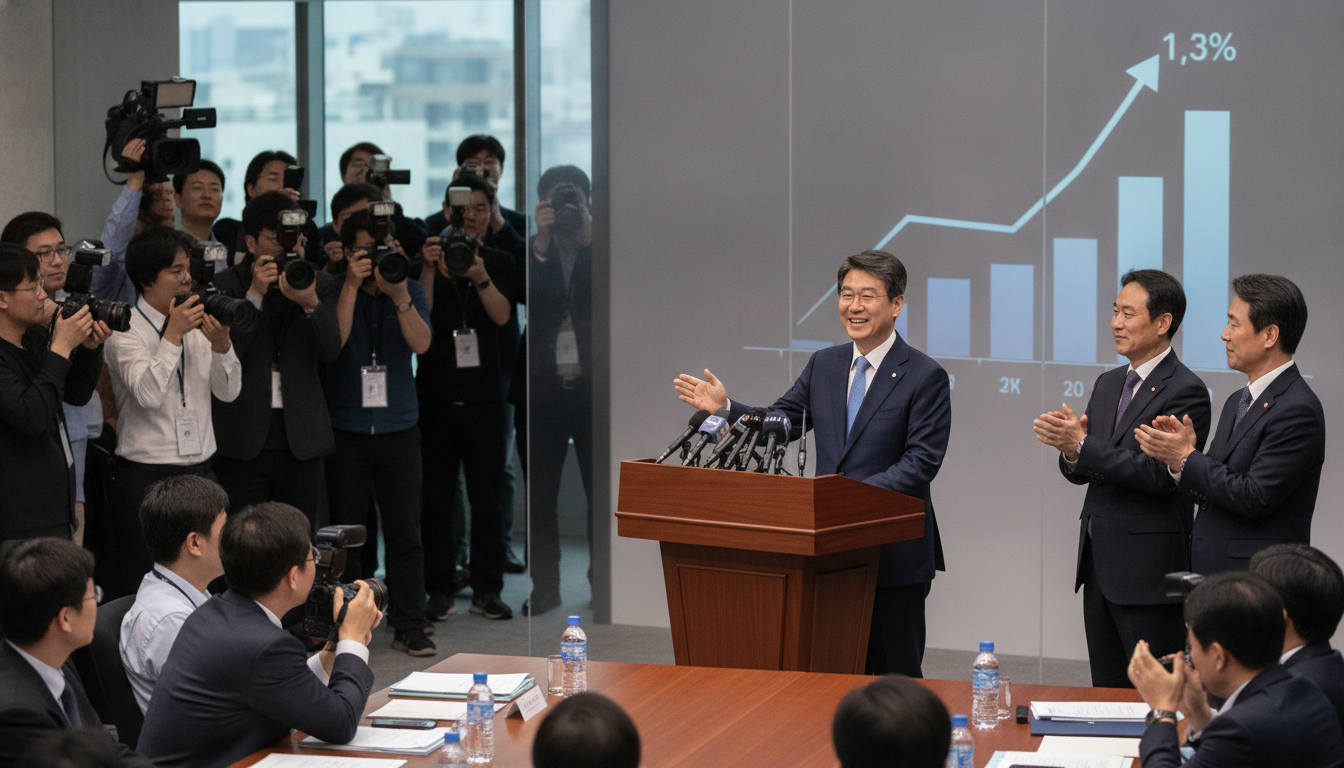
SK Hynix Reports 557% Q2 Operating Profit Surge as AI Drives Memory Demand
SK Hynix saw operating profit jump 557% in Q2 as AI infrastructure growth fuels unprecedented demand for memory chips.
SK Hynix reported a dramatic rise in second-quarter operating profit on July 29, 2026, as demand from artificial intelligence deployments pushed up sales of memory products. The company posted operating profit of 60.54 trillion won, roughly $41.6 billion, compared with the same quarter a year earlier. Executives and industry observers said the expansion of AI-related data centers and servers was the principal driver behind the surge in demand for high-performance memory.
Quarterly Results and Figures
SK Hynix’s operating profit for the April–June quarter climbed to 60.54 trillion won, a year-on-year increase of 557 percent, the firm announced. The figure reflects a sharp swing from depressed results a year earlier and underscores how quickly the memory market has tightened amid AI-led buying.
The company released the results on Wednesday and highlighted that revenue trends were significantly influenced by the pace of purchases tied to generative AI and high-performance computing. Management framed the quarter as a recovery driven by structural demand rather than a short-lived inventory cycle.
AI Infrastructure Driving Memory Chip Demand
Demand for server-grade memory used in AI training and inference has increased the need for both DRAM and high-bandwidth memory variants. Customers building large-scale AI clusters require dense, fast memory to handle model training workloads, a trend that benefited SK Hynix during the quarter.
Suppliers of memory components have reported stronger order flows from cloud providers and hyperscalers investing to expand compute capacity. Industry participants say these investments are more capital-intensive and persistent than prior cyclical upturns tied to consumer electronics.
Product Mix and Segment Strengths
SK Hynix’s strength in advanced DRAM and specialized memory products positioned it well to capture higher-margin AI-related sales. The company’s portfolio includes high-bandwidth memory solutions that are increasingly used in accelerator boards and server modules for AI workloads.
While company disclosures focused on operating profit totals, analysts note that a favorable product mix — with a larger share of revenue coming from premium memory — tends to lift margins more rapidly than volume alone. That dynamic appears to have been in play during the quarter.
Supply, Capacity and Pricing Dynamics
Memory chip pricing has stabilized and, in some segments, moved higher as supply-demand balances tightened. Manufacturers that had previously curtailed output are now seeing improved pricing power as orders from data-center customers accelerate.
Capacity adjustments made during the industry downturn limited immediate supply growth, which amplified the effect of rising demand. For SK Hynix, higher utilization of existing fabs and targeted shipments of premium products helped translate stronger market conditions into outsized profit gains.
Market Reaction and Competitive Landscape
The surge in profit is likely to renew attention on Korea’s chipmakers as key beneficiaries of the AI spending cycle. Competitors and customers will be watching how sustained these demand trends prove and whether pricing momentum persists into the second half of the year.
Investors and corporate buyers alike face questions about how quickly capacity will expand across the industry and whether increased investment will eventually temper margins. For now, SK Hynix’s results reinforce its role as a major supplier to the cloud and AI ecosystems.
Outlook and Risks for AI-driven Growth
Management commentary and market observers caution that while AI-related demand appears structural, risks remain from potential overinvestment, macroeconomic shifts, or rapid technological change. Memory markets have historically been cyclical, and a reversal in demand patterns could compress profits if supply grows faster than consumption.
At the same time, continued innovation in AI models and broader adoption of compute-intensive applications could sustain elevated memory needs for several years. How SK Hynix navigates capital expenditure, product roadmaps and customer relationships will shape whether the company can convert this quarter’s windfall into long-term revenue stability.
SK Hynix’s second-quarter performance illustrates how the AI boom is reshaping semiconductor economics and placing memory suppliers at the center of a new investment cycle. The company’s ability to maintain margin gains will depend on balancing capacity expansion with disciplined supply management and aligning product development to the evolving needs of AI infrastructure customers.

