
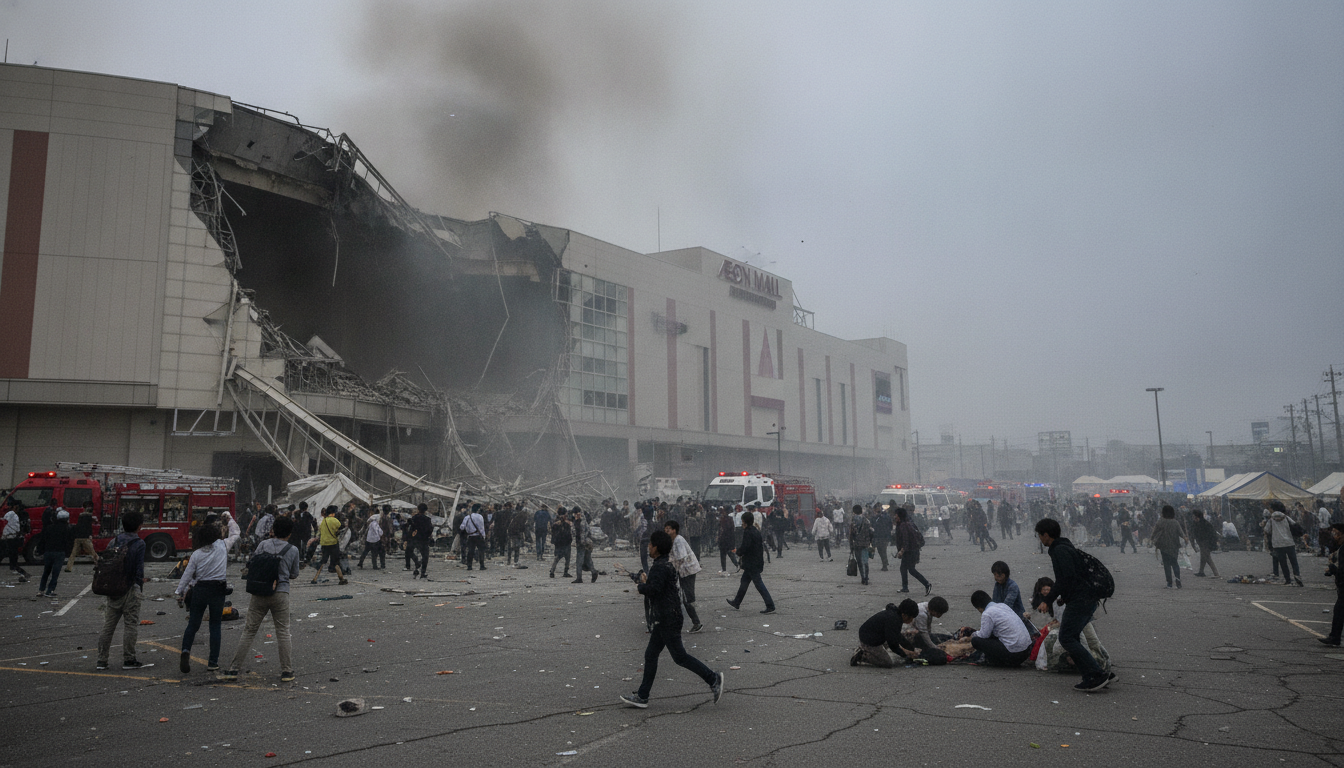
Aeon Mall Kumamoto explosion raises alarm over evacuation-site safety after 7.1 quake
Aeon Mall Kumamoto explosion after July 29, 2026 magnitude-7.1 quake raises questions about evacuation-site safety and emergency shelter resilience across Japan.
The fatal Aeon Mall Kumamoto explosion on July 29, 2026, which followed a magnitude-7.1 earthquake in Kumamoto prefecture, has intensified scrutiny of shopping complexes that double as designated evacuation sites. The Aeon Mall Kumamoto explosion, which occurred as residents sought shelter and emergency supplies, exposed vulnerabilities in the infrastructure of facilities expected to serve as community lifelines during disasters. Local authorities and disaster experts are now examining how evacuation-site designations are assigned and whether current safety measures are sufficient to protect evacuees. The incident has prompted a broad reassessment of the role major commercial centers play in regional emergency planning.
Explosion at designated evacuation center
A shopping complex long designated as an evacuation center for nearby neighborhoods suffered an explosion during the quake, directly challenging assumptions about the safety of such sites. Emergency sirens and chaotic evacuation scenes were reported as people moved toward the mall, which many had relied upon for shelter, food and basic necessities in emergencies. The occurrence of the Aeon Mall Kumamoto explosion while the building was serving this contingency function raises questions about the reliability of private facilities in times of intense seismic activity. Officials have said safeguarding evacuees requires an urgent review of which sites are suitable to be listed as official shelters.
Seismic event and immediate emergency response
The magnitude-7.1 earthquake that struck central Kyushu on July 29, 2026 triggered widespread shaking, damage to infrastructure and a rapid emergency response from municipal and prefectural teams. Firefighters, paramedics and municipal staff mobilized to assist injured residents and to account for those sheltering in public and private buildings, including shopping centers used as evacuation hubs. Rescue operations were complicated by aftershocks and by access issues around damaged roads and fallen debris, slowing the delivery of relief and assessment teams. Authorities prioritized search-and-rescue and the stabilization of potentially hazardous sites while urging residents to heed official sheltering instructions and safety advisories.
Investigations into cause and building systems
Preliminary inquiries into the Aeon Mall Kumamoto explosion are focusing on possible failures in building systems such as gas, electrical networks or storage of combustible materials, though investigators have not released definitive findings. Forensic teams are expected to examine utility shutoffs, structural damage and emergency power provisions to determine whether the mall’s systems functioned as designed during the quake. The incident underscores the intersection between natural hazards and built-environment risks, where non-structural elements can pose severe threats to occupant safety even if primary structural integrity remains. Engineers and safety inspectors will likely recommend immediate retrofits or procedural changes if systemic weaknesses are identified.
Responses from operators and local government
Management of the shopping complex and municipal officials have communicated that immediate emergency measures were taken and that full assessments will follow, while relief agencies focus on those affected. The operator of the mall has pledged cooperation with local authorities and promised to provide information that may assist investigators and aid efforts. Municipal governments in Kumamoto and neighboring jurisdictions have announced reviews of their lists of designated evacuation sites, with an eye toward clear criteria for selection and contingency planning for failures at single points of shelter. Community groups and residents’ associations are calling for transparent timelines and for immediate steps to ensure safe alternatives are available.
Broader implications for disaster shelter policy
The Aeon Mall Kumamoto explosion has reignited debate about the appropriateness of designating commercial facilities as primary evacuation centers without stringent, disaster-specific safety assurances. Many municipalities across Japan have relied on public halls, schools and large private complexes to augment shelter capacity, citing convenience and proximity, but the recent event highlights the need for thorough technical evaluations. Policymakers may move to codify stricter standards for utilities, emergency power, fire suppression and hazardous materials management before private sites are given official shelter status. The episode could accelerate investment in dedicated public shelters and distributed local caches of emergency supplies to reduce dependence on single, multi-use facilities.
Community impact and recovery efforts
Residents displaced or affected by the July 29 quake and the subsequent explosion are facing immediate housing, medical and logistical needs as relief organizations coordinate temporary accommodation and aid distribution. Local volunteers and civic groups have mobilized to support evacuees with food, clothing and information while authorities work to reestablish safe points for shelter and supplies. Economic disruption from damage to retail and supply chains is expected to compound short-term hardships, with businesses near the mall assessing losses and planning for cleanup and repairs. Longer-term recovery will hinge on transparent investigation outcomes and timely reinforcement of community safety measures.
The Aeon Mall Kumamoto explosion has become a catalyst for rethinking how Japan prepares for and manages sheltering during major earthquakes, prompting officials, private operators and residents to weigh the trade-offs between accessibility and structural and systems resilience.

