
Trump vows to strike Iran after missile attack on US base; tanker fire reported in Egypt
US President Donald Trump vowed to strike Iran on July 29, 2026, after the Islamic Revolutionary Guard Corps launched missiles at a U.S. base in Jordan, a move that deepens regional tensions and coincided with an apparent drone attack on an LNG tanker at Egypt’s Damietta port.
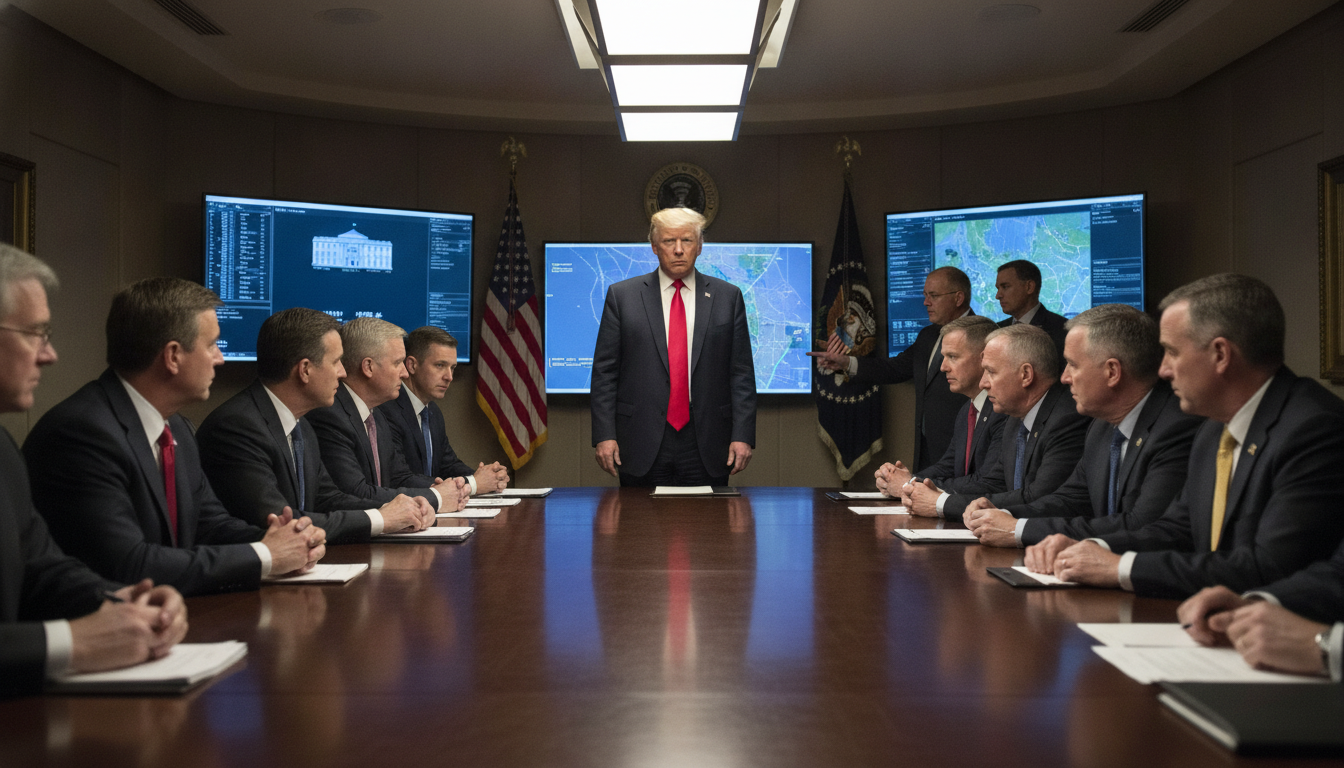
The president made the declaration to reporters at the White House, saying “we will hit Iran hard” and asserting that all five missiles fired toward the Jordan base were intercepted. His comments came as U.S. and allied forces conducted operations across the Middle East and as a reported attack on energy infrastructure raised concerns about wider escalation.
Trump’s White House remarks and immediate warning
President Trump told reporters on July 29, 2026, that the United States intended to respond decisively to strikes against American and allied forces. He characterized the coming action as an American turn to retaliate, while adding that he would watch Iran’s next moves and that “we’ll see whether we can come to an agreement,” signaling both readiness for force and openness to diplomatic developments.
Trump also said the five missiles fired at the Jordanian base were all intercepted, a claim he made directly to journalists at the briefing. He acknowledged receiving reports about an unrelated tanker fire in Egypt and said the matter “will be resolved,” without assigning responsibility for that incident.
Details of the missile strike on the Jordan base
U.S. officials and regional sources said the missiles were launched on July 29, 2026, and were aimed at a U.S. facility located in Jordan. The Islamic Revolutionary Guard Corps (IRGC) was identified in reporting as the force behind the attack, representing one of the most direct assaults attributed to Tehran on American positions in the region this year.
According to statements relayed by the president, all five incoming missiles were intercepted before they could inflict damage. The interception claim has yet to be independently corroborated by a U.S. Department of Defense public release at the time of the president’s remarks, and military assessments are expected to follow to verify damage, trajectories and the source of the launches.
U.S. military posture and recent operations in the region
The White House announcement comes amid a pattern of U.S. strikes and counterstrikes in the Middle East over recent weeks. U.S. forces had conducted a series of operations against Iran-aligned targets for about two weeks before temporarily pausing such strikes on July 24, 2026. That pause did not end the military activity entirely, and on July 29 the United States and Saudi Arabia carried out a joint strike against pro-Iran armed group positions in Iraq, according to official accounts.
Officials said the recent campaign has been intended to degrade the capabilities of groups linked to Iran that have targeted U.S. interests and partner forces. The president’s renewed threat to strike Iran directly marks a potential escalation from strikes on proxies to action aimed at Tehran’s own forces or infrastructure, a step that would sharply raise the stakes for regional stability.
Damietta tanker fire raises energy and shipping alarms
Separately on July 29, 2026, Reuters reported that a liquefied natural gas (LNG) storage tanker owned by a U.S.-linked company caught fire at Damietta port on Egypt’s Mediterranean coast. The blaze, which security analysts said appeared to have resulted from a drone attack, spread to an adjacent tanker, according to data from the maritime security firm Ambrey cited by the news agency.
The incident at Damietta — a facility used for storing and transshipping LNG — highlights vulnerabilities in regional maritime infrastructure and underscores the potential for energy supply disruption if attacks on tankers or terminals escalate. While the cause of the fire remained under investigation, the development drew immediate attention from U.S. officials and commercial shippers monitoring risk to Mediterranean and Red Sea routes.
Regional and diplomatic implications of renewed threats
The convergence of a direct threat by the United States, missile launches attributed to the IRGC, and an apparent attack on energy shipping amplifies the risk of miscalculation and broader conflict. Diplomats in Washington, Riyadh, and capitals across Europe and Asia have signaled concern about the prospect of the confrontation widening beyond localized strikes and reprisals.
Analysts say the next 48 to 72 hours will be critical in determining whether the situation escalates or pulls back. The president’s statement that he would “watch” Iran’s response suggests a degree of strategic patience, but also a readiness to act if Tehran fails to de-escalate or if additional attacks target U.S. forces, partners, or energy assets.
Allied coordination and international reaction
U.S. officials have emphasized consultations with regional partners, including Jordan and Saudi Arabia, as well as discussions with NATO and other allies about collective responses and force protection measures. The joint U.S.-Saudi strike in Iraq on July 29 demonstrates ongoing military coordination, while the Damietta fire has prompted calls for enhanced maritime security from shipping companies and regional governments.
International actors have urged restraint while also noting the need to protect military personnel and critical infrastructure. The interplay of military action, diplomatic channels and intelligence assessments will shape whether the confrontation remains confined or triggers wider responses across the Middle East.
The coming days will test whether deterrent measures and diplomatic engagement can prevent further violence, and whether the United States follows through on President Trump’s declaration to strike Iran directly should Tehran or its proxies continue attacks on U.S. forces or strategic assets.

