
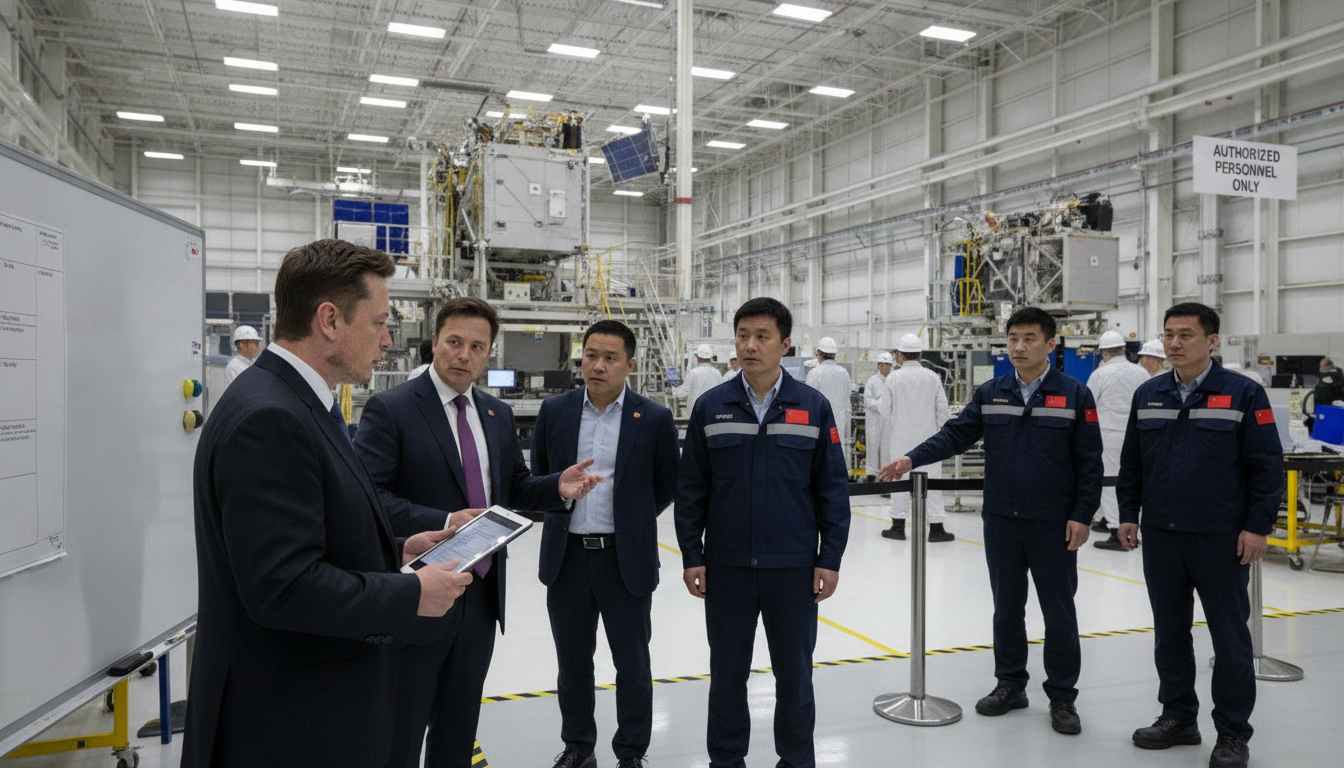
SpaceX China: Company Bars Chinese Nationals from Sensitive Supply Chain Sites
SpaceX tells partners to restrict Chinese nationals at sites making critical components, aiming to shield the U.S. space supply chain from Chinese influence.
SpaceX is instructing firms across its global supply chain to prevent the assignment or employment of Chinese nationals at facilities producing parts and systems for the company, according to people familiar with the directives. The move, framed by company officials as a safeguard for technologies tied to U.S. national security, is an effort to reduce what executives describe as potential foreign influence on sensitive production lines. The development marks a notable intensification of corporate controls tied to the geopolitical rivalry between the United States and China.
SpaceX Tightens Rules for Chinese Nationals
SpaceX has communicated new personnel restrictions to a wide array of suppliers, including those in the United States, Europe and Asia. The guidance asks partners to avoid assigning Chinese citizens to work on productions destined for SpaceX-owned programs that the company deems critical.
Company representatives characterize the measures as precautionary steps to protect intellectual property and limit access to sensitive manufacturing processes. Officials say the policy is targeted, not categorical, applying at identified facilities and projects rather than across all suppliers or roles.
Supply Chain Compliance and Partner Notices
Notices delivered to suppliers outline compliance procedures and request confirmations of workforce assignments at specific production sites. Some suppliers have been asked to provide lists of employees working on SpaceX programs and to certify adherence to the new restrictions. These administrative steps are intended to create verifiable records that can be reviewed internally.
Several mid-tier and smaller suppliers told industry contacts they were scrambling to adjust labor schedules and reassess contracts to meet the directives. For some companies, the changes raised immediate logistical and legal questions about workforce management and cross-border operations.
National Security and U.S. Policy Context
The company frames the changes as being consistent with U.S. national security priorities involving space and satellite technologies. Government officials in Washington have increasingly focused on the integrity of supply chains that underpin military and civil space programs. SpaceX executives say the company is aligning internal practices with those priorities to reduce risk exposure.
Legal experts caution there is limited public precedent for private firms imposing nationality-based restrictions at this scale, and that such measures can raise complex issues under employment, export-control and anti-discrimination laws. Companies implementing the policy will need to map regulatory obligations across jurisdictions to avoid unintended violations.
Global Suppliers Face Operational Challenges
For multinational manufacturers, the new directives complicate workforce planning in regions where Chinese engineers and technicians are integral to operations. Factories in East Asia that have relied on mixed-nationality teams must now weigh reassignment, remote work or the reallocation of production tasks to other sites. These operational shifts can increase costs and slow delivery schedules for time-sensitive components.
Some suppliers have begun exploring technical safeguards—such as segregated production lines, enhanced electronic monitoring and compartmentalized workflows—to limit access to sensitive processes without wholesale changes to personnel. Those measures, however, may not satisfy all of SpaceX’s stated requirements and could demand substantial investment.
Reactions from Industry and Legal Experts
Industry groups emphasize the tension between safeguarding technology and maintaining open, efficient supply chains that depend on international talent. Trade associations and business leaders warn that nationality-focused policies could undermine collaboration and raise reciprocal pressures on foreign firms operating in the United States and allied countries.
Employment law experts say companies must document clear, narrowly tailored risk assessments if they are to justify nationality-based restrictions, particularly where contractors operate under local labor laws. The balance between compliance with corporate security policies and adherence to anti-discrimination statutes will be a focal point for legal scrutiny.
Risks for U.S.–China Technology Decoupling
Analysts view SpaceX’s actions as part of a broader trend toward selective decoupling in high-technology sectors, where private firms and governments seek greater control over critical supply chains. The policy could accelerate regionalization of certain supply lines and encourage investment in alternative manufacturing hubs outside China for components related to space and defense.
At the same time, companies reliant on global talent and cross-border engineering teams may face longer-term workforce shortages and higher recruitment costs. The practical fallout could include slower innovation cycles, increased production costs and reconfigured industrial partnerships.
The new guidance from SpaceX has set off urgent meetings among suppliers and legal advisers as the company and its partners work to implement the changes while navigating regulatory and operational hurdles. Observers say the episode illustrates how geopolitical competition continues to shape corporate strategy and the structure of advanced-technology supply networks.

