
South Korea World Cup exit prompts parliamentary hearing into coach selection and KFA governance
South Korea World Cup exit prompts parliamentary hearing into coach selection and Korea Football Association amid public outrage and presidential criticism.
National Assembly launches hearing
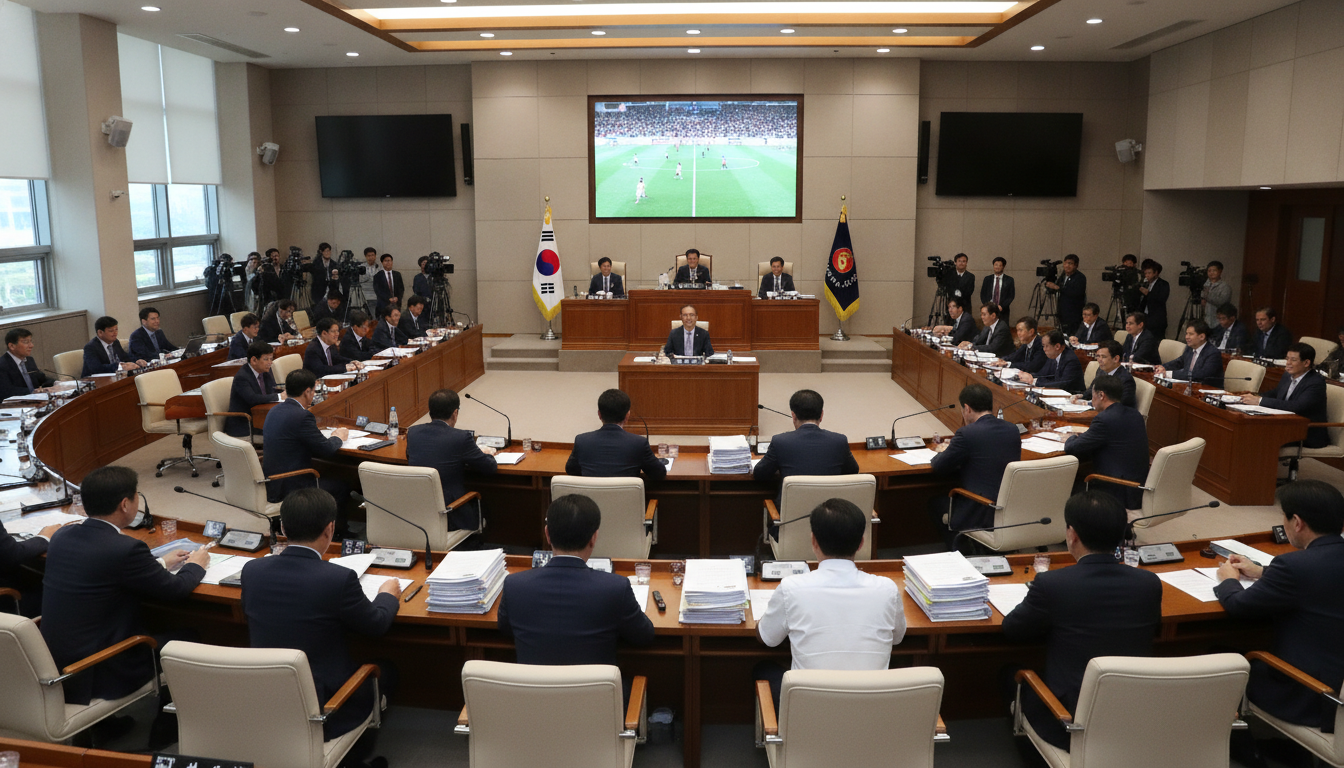
The National Assembly opened a hearing on July 30, 2026, to probe the selection process for the national team coach and the management of the Korea Football Association following South Korea’s World Cup exit. Lawmakers summoned former coach Hong Myung-bo and former KFA president Jeong Mong-gyu as witnesses amid mounting public concern. The session is framed as an effort to clarify decision-making that preceded the team’s early elimination from the group stage.
The hearing comes after South Korea finished the group stage with one win and two losses, an outcome that fell short of domestic expectations. Organizers and legislators said they aim to examine whether institutional failures or procedural lapses contributed to the result. Officials indicated the session will include questioning on appointments, preparations and communications between the association, coaches and players.
Resigned coach and KFA chief testify
Hong, who resigned as head coach after the defeat, told lawmakers he accepts responsibility and said he would answer questions about the facts he knows. Jeong, who stepped down as KFA president, apologized to the public and pledged to respond honestly during questioning. Both figures appeared under intense scrutiny as legislators pressed for detailed explanations about the selection and oversight process.
Witnesses faced questions about timelines, advisory inputs and who held final authority on key tactical and personnel decisions. Lawmakers also sought documents and correspondence related to the coach appointment, training camp choices and match preparations. The hearing is expected to run through additional sessions as committees follow up on unresolved items.
Public outrage and presidential criticism
Public reaction to the defeat has been sharp and at times vitriolic, with social media awash in criticism and, according to reports, abusive messages directed at team figures. Authorities and civil society groups have expressed concern about the scale of online harassment aimed at players, coaches and association officials. Lawmakers referenced these societal effects as they pressed for accountability while urging restraint in public discourse.
President Lee Jae-myung added to the pressure by criticizing the appointment process on social media, suggesting that personal connections were prioritized over competence. His comments echoed widespread frustration and intensified demands for transparency. Presidential remarks have heightened political attention to what had been largely a sports-management issue.
Questions over selection process and elite influence
A central line of inquiry at the hearing involves allegations that appointment decisions were influenced by internal networks, corporate ties and university affiliations rather than meritocratic selection. Opposition lawmakers and commentators have raised concerns about the KFA’s governance structures and alleged conflicts of interest. The hearing aims to determine whether those networks affected coach selection or broader strategic choices for the national team.
Previous administrations and sports governance analysts have long warned about opaque decision-making within sports bodies, and the current controversy has reignited calls for structural reform. Lawmakers signaled they may pursue legislative or regulatory changes to improve transparency, strengthen oversight and prevent recurrence.
Expectations vs. on-field realities
South Korea arrived at the 2026 World Cup with a roster that included high-profile players competing abroad, most notably forward Son Heung-min, and carried public expectations of advancing to the knockout rounds. The team’s strong individual profiles and past achievements — fourth place in the 2002 World Cup and a round-of-16 appearance in 2022 — helped fuel confidence at home. The disparity between those expectations and the early exit has intensified scrutiny of coaching, tactics and preparation.
Analysts at the hearing and in media coverage highlighted tactical decisions, squad selection and conditioning as potential factors in the underperformance. Some observers called for a comprehensive review of the national program, including youth development pathways and domestic league coordination. Others warned that knee-jerk personnel changes without systemic reform would not resolve deeper issues.
Next steps and possible reforms
Committee members indicated they will compile findings from testimony and documentary evidence before deciding on further action, which could include additional hearings, recommendations for administrative overhaul or referrals to investigative bodies. The KFA has pledged cooperation while acknowledging the need to restore public trust. Sports stakeholders—clubs, players’ unions and fan groups—have been invited to participate in future consultations as lawmakers consider broader governance reforms.
Reform proposals under discussion range from clearer appointment criteria and conflict-of-interest rules to enhanced transparency in funding and corporate sponsorship arrangements. Officials emphasized that any changes should balance accountability with professional autonomy for coaches and technical staff.
The parliamentary hearing marks a significant moment in South Korean sport governance as political, social and sporting pressures converge over the national team’s disappointing World Cup campaign.

