
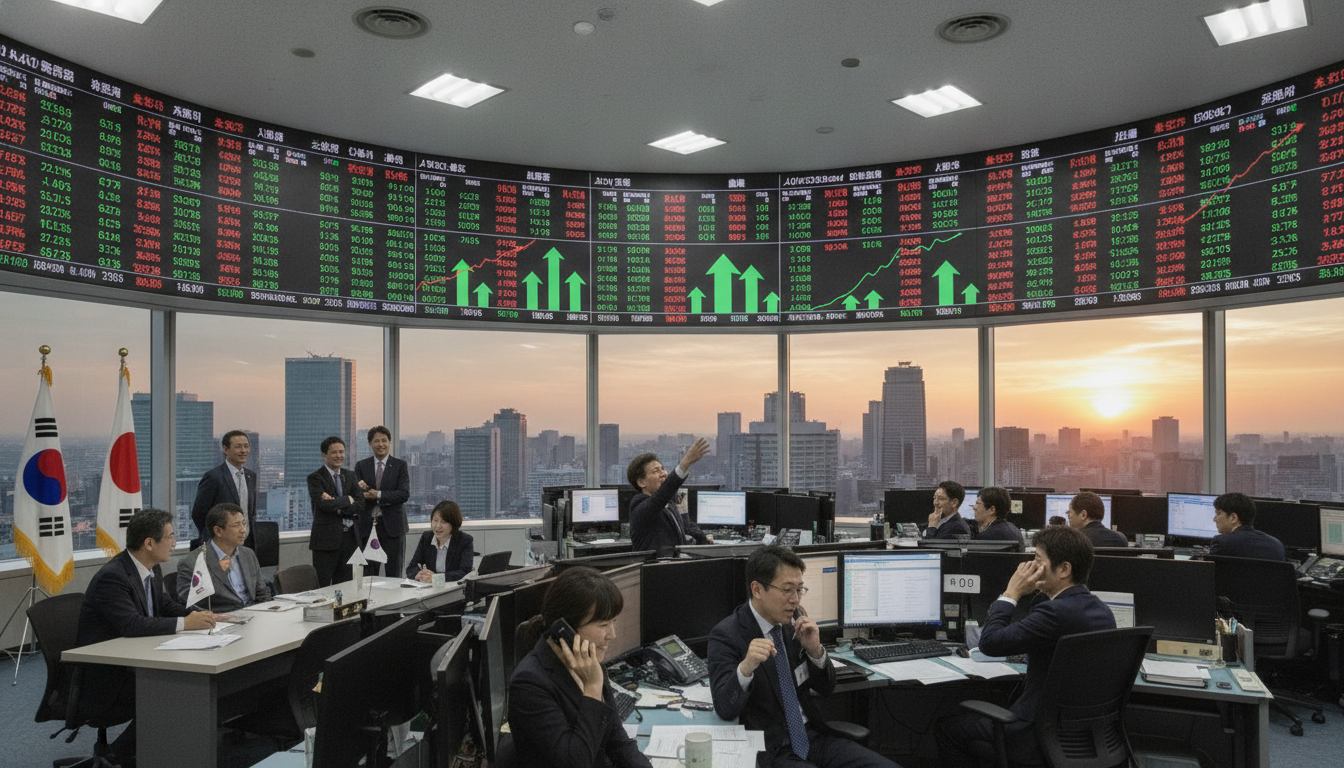
Asian stock markets wobble as Tokyo and Seoul rebound on bargain buying
Asian stock markets swing between gains and losses on July 30, 2026, as investors bought dips amid geopolitical tensions, inflation worries and a semiconductor sell-off.
Tokyo and Seoul Prices Rebound After Recent Slide
On July 30, 2026, Tokyo and Seoul equities staged a measured recovery following several days of steep losses, with traders citing bargain hunting as a key driver of the rebound. The Nikkei and Kospi both pared earlier declines as buying interest emerged in beaten-down cyclical and export-oriented names.
Market participants said the rebound was selective rather than broad-based, with large-cap exporters and some industrial stocks leading the move. Volume picked up in afternoon trading as investors reassessed risk after the recent bout of volatility.
Geopolitical Tensions from U.S.-Iran Conflict Weigh on Sentiment
Escalating tensions tied to the U.S.-Iran confrontation continued to cast a shadow over regional markets, prompting investors to factor in higher geopolitical risk premiums. Energy and shipping sectors were particularly sensitive to headlines, while safe-haven assets intermittently attracted flows.
Traders noted that headlines around the conflict tended to amplify downside moves when combined with weaker regional data or thin liquidity. Analysts warned that further escalation could sustain volatility across Asia and feed into global risk-off episodes.
Inflation Signals and Semiconductor Sell-off Hit Technology Stocks
Concerns about persistent inflation and the knock-on impact for consumer demand contributed to pressure on technology and consumer-facing companies. Semiconductor producers faced renewed selling after profit warnings and softer-than-expected demand signals from major buyers.
The chip sector’s weakness rippled through regional indices because of its outsized market capitalization and supply-chain linkages. Investors said the combination of inflation anxiety and an industry-specific correction prompted rotation into defensive and value-oriented sectors.
Currency Movements and Bond Yields Influence Capital Flows
Currency swings and shifting sovereign yields shaped portfolio decisions across the region, with exporters and import-sensitive firms responding differently to moves in the yen and the won. Traders reported that a firmer dollar and rising yields in the United States nudged some global investors toward dollar-denominated assets.
Local bond markets also absorbed selling pressure at times, as investors re-priced rate expectations and sought to hedge equity exposure. The interplay between currency trends and yields added complexity to short-term positioning among cross-border funds.
Bargain Hunting and Tactical Rebalancing Support Buying on the Dip
After rapid losses earlier in the week, many funds executed tactical rebalancing, lifting demand for selective equities seen as oversold. Portfolio managers described the activity as opportunistic buying aimed at capturing mean-reversion rather than a signal of renewed bullish conviction.
Exchange-traded funds and passive vehicles recorded inflows into certain regional indices as asset allocators rebalanced exposures. However, liquidity remained uneven, and market-makers cautioned that further headline shocks could quickly reverse the modest afternoon gains.
Corporate Calendar and Policy Signals Are Near-Term Catalysts
Looking ahead, investors identified central bank communications and corporate earnings updates as the most likely near-term market drivers. Monetary policy signals from major economies and data on inflation and activity will be watched closely for indications of whether tightening pressures persist.
Earnings season was also expected to bring heightened stock-specific volatility as companies update guidance amid a challenging macro backdrop. Analysts said that clearer guidance from chipmakers and exporters could help set a firmer directional bias for Asian stock markets.
Markets closed the session tentatively higher after oscillating throughout the day, reflecting a cautious mood among investors. With geopolitical uncertainty and sector-specific headwinds still in play, traders expect the coming days to remain volatile as market participants parse incoming data and policy cues.

