
Takaichi Orders Party Consensus on Food Consumption Tax 1% Plan, Leaving a ¥5 Trillion Hole and No Clear Funding Source
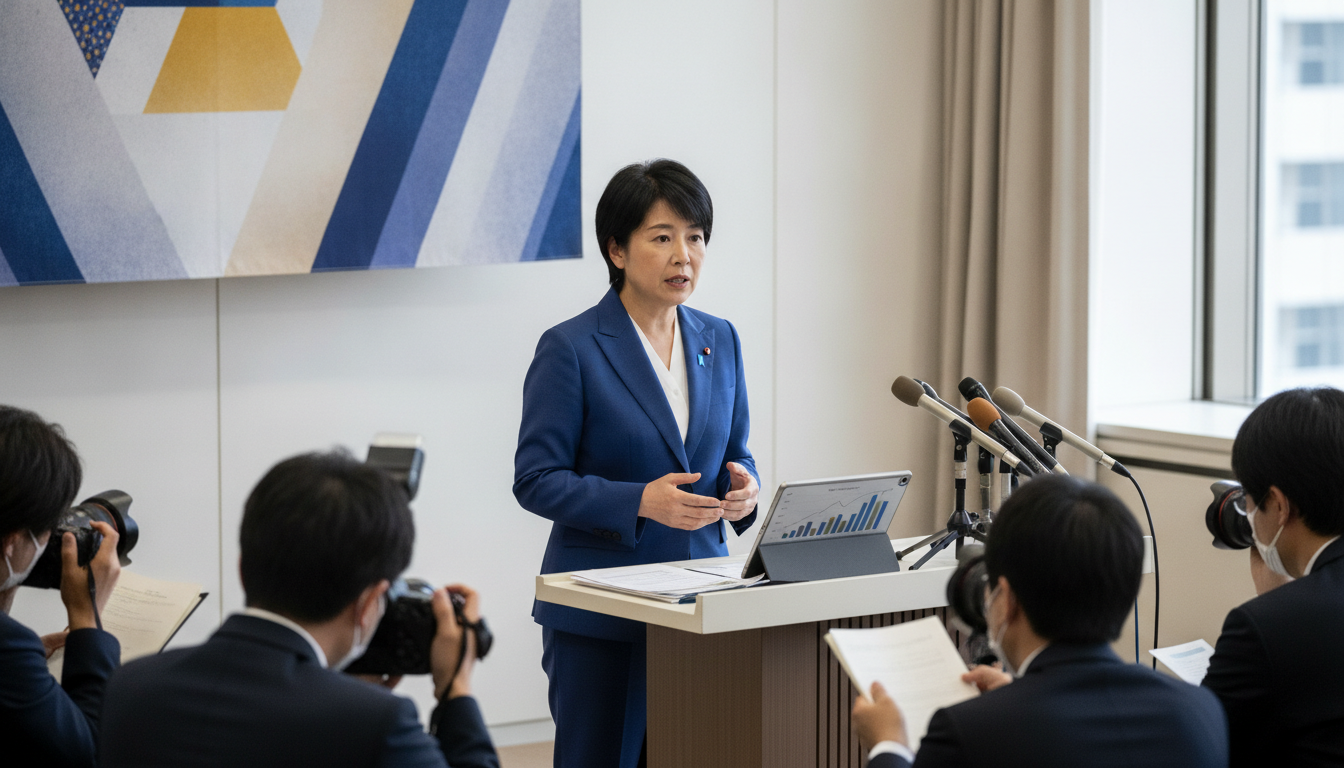
Prime Minister Sanae Takaichi told Liberal Democratic Party executives on July 30 that she intends to cut the food consumption tax to 1% from next April for two years and ordered party organs to consolidate a position on the measure. The proposal to make the cut effectively “practically zero” by pairing the 1% rate with a 1% equivalent cash benefit raises immediate questions about how the government will cover an estimated ¥5 trillion annual shortfall. (news.tv-asahi.co.jp)
Prime Minister Directs Party to Consolidate Position
At a temporary LDP executive meeting on July 30, the prime minister instructed party officials to gather views on the plan and to prepare for a formal decision in the coming days. The approach reflects the administration’s priority to deliver on campaign pledges to reduce the burden of food costs while moving the policy through party channels. (news.tv-asahi.co.jp)
Senior government sources have framed the two-year cut as an interim measure pending broader tax and social security reforms discussed in the cross-party national council. Officials have said the measure would be introduced from April of next year and limited to a two-year window. (jimin.jp)
Estimated ¥5 Trillion Annual Shortfall
Independent and government-linked estimates place the revenue loss from lowering the food consumption tax to 1% — or effectively eliminating the current reduced-rate burden — at roughly ¥4–5 trillion a year. Analysts caution that the combined cost of the rate cut and an accompanying benefit or refundable tax credit pushes the fiscal price tag into the multi‑trillion‑yen range. (newsweekjapan.jp)
Research houses and policy institutes warn that diverting revenue of that magnitude would squeeze existing social-security allocations and local government transfers unless offset by substantial savings or new non-tax receipts. Some economists have stressed the measure’s limited macroeconomic payoff given the size of the outlay. (allianz.com)
No Reliance on Deficit Bonds, but Funding Details Sparse
The prime minister and government spokesmen have publicly ruled out relying on special deficit-covering bonds to fill the gap, signaling a preference for on-budget measures to preserve market confidence. However, officials have so far declined to present a concrete list of offsets, leaving lawmakers and market watchers uncertain about the trade-offs that will be required. (kantei.go.jp)
Minutes and summaries from the national council meetings show that discussion of specific funding sources has been limited to broad formulations — such as reviewing subsidies, tax reliefs and non‑tax revenues — without firm numerical commitments. That vagueness has intensified concerns inside and outside the Diet about the preparedness of implementation plans. (shugiin.go.jp)
Industry and Local Governments Warn of Hidden Costs
Business groups and municipal governments say the headline reduction in the food consumption tax to 1% may not translate into equivalent price cuts at point of sale, and that compensation or transition support will be needed for sectors facing adjustment costs. Restaurants, food processors and small-scale farmers argue that system changes, administrative compliance and potential loss of input tax credits could impose burdens that offset consumer gains. (news.tv-asahi.co.jp)
Local authorities also point to the fiscal link between consumption tax receipts and transfers for social services; a sustained drop in tax revenue would require either cuts or alternative funding to maintain existing services. Analysts note that measures to shield industry and local budgets would add to the overall fiscal bill beyond headline estimates. (newsdig.tbs.co.jp)
Parliamentary Debate, Timing and Market Risks
The national council and LDP deliberations are expected to continue through the summer, with the administration aiming for a cabinet decision as early as next week, according to party officials. Opposition parties have reacted sharply, urging clearer costings and warning of possible future compensatory tax hikes after the two‑year window ends. (jimin.jp)
Financial analysts warn that leaving the funding question unresolved risks unsettling markets, particularly if investors perceive a long‑term drift in Japan’s fiscal trajectory. The government’s repeated pledge to avoid special deficit bonds is intended to reassure markets, but timing and detail will determine whether that reassurance is credible. (nri.com)
The government now faces a politically charged choice: move quickly to deliver relief at the point of purchase and accept complex fiscal trade‑offs, or slow the rollout until detailed offsets and implementation systems are in place. Lawmakers, business groups and municipal leaders will press the administration for greater clarity as the April implementation date approaches and the fiscal implications become clearer.

