
Trump Announces "Historic Agreement" on Hamas Disarmament, but Hamas and Israel Remain Silent
U.S. President Donald Trump unveiled a plan he called a "historic agreement" focused on Hamas disarmament, yet as of the evening of July 31, 2026 (Japan time) neither Hamas nor the Israeli government had issued official responses.
Opening summary
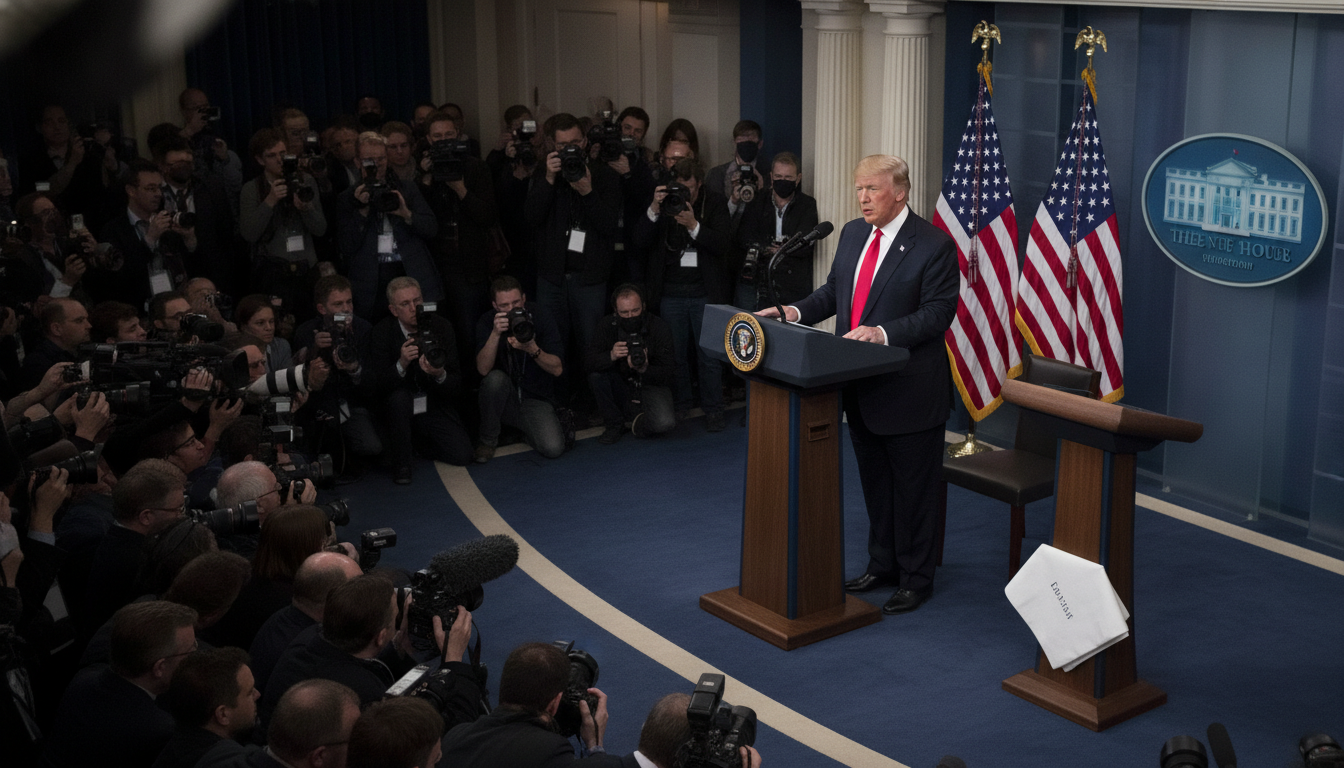
U.S. President Donald Trump on July 31, 2026 announced what he described as a "historic agreement" aimed at the disarmament of Hamas and the groundwork for Gaza’s reconstruction.
The announcement emphasized Hamas disarmament as the central pillar of a broader peace and recovery plan for the Gaza Strip.
Despite the White House messaging, key details including a timetable and verification mechanisms remained unspecified at the time of the announcement.
Details of the U.S. announcement
The White House statement credited President Trump with brokering an agreement that would require the militant group Hamas to relinquish weapons as a precondition for large-scale reconstruction assistance to Gaza.
Officials accompanying the announcement refrained from setting precise dates for disarmament or for the start of reconstruction efforts, citing the need for further consultations.
Trump had met with Israeli Prime Minister Benjamin Netanyahu at the White House on July 28, 2026, and U.S. officials said that meeting informed the announcement.
No immediate response from Hamas or Israel
As of the evening of July 31, 2026 (Japan time), neither Hamas nor senior Israeli officials had issued formal reactions to the announced accord.
Local monitors and diplomatic channels reported continued uncertainty, with spokespeople for both sides declining public comment or giving only guarded statements through intermediaries.
The absence of immediate ratification from the principal parties leaves the fate of the proposal in doubt and raises questions about practical implementation.
U.S. diplomacy and pressure on Israel
U.S. officials accompanying the president sought to underscore American insistence on Israeli compliance with the plan’s terms, saying Israel was expected to adhere to the agreement’s provisions.
One senior U.S. official warned that failure to follow through could lead to strong disappointment from the White House, signaling that Washington would press its ally to act.
The precise nature of any U.S. leverage—diplomatic, economic or military—was not detailed in the announcement, leaving analysts to weigh how enforcement might proceed.
Unclear timeline and verification challenges
The announcement left the core question of timing unresolved, offering no clear schedule for when Hamas disarmament would begin or how long the process would take.
Verifying the surrender of weapons in a densely populated and highly contested enclave like Gaza poses significant technical and political hurdles, including who would oversee disarmament and how compliance would be monitored.
International actors and on-the-ground monitors would need to be mobilized quickly, but the terms for their roles were not specified in the initial briefings.
Implications for Gaza reconstruction and aid delivery
Linking reconstruction aid to Hamas disarmament could accelerate donor commitments if a credible verification framework is established, but it also risks delaying urgent humanitarian assistance.
Gaza’s immediate needs—shelter, water, power and medical supplies—may not wait for protracted political negotiations, and aid agencies have warned that conditionality can complicate lifesaving relief.
Major international donors and regional governments will likely assess the announcement cautiously until they receive concrete operational details and guarantees that aid can be delivered safely and transparently.
Regional stakes and international reaction
Neighboring states and global institutions traditionally involved in Gaza’s post-conflict recovery were, by late July 31, 2026, assessing the plan and its practical implications.
Some capitals have historically tied reconstruction support to security guarantees and political outcomes, while others emphasize unfettered humanitarian access; those divisions may shape the response to the U.S. proposal.
How key players—regional powers, the United Nations and major donor states—choose to engage will be decisive in determining whether the announced agreement can move from rhetoric to reality.
The announcement marks a high-profile diplomatic initiative that foregrounds Hamas disarmament as the gateway to rebuilding Gaza, but with core parties silent and implementation details missing, the initiative faces significant obstacles before it can deliver tangible results.

