
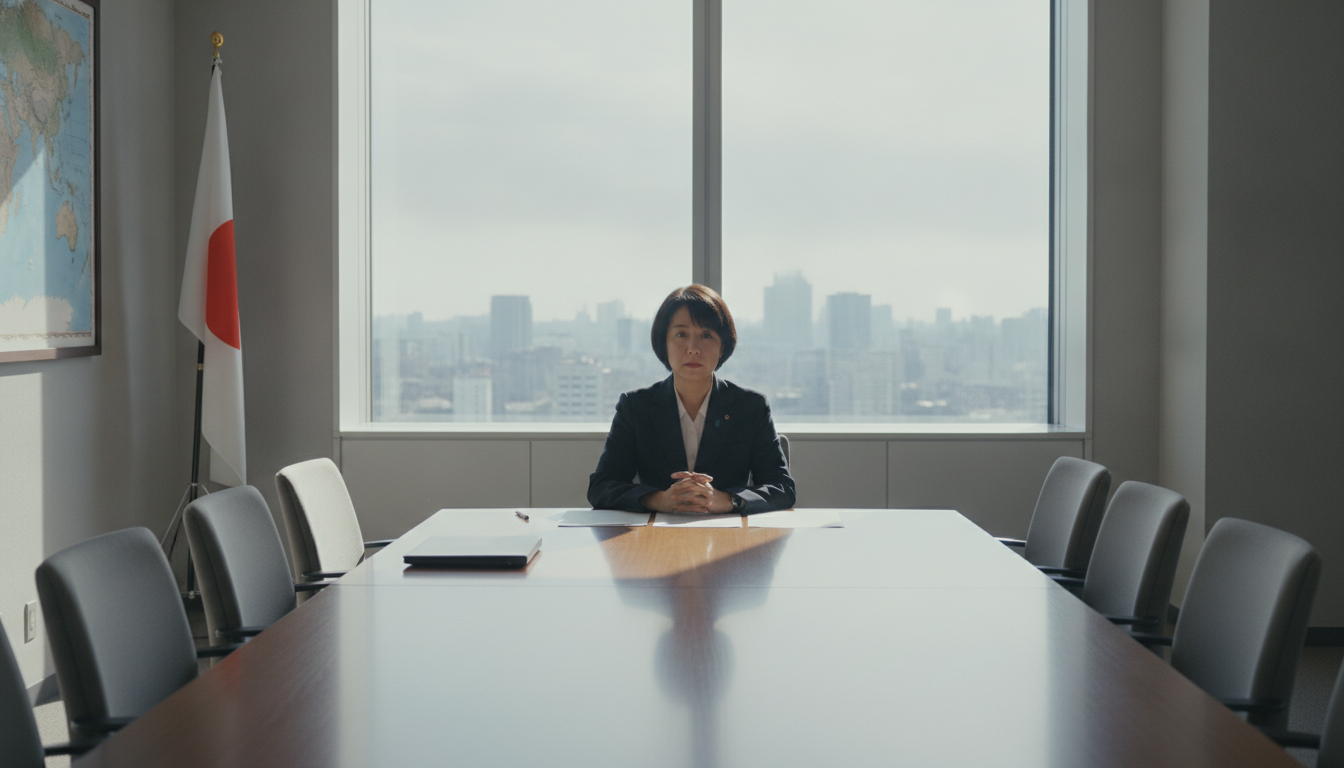
Takaichi phone calls with world leaders absent since June 1, raising diplomatic questions
Japan’s Prime Minister Sanae Takaichi has no public record of calls with other world leaders since June 1, 2026, a lapse that contrasts with her mentor Shinzo Abe’s frequent outreach and raises questions about Tokyo’s diplomatic posture.
Top-level calls absent for two months
Japan’s public records show no phone calls between Prime Minister Sanae Takaichi and foreign heads of state or government from June 1, 2026 through July 31, 2026.
The gap covers two full months of activity that would normally include routine contacts on security, trade and international summits.
Such gaps are unusual for Japanese premiers, who typically log regular exchanges with counterparts in Washington, Beijing, Seoul and allied capitals.
Officials in Tokyo have not published an explanation for the absence of recorded top-level telephone diplomacy during this period.
Recorded contact with U.S. president limited
Tokyo’s official documentation notes four phone calls between Prime Minister Takaichi and U.S. President Donald Trump since she assumed office earlier this year.
Those calls remain the only publicly acknowledged bilateral telephone engagements with a major ally during the two-month window.
The limited nature of recorded contact with Washington is notable given the centrality of Japan–U.S. relations to Tokyo’s foreign policy and security strategy.
Observers point out that even when in-person meetings are not feasible, leaders commonly use phone calls to manage crises and coordinate policies.
Contrast with Shinzo Abe’s outreach to Trump
The current lull contrasts with the pattern of outreach associated with Shinzo Abe, described by aides and commentators as a mentor to Takaichi, who maintained frequent direct contact with Mr. Trump.
Abe’s regular calls with the U.S. president became a visible feature of Japan’s diplomacy and underscored a personal channel between Tokyo and Washington.
That precedent has shaped expectations inside and outside Japan about the value of sustained, top-level dialogue with the United States.
The sharper, public-facing lines of communication under Abe are now being compared with Takaichi’s recorded telephone activity.
Domestic context and potential explanations
Several domestic factors could help explain the pause in recorded top-level calls, including scheduling constraints, a focus on internal reforms, or a preference for multilateral meetings and ministerial-level contact.
It is also possible that some interactions occurred through other channels — encrypted lines, intermediaries, or in-person encounters at international gatherings — and therefore were not logged in the same manner.
Still, the absence of publicly released records is itself a diplomatic signal, since transparency about leader-level exchanges is often used to reassure allies and markets.
Political aides and ministry officials in Tokyo have so far made no detailed public statement clarifying the reasons for the two-month gap.
Implications for Japan’s foreign policy image
A sustained lull in reported leader-to-leader calls can affect perceptions of Japan’s engagement at a time of heightened regional competition.
Allied capitals and neighboring governments often read frequency of direct contact as a barometer of priority and readiness to coordinate on security, economic and global issues.
The gap could complicate Tokyo’s ability to project continuity in bilateral ties, especially with the United States, where close personal contact between leaders has been a feature of recent years.
Diplomatic analysts say Tokyo may need to reinvigorate visible channels of communication to avoid misinterpretation of intent.
Questions facing the administration and next steps
Prime Minister Takaichi’s office will likely face pressure to account publicly for the absence of recorded calls and to outline how it plans to maintain high-level ties.
Officials may release details of other less-visible contacts or step up scheduled exchanges to reassure partners and domestic audiences.
How Tokyo chooses to explain the gap — whether as a technical reporting issue, a deliberate strategy, or a temporary scheduling phenomenon — will shape short-term perceptions of Japan’s diplomatic stewardship.
Any clarification should include exact dates and formats of resumed contact to reduce ambiguity for allies and stakeholders.
The two-month hiatus in publicly logged top-level phone diplomacy highlights the importance of routine transparency in managing international expectations, and it places a new spotlight on how Prime Minister Takaichi will navigate relationships with key partners going forward.

