
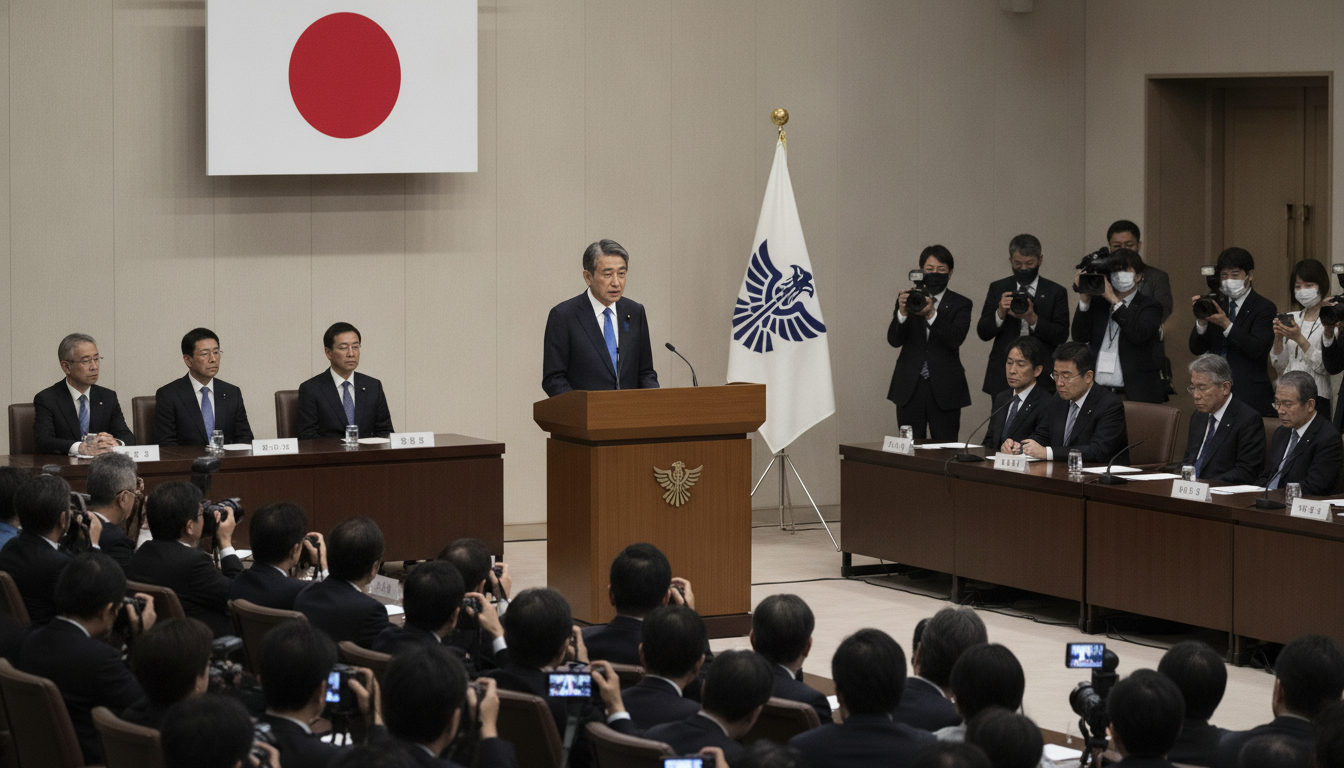
Japan Establishes National Intelligence Bureau to Tackle Corporate Espionage
Japan establishes the National Intelligence Bureau on July 31, 2026 to centralize agency intelligence and strengthen defenses against corporate espionage.
TOKYO — The government formally launched the National Intelligence Bureau (NIB) on July 31, 2026, creating a centralized body to coordinate intelligence gathering across ministries and state agencies. The move is aimed at tightening protections for companies and critical infrastructure amid rising concerns about industrial espionage and foreign interference. The bureau will report to the National Intelligence Council, chaired by Prime Minister Sanae Takaichi, according to government statements and official briefings.
New bureau comes into force
The NIB was established by executive order following months of internal deliberations and legislative preparations within the cabinet. Officials said the new agency will absorb existing inter-agency information flows and act as a central node for analysis and dissemination. Government sources described the change as part of a broader effort to modernize Japan’s national security apparatus and close gaps in cross-ministerial coordination.
The creation of the bureau follows a series of high-profile leaks and commercially sensitive data breaches cited by policymakers as evidence of systemic vulnerability. Authorities argued that fragmented intelligence streams had impeded timely responses to espionage and sabotage threats. Centralization is intended to speed decision-making and improve situational awareness for both public and private stakeholders.
Mandate and organisational design
The National Intelligence Bureau’s stated mandate covers collection, analysis and the secure sharing of intelligence related to economic security, technology transfer and critical infrastructure protection. It will also build specialized teams to assess threats to intellectual property and commercial technologies deemed strategically important. The bureau is expected to coordinate with law enforcement, trade regulators and industry bodies to translate intelligence into preventive measures.
Structurally, the NIB will be organized into analytic divisions and a liaison wing tasked with embedding officers with key ministries and selected private-sector partners. The bureau’s staffing plan includes career intelligence professionals, analysts with technical expertise, and secondments from other agencies to ensure interoperability. Budgetary allocations and personnel numbers were not disclosed in full, with officials saying details will be released as the rollout progresses.
Targeting corporate espionage and technology theft
Combating corporate espionage is a central pillar of the NIB’s mission, reflecting growing concern about the theft of proprietary technologies in sectors such as semiconductors, robotics and advanced materials. Government briefings indicated that the bureau will focus on identifying threat actors, mapping illicit information pathways and advising firms on cybersecurity measures. The initiative also aims to detect and disrupt illicit acquisition networks that exploit legal and commercial channels to obtain sensitive know-how.
Industry observers welcomed the attention to technology protection but urged the bureau to balance security measures with measures that preserve commercial openness and foreign investment. Private-sector leaders called for clear protocols on information sharing and assurances about confidentiality and legal safeguards. Analysts noted that the bureau’s effectiveness will hinge on building trust with corporations that may be wary of government involvement in commercial affairs.
Oversight and political accountability
Oversight arrangements place the NIB under the National Intelligence Council, which is chaired by Prime Minister Sanae Takaichi and includes senior ministers and security officials. The council will set strategic priorities and review assessments produced by the bureau, according to the government outline. Lawmakers have called for statutory oversight mechanisms and regular reporting to parliamentary committees to ensure transparency and respect for civil liberties.
Civil society groups and some opposition lawmakers have signaled concerns about potential overreach and the safeguarding of privacy rights. They are pressing for clear legal limits on domestic surveillance and judicial review of intelligence activities. Government representatives have said the bureau will operate within legal frameworks and under existing protections, and that any expansions of authority will follow parliamentary debate.
Domestic and international reactions
Domestic industry associations broadly expressed cautious support for the NIB, emphasizing the need for practical guidance and rapid threat warnings. Several major firms said they would engage with the bureau on information-sharing frameworks and joint resilience exercises. Financial and technology sectors, in particular, underscored the importance of protecting supply chains and research collaborations from espionage risks.
On the international front, allied governments and foreign partners are monitoring the bureau’s formation for opportunities to enhance intelligence cooperation. Observers expect Tokyo to seek deeper collaboration with partners on counterintelligence and cyber threat exchange, while maintaining strict controls over classified or commercially sensitive material. Diplomats noted the delicate balance between cooperation and the protection of domestic strategic industries.
Implementation timetable and next steps
Officials have outlined a phased implementation that will begin with consolidation of existing reporting lines and the activation of core analytic teams. Immediate priorities include setting technical standards for secure communication, establishing liaison protocols with business sectors, and recruiting analysts with specific expertise in technology and economic security. The government has signaled that additional regulatory and legislative measures may follow to strengthen legal authorities and oversight.
The success of the National Intelligence Bureau will be judged on its ability to deliver timely, actionable intelligence that prevents theft and minimizes disruption to industry and national infrastructure. In the coming months, the bureau’s first public assessments and joint exercises with industry partners will provide early indicators of its operational impact.
The government framed the move as a pragmatic response to evolving threats to Japan’s economic and technological security, and pledged ongoing engagement with lawmakers, businesses and civil society as the bureau assumes its duties.

