
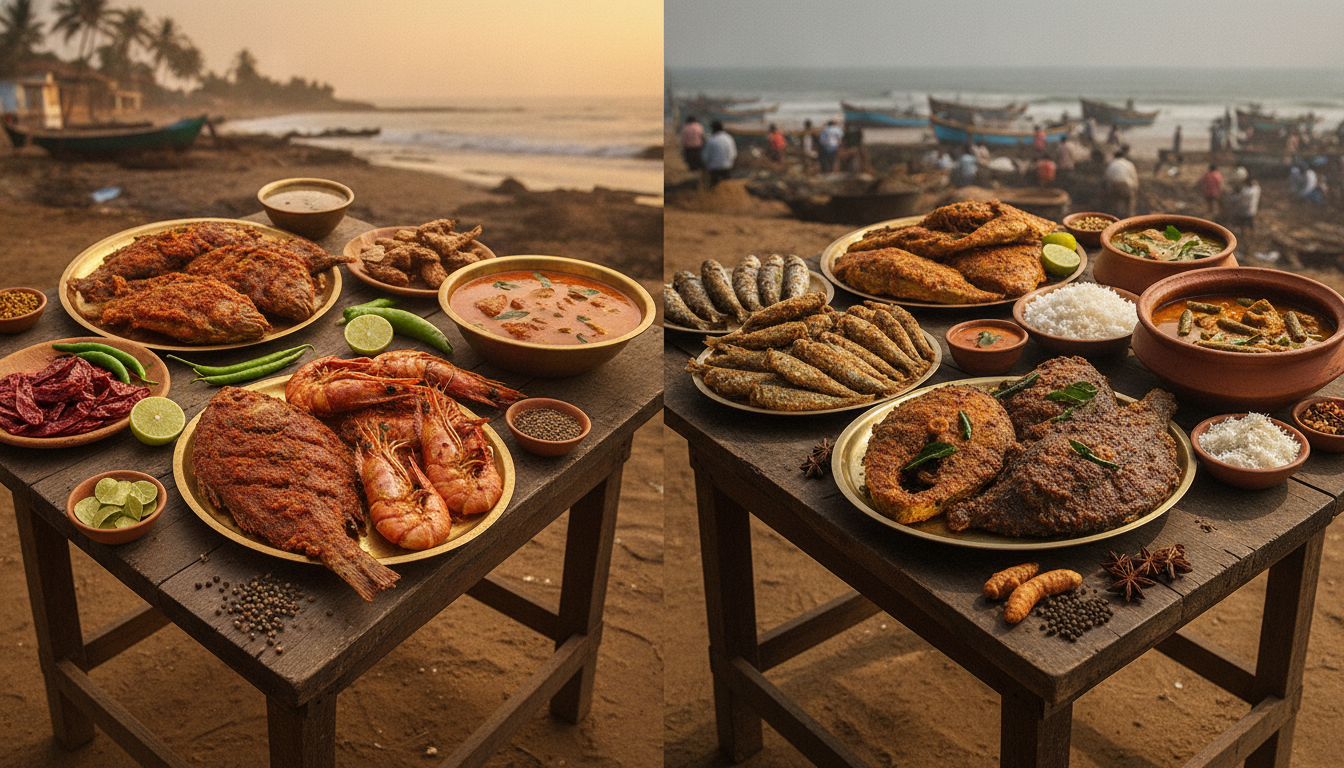
Indian Coastal Seafood: How Goa, Kerala and Bengal Defy the "Curry" Label
From Goa’s spicy fish fry to Kerala’s coconut-rich stews, Indian coastal seafood showcases distinct regional traditions rather than a single “curry” identity, revealing deep local histories and techniques.
Distinct regional identities along the coast
Across India’s shoreline, the term “curry” is often used as shorthand for a wide range of dishes, but it flattens the region’s culinary complexity. Indian coastal seafood traditions vary by technique, spice profile and staple ingredients, reflecting each area’s historical trade links, religions and ecosystems. What a diner calls “fish curry” in Kolkata can be a fundamentally different dish from a coastal meal in Kochi or Mangalore.
Goa’s blend of Konkani, Portuguese and coastal produce
Goan seafood highlights the influence of Konkani traditions and centuries of Portuguese contact, producing dishes that balance heat, tang and char. Vinegar, kokum and palm jaggery frequently appear alongside chili and tamarind, creating sharply contrasted flavors in preparations such as fish curries and fried fish. Coastal methods—grilling, shallow frying and braising in spiced gravies—make seafood the centerpiece of home and festival cooking.
Kerala’s coconut-driven stews and banana-leaf techniques
In Kerala, coconut is central to seafood—used as oil, milk and scraped flesh—yielding rich, aromatic stews like meen pollichathu and fish moilee. Traditional techniques include wrapping and roasting in banana leaves or slow-cooking in clay pots, which add layered fragrance and preserve moisture. The state’s abundant backwaters and estuaries also favor both saltwater and brackish varieties, shaping texture and seasoning choices in household recipes.
Bengal’s mustard-forward freshwater and riverine dishes
Bengali seafood traditions emphasize the river as much as the sea, where freshwater fish dominate; mustard oil and paste provide a pungent backbone in many preparations. Dishes often spotlight a single fish species, treated simply to emphasize freshness and texture rather than heavy spice mixes. The region’s preference for brief cooking times and bold mustard notes contrasts with the coconut and vinegar traditions seen farther south and west.
Tamil Nadu and Andhra Pradesh: spice layers and coastal variety
Along the Coromandel and Andhra coasts, seafood cooking mixes dry spice rubs, tangy tomato bases and tempering with curry leaves and mustard seeds. Coastal towns and fishing villages maintain local specialities—peppery dry fish, tangy prawn curries and layered masala broths—that reflect both Tamil and Telugu culinary sensibilities. Regional palates favor sharper heat and a variety of pickling and drying techniques to preserve catches between market runs.
Markets, sourcing and the seasonality of flavor
Local markets and small-scale fisheries remain crucial to these culinary traditions, with species on the plate shifting through monsoon and post-monsoon seasons. Seasonal availability determines not only what is cooked but how it is prepared—delicate fish may be steamed or poached, while robust, oily varieties are suited to frying or pickling. This seasonality underpins the regional diversity and reinforces the close relationship between coastal communities and their marine environment.
How globalization and tourism are reshaping seafood plates
Tourism and global supply chains have introduced new ingredients and presentation styles, but they have also encouraged chefs and home cooks to reassert and promote regional identities. Restaurants in coastal towns often reinterpret traditional recipes for visitors while preserving signature elements like mustard, coconut or vinegar-based sauces. At the same time, sustainable sourcing concerns and changing fish stocks are prompting cooks and policymakers to rethink menus and fishing practices.
Final paragraph without title
Recognizing the diversity within Indian coastal seafood means listening to markets, cooks and seasons rather than relying on generic labels. Each coastline—from Goa’s Konkani kitchens to Bengal’s riverine tables—offers a distinct culinary logic that deserves to be named and tasted on its own terms.

