
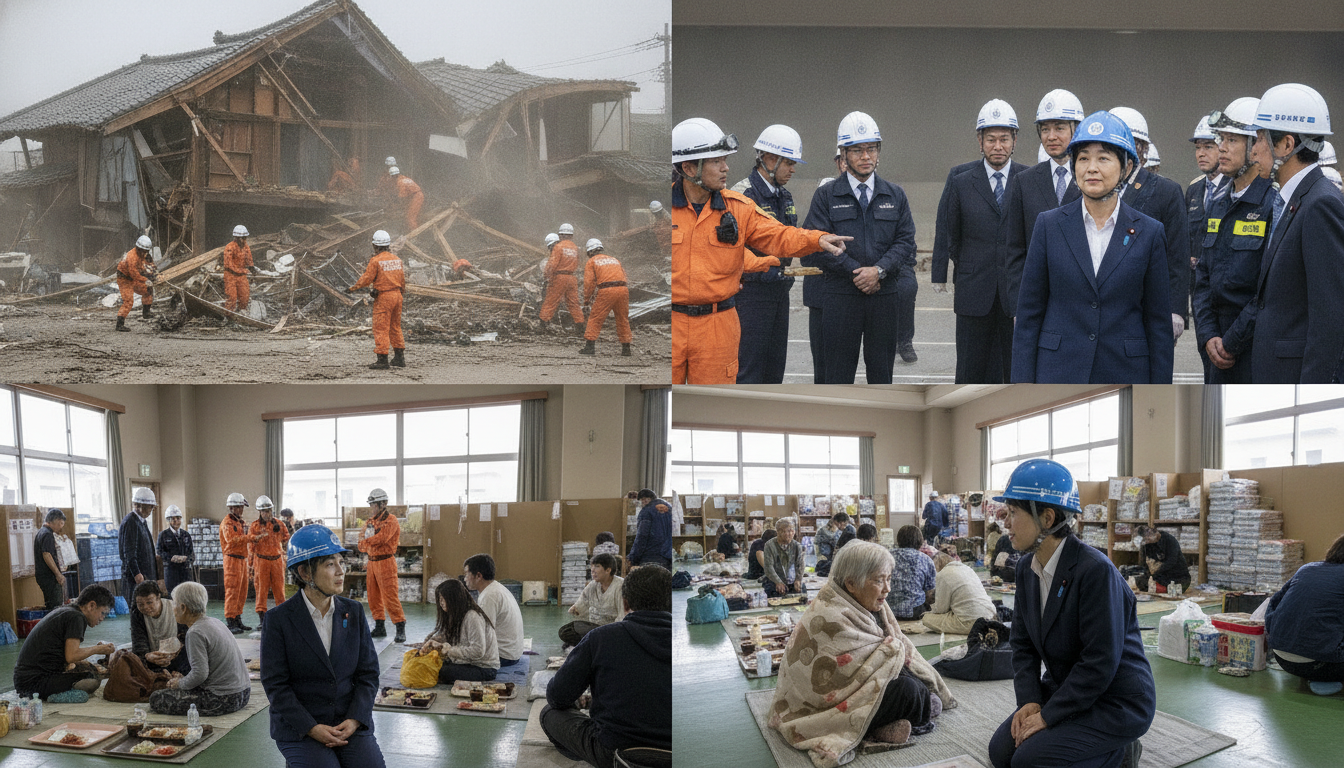
Takaichi to Visit Kumamoto on August 3 to Inspect Earthquake Shelters
Prime Minister Sanae Takaichi will visit Kumamoto on August 3, 2026, to inspect earthquake damage and shelter conditions following the July 28 quake; the Takaichi visit Kumamoto aims to assess needs amid extreme heat.
Prime Minister Sanae Takaichi will enter Kumamoto Prefecture on August 3, 2026, to inspect damage from the July 28 earthquake that registered a maximum seismic intensity of 7. The government announced the trip on August 2, saying this will be the first time the prime minister has visited the affected areas since the tremor struck. The visit will include stops at evacuation centers to evaluate living conditions and relief needs as authorities contend with searing summer temperatures.
Takaichi to Enter Affected Areas on August 3
The Cabinet Office announced the schedule on August 2, confirming that Ms. Takaichi will tour multiple sites within Kumamoto on August 3, 2026. Officials said she will meet with local authorities and evacuees to receive direct briefings on damage and emergency operations. Government representatives framed the trip as an opportunity for the prime minister to see shelter conditions firsthand rather than relying solely on reports.
The visit comes after days of rescue and relief work, during which central and local governments coordinated search, medical support and temporary accommodation. Officials emphasized that the timing reflects a transition from urgent rescue toward assessing medium-term needs for shelter, health and infrastructure recovery.
Government Aims to Hear Local Needs Directly
Chief Cabinet Secretary Minoru Kihara told reporters at the prime minister’s office that the government must conduct careful, on-site consultations to capture detailed support requirements. He said authorities believe initial rescue and extraction tasks have reached a point where they can shift attention to living conditions and welfare at evacuation sites. Kihara added that the prime minister’s direct observations will inform decisions on resource allocation and prioritization.
Government sources described the visit as part of a broader effort to ensure that central government support aligns with local priorities. Officials plan to use the findings from the site visits to refine relief packages, logistical deployments and health interventions for vulnerable evacuees.
Priority on Preventing Disaster-Related Deaths
Minoru Kihara emphasized that reducing disaster-related deaths is the government’s central priority as recovery operations continue. He said efforts will concentrate on improving evacuation center environments, accelerating water supply restoration and addressing health risks exacerbated by sustained heat. The Cabinet Office signaled that special measures may be taken to protect elderly and medically vulnerable evacuees.
Authorities are also considering expanded medical monitoring and heat-relief measures within and around shelters. The government indicated it will coordinate with municipal leaders to target resources where they are most needed to prevent secondary fatalities linked to the disaster and the summer heat.
Heat and Shelter Challenges in Kumamoto
Kumamoto has faced a sharp increase in heat-related risks since the quake, with forecasts on August 3 calling for daytime highs near 40°C in parts of the prefecture. Emergency services reported at least one heat-related fatality in the days after the earthquake when a 70-year-old woman became ill while evacuating in a vehicle and later died after being transported to hospital. That case has sharpened concerns about the combined impact of heat and displacement.
Evacuation centers are coping with crowded conditions and limited cooling infrastructure, presenting challenges for maintaining safe indoor temperatures. Humanitarian officials have warned that daytime work and relief distribution must account for the extreme heat to avoid putting volunteers and evacuees at greater risk.
Hotel Evacuations and Infrastructure Recovery Measures
Some municipalities in the affected area have begun using hotels as temporary evacuation sites to reduce heat exposure for high-risk residents. Local governments have distributed guidance to evacuees about hotel-based sheltering to expedite moves away from crowded gymnasiums and community centers. Officials said speed is being prioritized to reduce immediate health risks.
Restoration of water and power infrastructure remains a central logistical hurdle. The Cabinet Office has identified water service repairs as a critical task and pledged to mobilize engineering teams to accelerate repairs. The government is also exploring additional measures to support cooling and sanitation at shelters while infrastructure work continues.
Outreach to Residents Not Staying in Shelters
The government has instructed prefectural and municipal authorities to expand outreach to people who have not moved into formal evacuation centers, recognizing that many displaced residents are sheltering in privately owned vehicles or with relatives. Kihara said administrations must proactively extend administrative support to those outside designated shelters to ensure equitable access to supplies and medical care.
Officials expect the prime minister’s direct conversations with evacuees and local leaders to highlight gaps in outreach and trigger immediate corrective actions. Central and local agencies said they will continue coordinating to identify and assist isolated households that might otherwise be overlooked.
Relief teams will monitor developments after the prime minister’s visit and adjust plans based on assessments made on the ground. The government has pledged to keep rebuilding and humanitarian priorities focused on protecting lives, restoring essential services and ensuring evacuees receive necessary care as recovery proceeds.

