
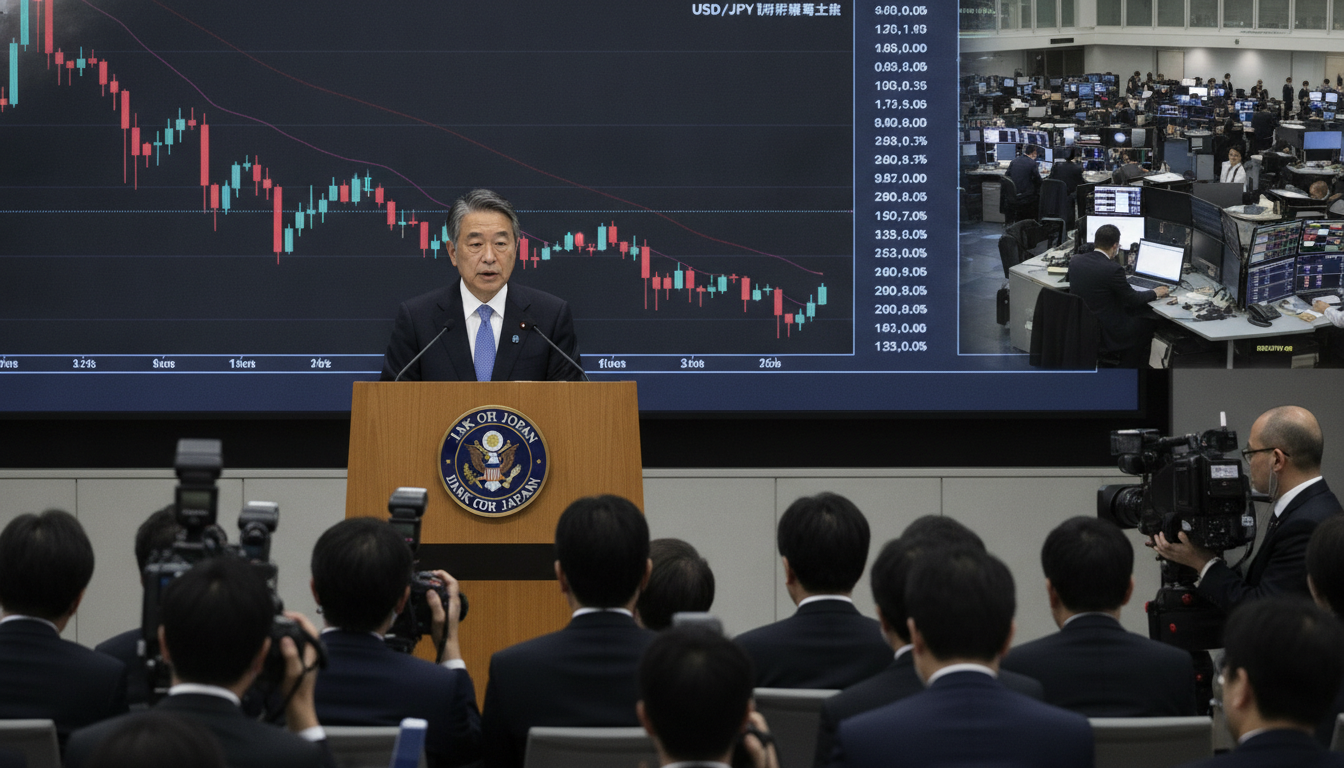
Yen intervention: Japan spent about $31.8 billion buying yen in joint action with U.S. on July 31
Japan’s yen intervention on July 31 involved roughly $31.8 billion to buy yen, with U.S. authorities selling euros to support the currency, Bank of Japan preliminary data shows.
Bank of Japan preliminary data on intervention outlays
The Bank of Japan’s preliminary money market figures show Japan spent approximately $31.8 billion purchasing yen on Friday, July 31, 2026, as part of a coordinated market operation.
The central bank data indicate the transaction was sizable and intended to staunch a sharp depreciation of the yen in intraday trade.
Officials provided the preliminary totals to market participants ahead of formal reconciliations, underscoring the authorities’ rapid response to currency stress.
U.S. authorities participated by trading euros for yen
Market reports and the BOJ figures indicate that U.S. authorities joined the operation by selling euros and buying yen rather than trading dollars directly.
That form of two-country intervention — where one authority supplies a third currency to facilitate purchases — aimed to increase yen liquidity and ease the pressure on spot exchange rates.
The U.S. involvement reflected Washington’s willingness to cooperate with Tokyo to address disorderly market moves without escalating bilateral tensions.
Intraday market moves and immediate effects
On the evening of July 31, around 6 p.m. local time in Tokyo, the yen strengthened into the 158 range against the dollar after trading near 160 earlier in the day.
The intervention and accompanying flows helped compress volatility and halted a rapid slide that had raised immediate concern among policymakers and traders.
Liquidity conditions in offshore and onshore yen markets improved as dealers rebalanced positions in response to the central bank’s actions.
Why authorities acted and the policy backdrop
Japanese authorities cited a need to address disorderly market conditions and to ensure the functioning of foreign exchange markets as the rationale for the intervention.
Persistent weakness in the yen had heightened concerns about imported inflation and financial stability, prompting decisive action when moves appeared disruptive.
The intervention came against a backdrop of divergent monetary policy stances globally, which had placed additional pressure on the yen’s exchange rate in recent months.
Market and analyst reactions to the joint operation
Analysts said the coordinated nature of the operation between Japan and the United States was significant because it signaled international backing for stabilizing the yen.
Market commentators noted the scale of the reported $31.8 billion outlay as large enough to alter short-term flows, while cautioning that long-term exchange-rate trends depend on fundamental policy differences.
Traders broadly welcomed the immediate reduction in volatility but warned that further volatile sessions could require additional interventions or a change in policy settings.
Potential implications for future exchange-rate strategy
The July 31 intervention may recalibrate how Tokyo and its partners respond to abrupt currency moves, particularly when rapid depreciation threatens orderly market functioning.
Authorities will likely monitor the yen’s behavior closely in the coming weeks to determine whether further direct market action is warranted or whether alternative policy tools should be deployed.
Any future steps will be watched for signs of closer coordination among major economies, and for indications of how Japan balances market support with its broader monetary policy objectives.
The Bank of Japan has released only preliminary money market data and further official statements or reconciled figures are expected to clarify the full operational details and timing of the transactions.

