
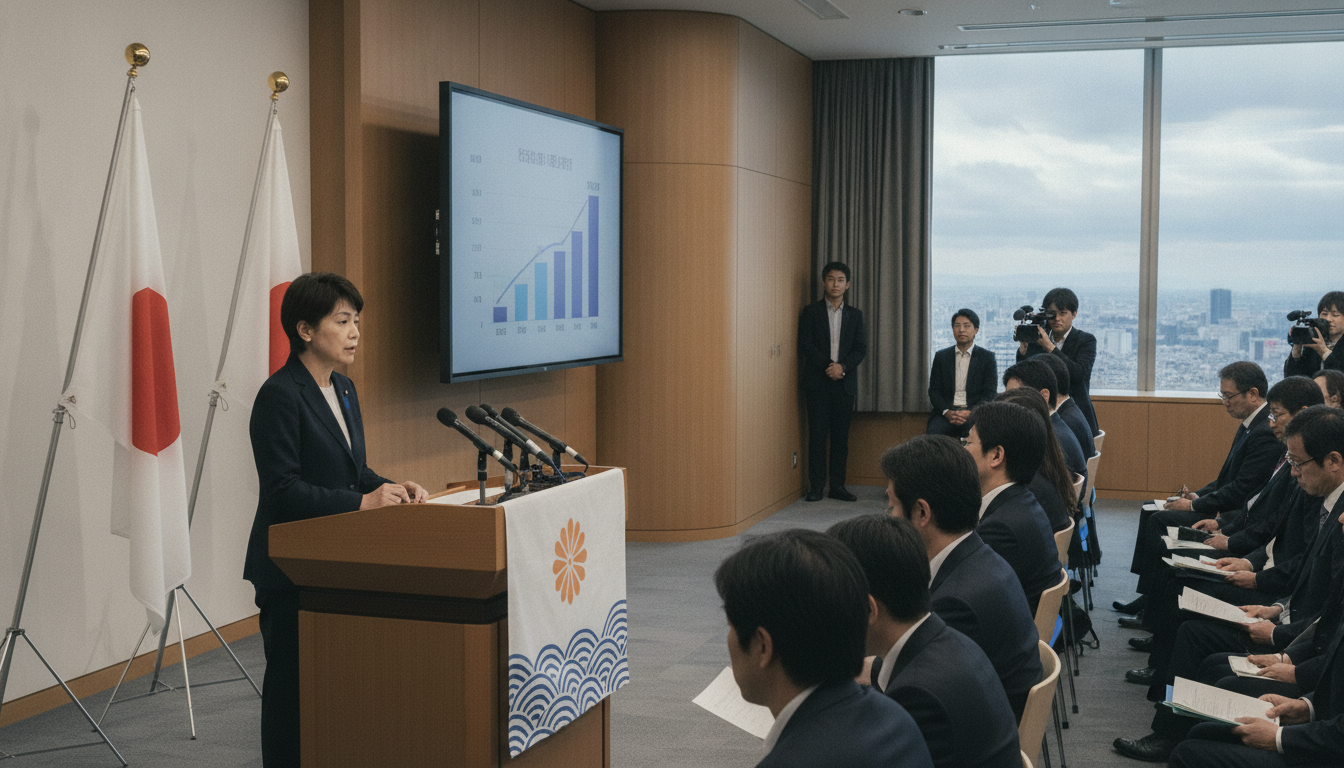
Kumamoto earthquake: Prime Minister Takaichi visits affected areas, pledges over ¥20 billion and ‘severe disaster’ designation
Prime Minister Sanae Takaichi visited quake-hit areas in Kumamoto on August 3, 2026, pledging more than ¥20 billion from contingency funds and indicating the government will designate the event as a “severe disaster.” The Kumamoto earthquake, which registered a maximum seismic intensity of 7 in Hikawa Town, prompted the prime minister to meet evacuees and local officials as recovery planning accelerated. She said the state would “do everything it can,” signaling a rapid central response in the days after the quake.
Visit to Hikawa evacuation center
Prime Minister Takaichi visited an evacuation center in Hikawa Town on August 3, 2026, where local authorities reported the highest seismic intensity of 7. At the shelter she spoke directly with residents, hearing accounts of damage, urgent needs and conditions inside the crowded facilities. Her public message to evacuees emphasized that the national government would provide full support and work to address immediate hardships.
During the visit Takaichi reiterated that firsthand observation was intended to inform government policy and relief measures. Officials accompanying the prime minister collected requests on water, shelter improvements and medical assistance to feed back into short-term relief planning.
Contingency funding to exceed ¥20 billion, Cabinet meeting set for Aug. 4
Takaichi told reporters that the government intends to allocate more than ¥20 billion (200億円) from the national contingency fund to support recovery operations. She said the disbursement would be put before the Cabinet for approval at a meeting scheduled on August 4, 2026. The prime minister urged local governments to begin restoration work without hesitation, saying budget measures would be secured promptly.
Senior officials in Tokyo described the contingency allocation as intended to cover urgent needs such as temporary housing, emergency repairs and logistics support. The planned funding is being framed as an immediate step to stabilize conditions while longer-term budgetary measures are prepared.
Move to designate the quake a ‘severe disaster’ and apply special emergency status
Takaichi indicated she intends to formally designate the event as a “gejin saigai,” or severe disaster, and that the designation will be a full, non-limited classification rather than one restricted to specific municipalities. Government sources said the “full” designation would unlock a broader range of national support measures and simplify access to relief funds. The prime minister’s remarks suggested an intent to expedite administrative procedures for affected areas.
In addition, the government is considering naming the event a “specified emergency disaster” that would allow temporary administrative relaxations, such as extensions for driver’s license renewals and other deadlines tied to residency or documentation. Officials said such measures are meant to reduce bureaucratic burdens on victims while urgent needs are addressed.
Meeting with Governor Kimura and local leaders in Kumamoto City
After visiting the evacuation center, Takaichi met Kumamoto Governor Takashi Kimura in Kumamoto City to exchange views on local needs and central government support. The meeting focused on an initial inventory of damage, priorities for emergency work and coordination mechanisms between prefectural and national agencies. Governor Kimura outlined immediate priorities including water supply restoration, debris clearance and shelter improvements.
Both sides agreed to maintain close communication as the Cabinet finalizes the contingency disbursement and as prefectural authorities deploy resources. Local leaders emphasized that fast, predictable funding would be crucial for municipalities that face staffing and logistical constraints as they begin reconstruction work.
Internal debate over timing of the prime minister’s visit and past precedents
Officials at the national level said there was debate within government about the timing of a prime ministerial visit so soon after the quake, given concerns about adding to logistical strain at disaster sites. Some in the administration argued that early visits can be of limited operational value and risk burdening local responders, while others emphasized the symbolic and information-gathering benefits of on-the-ground assessment. The decision to go ahead with the August 3 visit was made after weighing those factors.
Observers noted past precedents: former Prime Minister Shinzo Abe visited Kumamoto seven days after the 2016 mainshock, and then-Prime Minister Fumio Kishida visited the Noto Peninsula 13 days after the 2024 earthquake. Takaichi’s trip, six days after the July 28, 2026 quake, is among the earlier top-level responses in recent memory.
Immediate challenges on the ground and next steps for recovery
Local authorities and relief organizations reported that heat, disrupted water supply and damaged infrastructure are complicating evacuation center conditions and recovery work. Municipalities have called for rapid provision of generators, potable water and tarpaulins to protect damaged homes from rain and heat. Logistics for debris removal and temporary housing placement were described as urgent priorities for the coming week.
The government’s next procedural steps include the planned Cabinet approval of contingency spending on August 4, formal issuance of the severe-disaster designation and activation of administrative flexibilities tied to a specified emergency disaster designation. Officials said follow-up visits and assessments will be scheduled as recovery moves from immediate relief into reconstruction planning.
The prime minister’s visit on August 3, 2026 signaled a quick central response to the Kumamoto earthquake, with concrete funding and legal designations now moving through government channels. Local officials and residents are preparing to shift from emergency survival to longer-term restoration, awaiting the funds and administrative measures pledged by the national government.

