
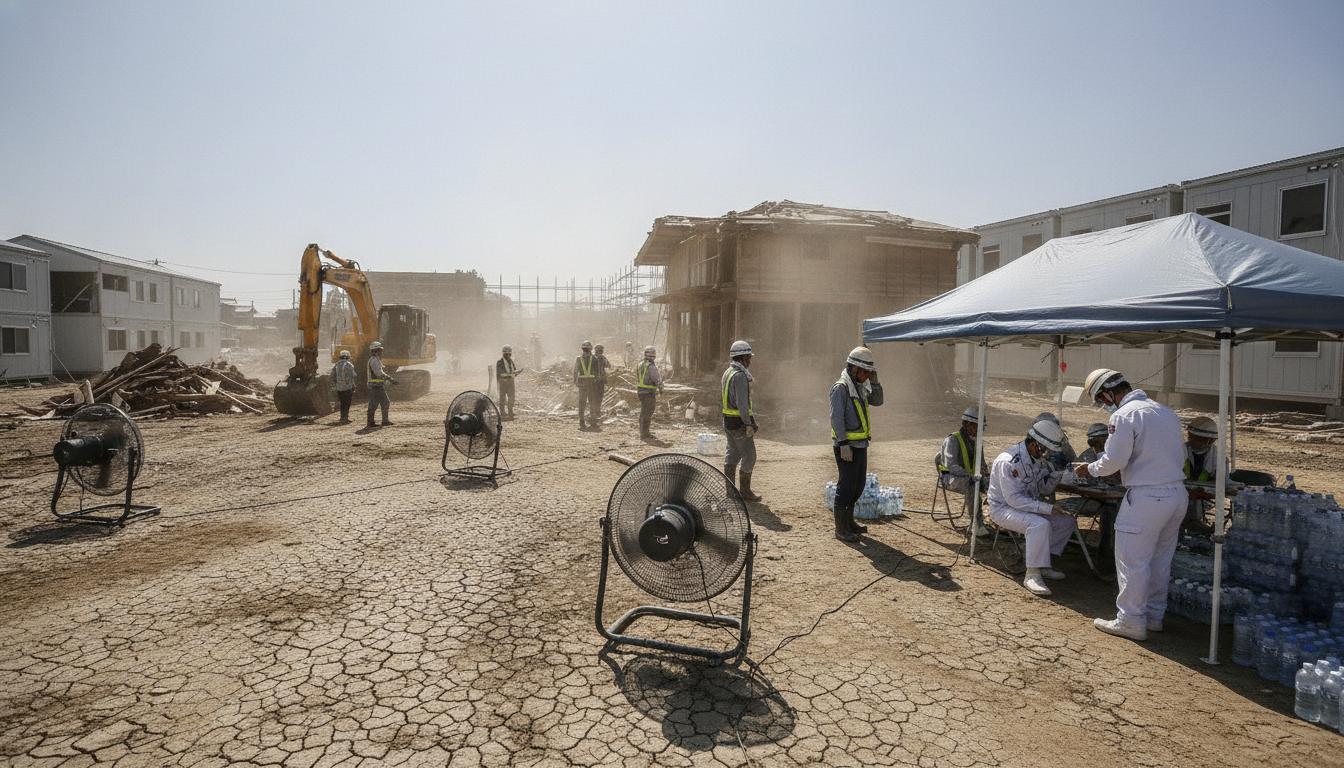
Kumamoto earthquake recovery speeds up as 40.3°C heatwave raises risk of heatstroke
Kumamoto earthquake recovery speeds up as authorities face a 40.3°C heatwave, expanding cooling shelters, restoring power and warning against heatstroke.
The Kumamoto earthquake, which struck the prefecture one week ago, has prompted an accelerated recovery push as an intense heatwave — with Kumamoto city reaching 40.3°C on Aug. 3 — raises the risk of heat-related illness among displaced residents. Local and national authorities are racing to expand cooling shelters, restore essential services and deliver water to make sure survivors and responders are protected. The government has said it hopes to avoid a repeat of the disaster-related fatalities seen after other recent temblors. Efforts are being prioritized for elderly evacuees and those in temporary accommodation.
Recovery operations intensify across Kumamoto
Local governments have mobilized additional personnel to clear debris, inspect damaged buildings and reopen key routes to isolated communities. Teams from the prefectural government, national disaster response units and municipal staff are coordinating to speed assessments so shelters can be consolidated safely. Officials say rapid clearances are also intended to allow utility crews and relief convoys to operate with fewer interruptions. Restoring access remains a central task as crews work under sweltering conditions.
Heatwave heightens risk for survivors and emergency workers
The recorded 40.3°C high on Aug. 3 amplified concerns about heatstroke among those forced to live in tents, cars or crowded evacuation centers. Medical and public-health officials warn that heat stress, dehydration and worsening chronic conditions can increase disaster-related mortality if cooling and hydration are not provided. Local hospitals have set up triage areas to manage heat-related cases separately from trauma patients to preserve capacity. Emergency workers operating outdoors have also been given rotating shifts and shaded rest areas to reduce occupational risk.
Shelters expand cooling, water and medical services
Evacuation centers have been reconfigured to prioritize cooling access and social distancing where possible, with some schools and community halls converted into temporary cooling hubs. Distribution of bottled water, electrolyte solutions and cooling towels has become a daily priority for relief teams. Mobile clinics and outreach teams are conducting welfare checks, focusing on older residents and those with limited mobility who are most vulnerable to heat-related complications. Authorities are urging evacuees to move to designated cooling centers if their temporary shelter lacks ventilation or air conditioning.
Power restoration and infrastructure repairs prioritized
Electricity crews are being given priority access to damaged substations and lines to restore power to hospitals, water-supply facilities and large shelters. Officials noted that outages complicate cooling efforts and can slow the operation of pumps and refrigeration for medical supplies. Road repairs and bridge inspections are also underway to reopen supply corridors for food, water and fuel. The prefectural government has signaled that restoring critical infrastructure is the fastest way to reduce pressure on temporary shelters and return residents to safer, more stable living conditions.
Government issues targeted warnings and support measures
Kumamoto prefectural officials and Tokyo-based ministries have issued joint advisories urging residents to monitor heat warnings, stay hydrated and check on neighbors, especially the elderly. Financial assistance and emergency allowances are being arranged to help displaced households secure short-term lodging with air conditioning where necessary. Authorities are also coordinating with local NGOs and private-sector partners to scale up delivery of cooling appliances and bottled water. The government emphasized that preventing secondary deaths from heat and other post-quake causes is as urgent as repairing physical damage.
Volunteers and relief organizations step up relief and outreach
Charitable groups and volunteer teams from across the region have been mobilized to supplement official relief, delivering meals, water and personal cooling supplies to affected neighborhoods. These organizations are prioritizing door-to-door visits to identify people who cannot reach evacuation centers or who require urgent medical attention. Coordination hubs are being set up to match volunteer capacity with local needs while ensuring volunteer safety in high temperatures. Private companies have also contributed temporary power units and ice-making equipment for large shelters.
As recovery efforts continue, officials say balancing rapid reconstruction with the immediate humanitarian needs created by the heatwave will determine whether the prefecture can avoid the spike in secondary fatalities seen after some past earthquakes. The coming days will be critical for consolidating cooler, safer shelter options and for completing power and water restorations that reduce the risk of heatstroke. Communities and authorities alike are focused on preventing further loss of life while returning daily routines to the region.

