
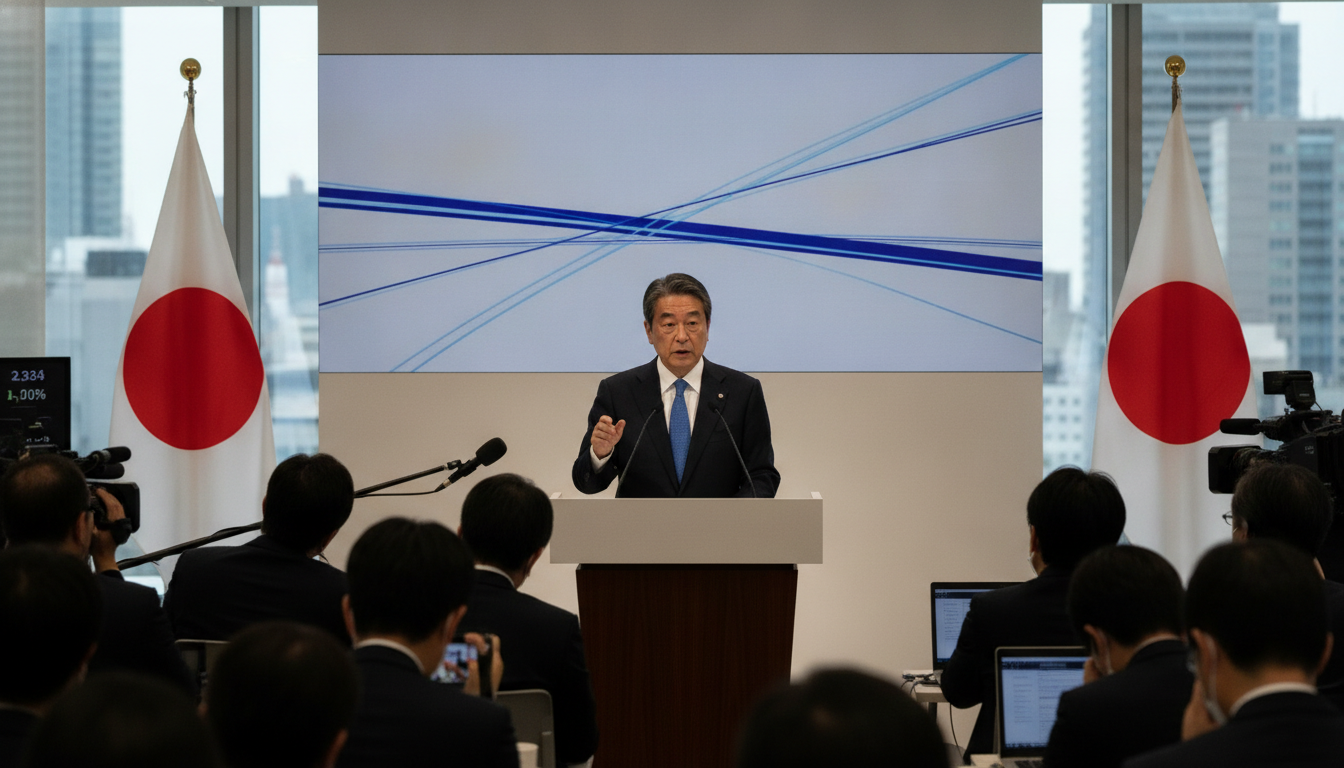
Toyota raises net profit forecast to ¥3.25 trillion as weak yen boosts results
Toyota raises net profit forecast to ¥3.25 trillion for fiscal 2027, aided by yen depreciation that adds roughly $3 billion to operating profit projections.
Toyota raised its full-year net profit forecast for the fiscal year ending March 31, 2027 to 3.25 trillion yen on August 4, 2026, citing a weaker yen and a revised exchange-rate assumption that materially improved its outlook. The move, which the company said boosts projected operating profit by roughly $3 billion, underscores the outsized role currency movements play in automakers’ results. Toyota’s revised net profit forecast equates to about $20.6 billion, reflecting both foreign-exchange gains and ongoing operational performance across markets.
Details of the revised profit forecast
Toyota’s updated guidance sets net profit for fiscal 2027 at 3.25 trillion yen, a rise from its earlier estimate announced months earlier. Company executives attributed the upward revision primarily to exchange-rate assumptions that increase the yen value of overseas earnings. Toyota also highlighted steady vehicle demand in key markets and disciplined cost management as supporting factors behind the stronger estimate.
The automaker said the exchange-rate change added an estimated boost to operating profit, which management quantified at roughly $3 billion. Toyota’s comment signals how sensitive its profit margins are to currency swings given the global span of its sales, production and component sourcing. The company did not release a detailed breakdown of how much of the gain came from specific regions or product lines.
Exchange-rate assumptions and the yen’s role
Toyota’s adjustment follows a period of yen depreciation that has raised the value of dollar- and euro-denominated revenue when converted into yen. The company revised its exchange-rate assumptions when updating guidance, a common practice for multinational firms that report in a single currency. Toyota’s statement emphasized that the weaker yen amplified repatriated profits from overseas sales and manufacturing subsidiaries.
Management warned, however, that exchange-rate tailwinds are inherently volatile and can reverse, creating potential headwinds for periods when the yen strengthens. The company indicated it will continue to monitor currency markets and may adjust forecasts again if exchange-rate conditions shift materially before the fiscal year end.
Impact on operating profit and global operations
Beyond the headline net profit figure, Toyota’s operating profit projection also benefited from the revised assumptions, reflecting improved margins on overseas sales. Higher translated revenue can offset persistent cost pressures such as raw materials and logistics, helping preserve profitability without altering retail pricing. For Toyota, that translated cushion provides additional flexibility for investments and pricing strategy across regions.
Toyota’s global production network and expansive export business mean that even modest currency moves can translate into substantial yen-denominated swings in profit. The company has long managed this exposure through hedging and local sourcing, but the current environment has underscored the immediate impact of exchange-rate adjustments on quarterly and annual results.
Market and investor considerations
Analysts and investors typically view upward revisions to earnings guidance as positive for a company’s shares, especially when driven by sustainable operational improvements. In Toyota’s case, however, the boost is tied predominantly to an external factor—currency—rather than a singular operational breakthrough. That raises questions about the durability of the uplift if the yen stages a recovery or if global demand softens.
Investors will also watch Toyota’s capital allocation plans in light of the stronger forecast, including potential impacts on dividends, share buybacks and investment in electrification and autonomous technologies. Management’s next earnings commentary and any updates to mid-term plans will be closely examined for signals about how the company intends to deploy the improved profitability.
Outlook for production, electrification and cost discipline
Toyota said it remains focused on balancing near-term profitability with long-term investments in electrification, hybrid platforms and software capabilities. The automaker has repeatedly emphasized gradual, profitability-conscious expansion of battery-electric vehicle (BEV) production while continuing to leverage hybrids and other powertrains where demand and infrastructure vary by market. Cost management measures and productivity gains at factories are expected to help sustain margins irrespective of currency trends.
The company also noted that macroeconomic uncertainty and semiconductor supply dynamics remain relevant operational considerations, although Toyota has reported steady improvements in parts availability compared with earlier in the post-pandemic period. Management stressed that flexibility across its model mix and manufacturing footprint will be central to navigating shifting demand patterns.
As Toyota moves through the current fiscal year, it will need to balance the benefits of a weaker yen with the risks of currency volatility and changing consumer behavior. The revised net profit forecast signals a stronger near-term position, but company officials and investors alike will be watching for evidence that the gains translate into lasting financial and strategic progress.

