
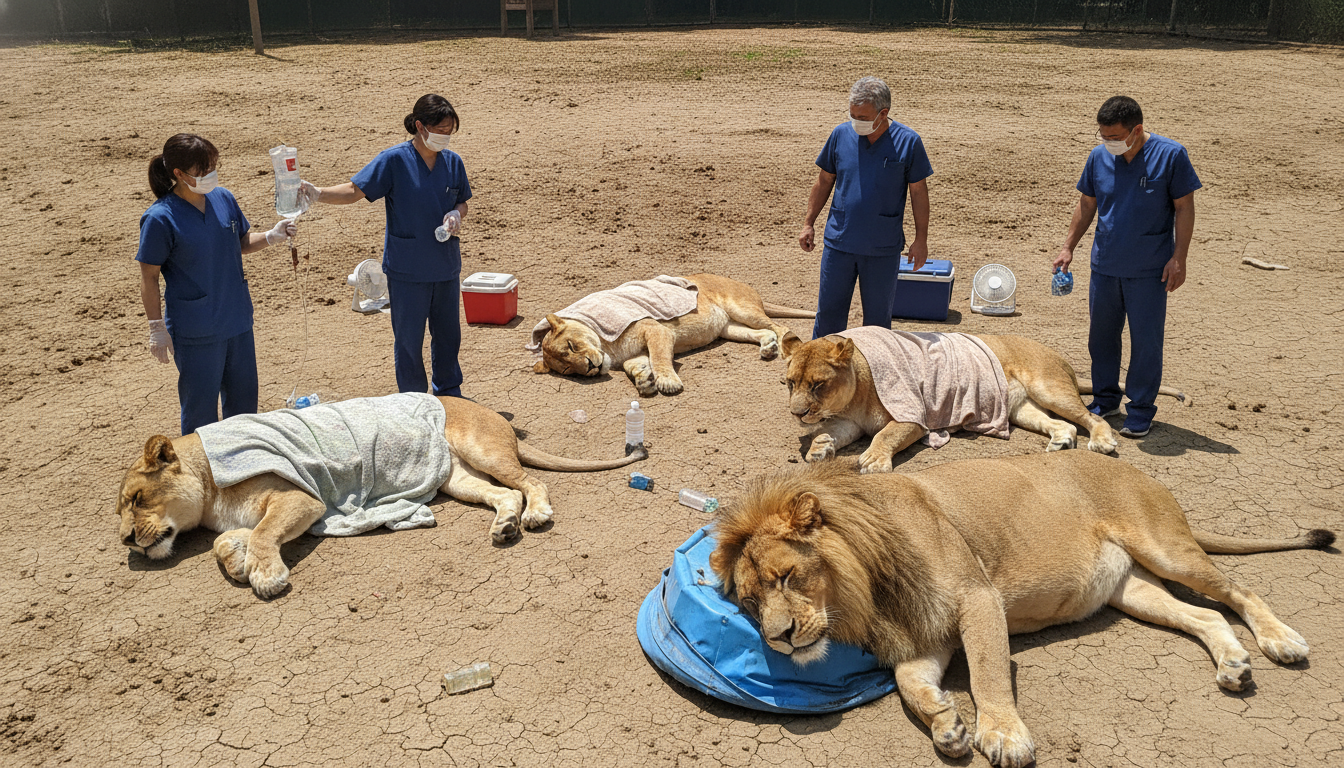
Tama Zoo lions die amid Tokyo heatwave; vets cite dehydration and organ failure
Three female lions at Tama Zoo in Hino, Tokyo, have died after a heat-related illness, officials said, with veterinarians identifying severe dehydration and multi-organ failure. The deaths and broader illness among the park’s lions have prompted scrutiny of animal care amid an intense, humid heat spell in the region.
Deaths tied to dehydration and multi-organ failure
Zoo veterinarians who performed post-mortem examinations concluded that the three lions showed signs of extreme systemic dehydration and failure of multiple organs. The animals were all female and ranged in age from three to 15 years, the park reported.
Officials said the findings point to heat as a key factor in the deaths, and laboratory tests and pathology results are being analyzed to rule out other causes. The park described the losses as sudden and alarming given the animals’ otherwise monitored health status.
Timeline of illness, treatment and scope among pride
Park staff first noticed reduced appetite and decreased activity in two animals on July 18, after which veterinary care was initiated immediately. Despite treatment efforts, three lions later died; the park did not disclose exact times of death but confirmed the cases occurred in quick succession.
Tama Zoo keeps 16 lions in total, and managers said that, including the three fatalities, ten lions have shown signs of illness or reduced condition. The remaining animals are under close observation and receiving supportive care as veterinarians assess risks and adjust husbandry practices.
Expert assessment: rapid temperature rise and high humidity compounded stress
Hideaki Karaki, emeritus professor of veterinary medicine at the University of Tokyo, said the situation reflects two overlapping problems. He warned that a sudden spike in temperature combined with unusually high humidity can impose unexpected physiological strain on species adapted to different climates.
Karaki explained that lions are native to savannah regions where heat is typically dry and animals rely on behavioral and physiological adaptations suited to that environment. He said the recent pattern of quick warming and moist air in Tokyo may have reduced the animals’ ability to dissipate heat effectively, increasing the risk of dehydration and organ dysfunction.
How savannah-adapted lions respond to humid heat
Lions evolved to cope with daytime heat in open, dry landscapes and typically regulate body temperature through panting, shade-seeking and decreased activity during the hottest hours. Those strategies work less efficiently when humidity is high because evaporative cooling via panting becomes less effective.
Veterinary experts caution that even animals accustomed to warm conditions can suffer when environmental variables change rapidly. High humidity can raise core body temperature and accelerate fluid loss, and combined with prolonged exposure these factors can overwhelm compensatory mechanisms and lead to systemic failure.
Zoo response and ongoing monitoring measures
The Tama Zoo said it began treatment for affected lions immediately after symptoms appeared and has intensified monitoring of all felids at the facility. Staff have increased veterinary rounds, adjusted feeding and cooling protocols, and are documenting environmental conditions to inform care decisions.
Zoo officials also indicated they are reviewing enclosures, shade availability and water access to reduce heat exposure and to ensure rapid intervention when animals show early signs of distress. The park said external specialists have been consulted to support diagnostic testing and to advise on emergency measures.
Officials and experts call for broader attention to animal welfare during extreme weather
The cluster of illnesses at Tama Zoo has sparked concern among animal welfare professionals and zookeepers about how climate variability is affecting captive wildlife. Experts say institutions need to anticipate how abrupt changes in temperature and humidity can interact to create hazardous conditions even for species from warm regions.
Professionals recommend that zoos incorporate dynamic environmental monitoring and emergency response plans that reflect not only temperature but also humidity and the pace of weather change. These steps, they say, are necessary to protect animals whose evolutionary adaptations may not match the rapidly changing local climate.
The park continues to work with veterinary pathologists and government animal health authorities as investigations proceed, and it has urged patience while further test results are compiled and a full report is prepared.

