
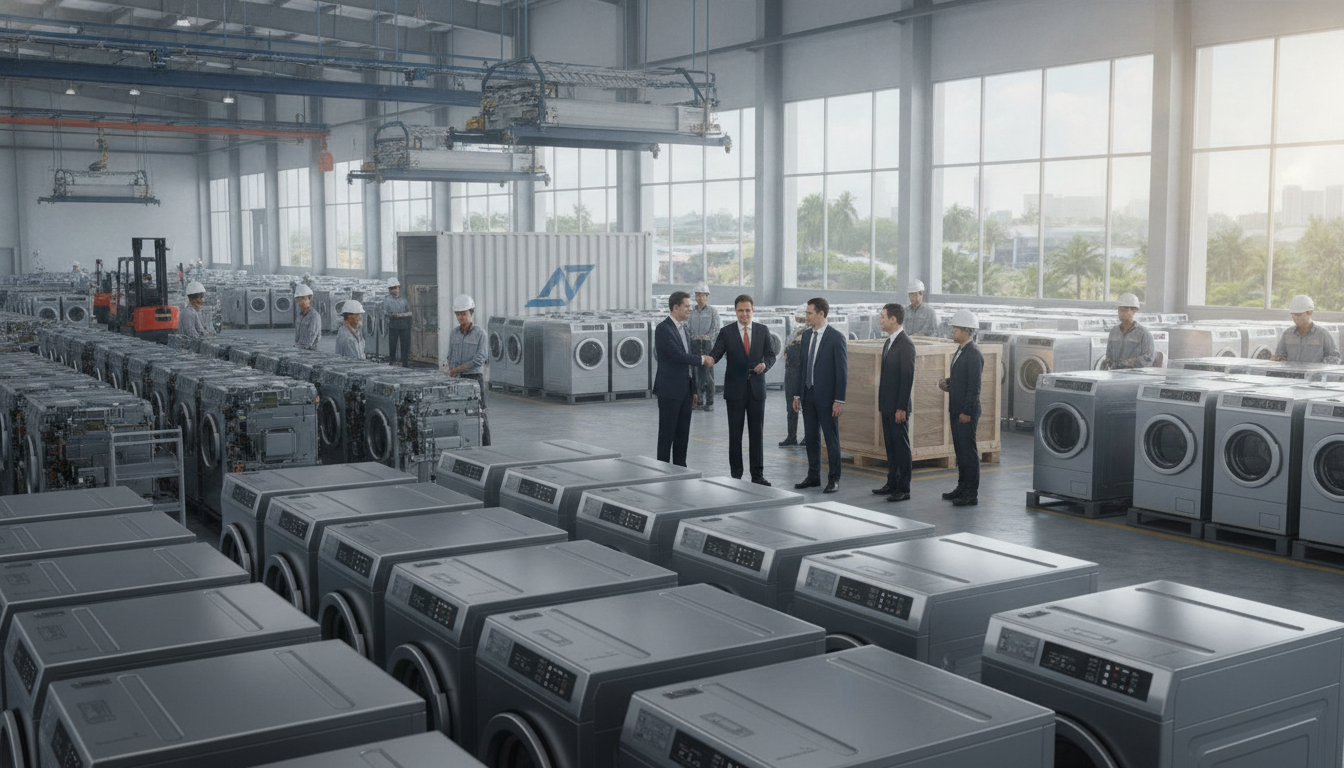
Commercial washing machines see surge in Southeast Asia as Samsung and Alliance expand services
Rising demand for commercial washing machines in Southeast Asia draws Samsung and U.S. firm Alliance Laundry Systems to invest in laundromat chains and equipment for the region’s growing middle class.
BANGKOK/SEOUL — Demand for commercial washing machines is rising across Southeast Asia as expanding middle classes seek time-saving services, drawing established manufacturers and equipment suppliers into the market. South Korea’s Samsung Electronics and U.S.-based Alliance Laundry Systems are among the companies moving to supply machines and services to laundromat chains and institutional customers in the region. The trend is visible in Thailand, where the WashXpress chain operates roughly 600 locations fitted with Speed Queen washers and dryers from Alliance.
Regional consumer shifts driving equipment demand
Population shifts and urban lifestyles are altering laundry habits in major Southeast Asian cities. Dual-income households, rising disposable incomes and denser apartment living have increased reliance on outsourced laundry services and coin‑operated laundromats. This has translated into stronger demand for commercial washing machines that can deliver faster throughput and higher durability than consumer units.
Operators report customers prioritize time savings and convenience over price, prompting chains to upgrade fleets with larger, faster machines. For suppliers, that creates opportunities in both equipment sales and follow-on services such as maintenance contracts, spare parts and digital payment integrations.
How Samsung and Alliance are positioning themselves
Manufacturers are responding by tailoring products and services to local needs. Samsung — known for its consumer appliances — has stepped up offerings for commercial and multi-family laundry applications, positioning machines with higher capacity and connectivity features. Alliance Laundry Systems, the U.S. company behind the Speed Queen brand, has focused on established laundromat networks and institutional buyers, supplying heavy-duty washers and dryers designed for continuous use.
Both firms are emphasizing reliability and service networks as selling points, arguing that uptime and quick repairs are critical for commercial laundries where machine availability directly affects revenues. They are also exploring payment and management platforms that allow operators to monitor machine usage and accept cashless payments, reflecting broader shifts toward digital commerce in the region.
WashXpress expansion underscores market potential
The WashXpress chain in Thailand illustrates the momentum. With around 600 sites nationwide fitted with Speed Queen washers and dryers, the chain has scaled quickly to serve urban and suburban neighborhoods. Operators say standardized, commercial-grade equipment helps maintain quality across outlets and supports higher customer throughput during peak hours.
Chains like WashXpress also highlight the importance of brand consistency and service reliability in growing consumer acceptance of laundromats. For middle-class customers seeking to reclaim time otherwise spent on domestic chores, the availability of robust commercial washing machines and professional laundry outlets is increasingly attractive.
Supply chain and after-sales service challenges
Scaling commercial laundry operations in Southeast Asia brings logistical and service challenges for manufacturers and operators. Commercial washing machines require specialized installation, parts inventories and trained technicians to maintain uptime. Suppliers must balance initial equipment costs with local after-sales support to build long-term relationships with operators.
Additionally, import duties, shipping costs and local regulations can affect pricing and deployment speed. Some suppliers are exploring regional assembly or local partnerships to reduce lead times and adapt machines to specific climate and electrical standards across markets such as Thailand, Vietnam, Indonesia and the Philippines.
Implications for small businesses and consumers
The influx of commercial washing machines and professional laundromat services has ripple effects for small businesses and consumers alike. For small laundry operators and entrepreneurs, newer machines can improve efficiency and margins but often require higher upfront investment or financing options. For consumers, expanded access to laundromats offers time savings and can support hygiene expectations in dense urban settings.
Industry observers note a potential shift in household labor patterns as more families choose professional laundry services for bulky items, workwear and high-frequency washing needs. That shift could sustain demand for commercial machines, as laundromat chains scale and diversify services — for example, adding pickup-and-delivery or subscription models.
Market outlook and competitive dynamics
Market watchers expect continued, steady growth in demand for commercial washing machines in Southeast Asia as urbanization and income growth persist. Competition is likely to intensify among global appliance makers and specialist suppliers, with market share contested through product durability, financing solutions and local service footprints. Partnerships with regional operators and investments in digital management tools will be key differentiators.
The competitive landscape may also encourage consolidation among local chains and the entry of new franchised models, increasing bulk equipment purchases and creating recurring service revenue streams for manufacturers and distributors.
As the sector develops, regulators and industry associations may step in to set performance and safety standards for commercial laundries, which would further shape product specifications and after-sales obligations.
The expansion of commercial washing machines reflects wider shifts in Southeast Asian consumption patterns, where time-saving services and dependable equipment are becoming essential components of urban life.

