
US-China tensions escalate as Beijing sanctions U.S. testing lab and probes foreign software in office equipment
China announced sanctions on a U.S. testing laboratory and opened probes into office equipment using foreign software, heightening US-China tensions ahead of an expected leaders’ meeting.
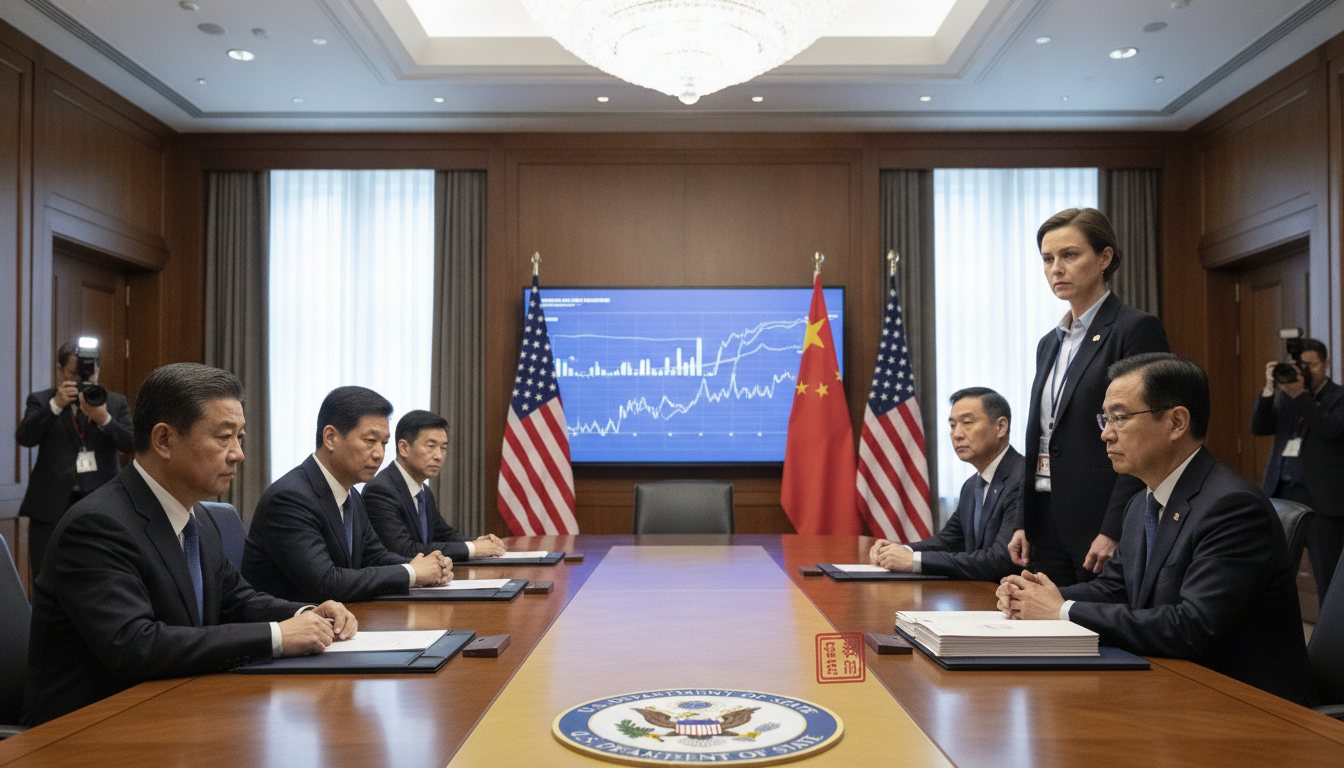
China announced a package of retaliatory measures on Wednesday that included sanctions on a U.S. testing laboratory and targeted inspections of office devices running foreign-made software. The moves mark a renewed escalation in US-China tensions and arrive as both sides prepare for an anticipated summit between their leaders next month. Beijing framed the actions as measures to protect national security and technological sovereignty, while the steps are likely to complicate already fraught diplomatic and commercial ties.
Beijing sanctions a U.S. testing laboratory
China’s announcement identified a U.S.-linked testing facility as a target of sanctions, a rare direct measure against a private or quasi-private technical organization. The sanctions restrict that lab’s ability to operate or partner with Chinese entities, effectively limiting its commercial activities and access to Chinese markets. Officials described the step as a response to what they portrayed as unfair U.S. restrictions and scrutiny of Chinese technology firms.
The move signals an intensification of tactics Beijing is willing to use to exert pressure on foreign technical institutions it deems hostile. Analysts say sanctions against testing and certification bodies can have outsized ripple effects because such organizations play key roles in supply chains and product approvals. Companies that rely on third-party testing in global trade may face new compliance hurdles and delays.
Probe into office equipment with foreign software
In parallel, Chinese authorities announced inspections of office equipment that incorporate foreign-developed software, citing potential security risks. The probes focus on devices and systems used in corporate and government offices, including multifunction printers, routers and other networked devices. Regulators said they will examine whether these products contain vulnerabilities or backdoors that could compromise sensitive information.
Technology firms that supply hardware and embedded software could be subject to stricter vetting or certification requirements as a result. Vendors operating in China may need to demonstrate deeper transparency about code provenance and supply-chain integrity. Market participants warn that such measures will increase compliance costs and could prompt some suppliers to reconfigure product lines for the Chinese market.
Diplomatic backdrop ahead of summit talks
The announcements come weeks before an expected meeting between the two countries’ top leaders, a summit that had been seen as an opportunity to stabilize relations and address trade and security frictions. Instead, the timing of Beijing’s actions risks raising tensions further and complicating the diplomatic agenda. Officials in both capitals have repeatedly used trade and technology measures as leverage in broader geopolitical negotiations.
Observers note that both sides often engage in calibrated signaling in the run-up to high-level talks, taking steps to strengthen domestic positions while testing counterpart reactions. While such maneuvers do not always derail meetings, they can narrow the space for compromise and lead to last-minute diplomatic adjustments. The coming weeks will be closely watched for responses from Washington and for any shift in the summit timetable or format.
Implications for supply chains and the tech sector
Industry experts say the sanctions and probes could exacerbate existing disruptions in global technology supply chains, particularly in sectors that depend on testing, certification and interoperable components. Restrictions on a prominent testing laboratory could force manufacturers to seek alternative certification routes or delay product launches. Meanwhile, heightened scrutiny of foreign software in office devices may encourage firms to localize software stacks or adopt dual-sourcing strategies.
Smaller vendors and contract manufacturers that operate on thin margins may be disproportionately affected by new compliance burdens. Investors are likely to reprice risk for companies with significant exposure to China’s regulatory environment, while multinational corporations may accelerate efforts to diversify production and testing capacities. Overall, the measures contribute to a decoupling dynamic already influencing strategic planning across the technology sector.
Potential responses from Washington and international partners
Washington has in recent years used export controls and restrictions to curb technology transfers it views as harmful to U.S. security, prompting reciprocal actions from Beijing in the past. The latest Chinese measures are expected to prompt careful responses from U.S. policymakers, who may weigh diplomatic protests against potential escalation. Allies and trading partners will also monitor developments for implications on multinational compliance and data security norms.
Public statements from either government could be limited in the immediate term as officials assess the impact and consider diplomatic channels. Private-sector groups and industry associations are likely to push for clarity and predictability to minimize disruption. International forums that address trade and technology standards may see renewed calls for common rules, though consensus among major powers remains elusive.
The coming days are set to be pivotal as both sides calculate how far to press regulatory and economic levers without closing off diplomatic solutions. The intersection of national security, commerce and technological competition is increasingly shaping policy choices in capitals around the world.
China’s latest actions underscore the fragility of the current relationship and highlight how quickly economic and technical measures can translate into diplomatic friction. As leaders prepare to meet, businesses and governments will be watching closely for signs that tensions can be managed or that the competition over technology and influence will intensify further.

