
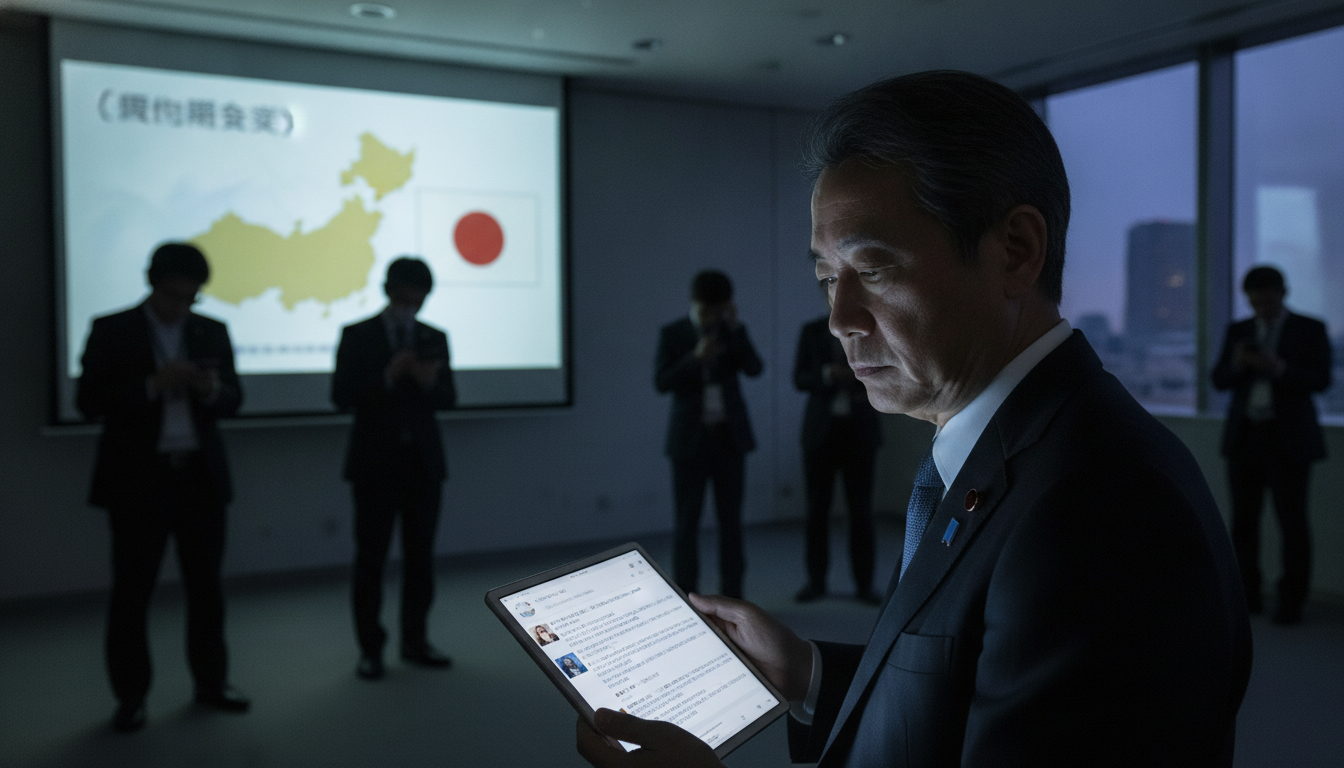
Iwaya social media backlash shifts votes in Oita’s 3rd district
Online criticism of Takeshi Iwaya spread rapidly on video platforms, reshaping voter behavior in Oita and testing politicians’ resilience.
The Iwaya social media backlash that emerged around the February 2026 general election has left an imprint on local voting patterns in Oita’s 3rd district, where longtime lawmaker Takeshi Iwaya secured his 11th term amid an unexpected surge of negative content. Reporters who walked the district found voters increasingly influenced by clips and posts on YouTube and TikTok rather than traditional outlets. The episode raises questions about how quickly online narratives can alter well-established political loyalties.
Surge in online criticism before and after the February election
Local campaign observers say criticism of Iwaya increased sharply in the weeks leading up to and following the February 2026 vote. Official campaign material and traditional news coverage were supplemented — and in some cases drowned out — by short videos and social posts that labeled the former foreign minister with damaging epithets.
Campaign staff and voters interviewed in the district described a pattern of repeated, emotionally charged content that amplified a few themes. The volume and velocity of posts made it difficult for standard rebuttals or clarifying statements to keep pace.
Voters in Beppu say YouTube and TikTok became primary sources
Several residents, including a 54-year-old hotel worker in Beppu, told reporters they lacked television or newspaper subscriptions and relied on video platforms for political news. These voters said they encountered clips that framed Iwaya as out of step with local sentiment and positioned him opposite the new prime minister’s agenda.
The reliance on social video meant short, repetitive labels stuck with viewers more than policy explanations or formal statements. For many, a handful of viral clips formed the bulk of political impressions for the election period.
“Pro-China” and “anti-Takaichi” labels spread rapidly
Attack lines included claims that Iwaya was sympathetic to China and that he opposed Prime Minister Sanae Takaichi’s political program, creating a “anti-Takaichi” framing that resonated with some voters. Words such as “pro-China” and “China’s agent” proliferated in comments and on-screen captions in shared videos.
The shorthand messaging proved potent: viewers accustomed to rapid, emotive content often accepted the labels without seeking broader context. That dynamic highlighted how simple narratives can overshadow more nuanced reporting in digital spaces.
Incumbent’s vote share dented by newcomer from Sanseitō
Despite his established profile in Oita’s 3rd district, Iwaya saw votes shift toward a newcomer from the Sanseitō party during the election. Several interviewees who had long recognized the incumbent by name said they chose the alternative after viewing critical content online.
Local campaign aides described the result as a warning sign for entrenched politicians who assume name recognition alone will secure support. The upset was not a wholesale defeat for Iwaya, but it illustrated how marginal changes in voter behavior can matter in tightly contested locales.
Campaign tactics and gaps in local information ecosystems
Field reporting found that traditional campaign tools — leaflets, street-level announcements and televised messaging — were less effective among segments of the electorate that primarily consumed short-form video. Where household media consumption shifted, so did the venues in which opinions were formed and contested.
Experts and local officials interviewed in the district pointed to a widening information gap: older voters still relied on established outlets, while younger and media-fragmented voters turned to algorithm-driven platforms. That fragmentation complicates any single party’s effort to present a unified message to all constituencies.
Implications for political resilience and party strategy
The Iwaya social media backlash episode speaks to a broader test of political resilience, particularly for lawmakers whose reputations were built in a pre-digital era. The capacity to withstand rapid reputational shocks now hinges on real-time response strategies and deeper engagement with platform dynamics.
Party strategists face a dual challenge: countering misleading narratives while also addressing the underlying reasons voters may be receptive to them. The episode underscored the need for organized digital literacy efforts, rapid rebuttal mechanisms and sustained local outreach to rebuild trust where it has frayed.
The experience in Oita’s 3rd district demonstrates how social media can reconfigure local politics in a short time, nudging even established incumbents into precarious territory and compelling parties to rethink how they communicate with an increasingly platform-driven electorate.

