
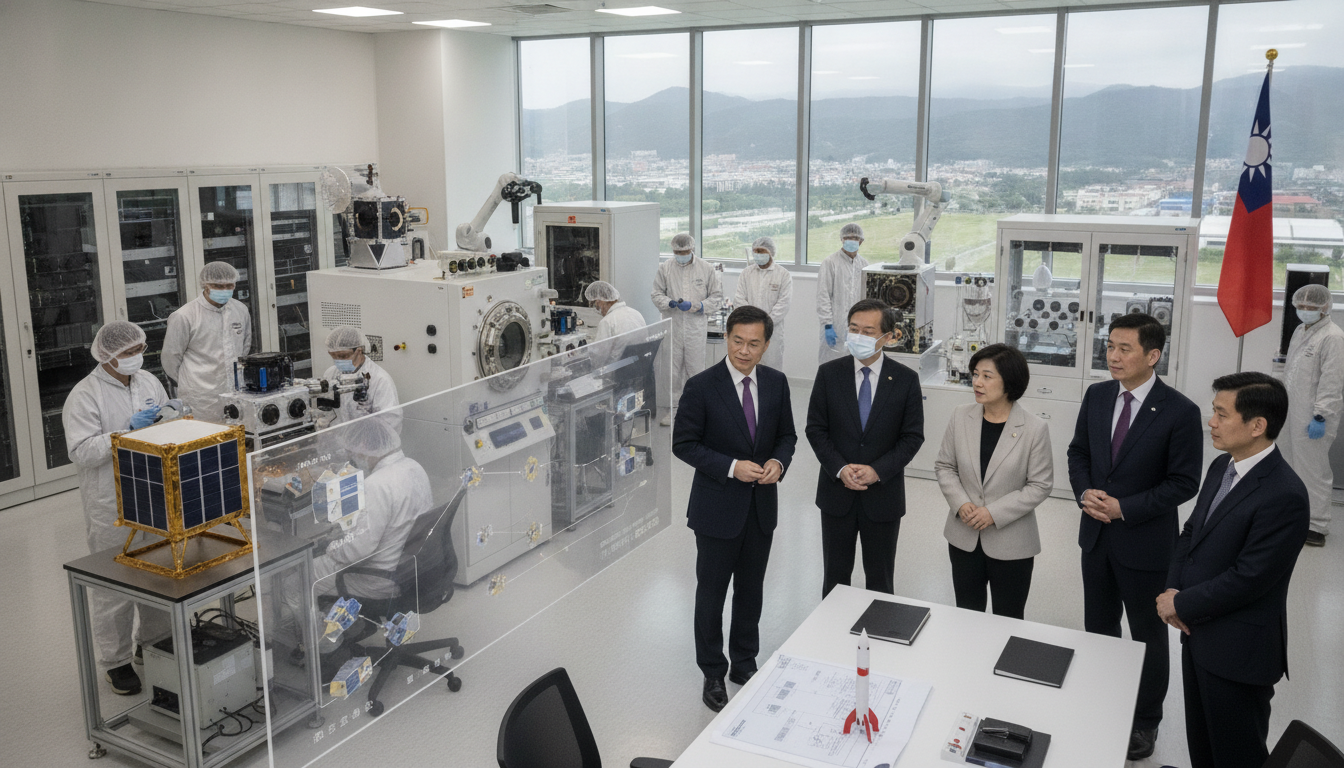
Taiwan tech suppliers pivot to space as satellites, space computers and optics draw new investment
Taiwan tech suppliers pivot to space as manufacturers shift from consumer electronics into satellites, precision optics and space computing, attracting fresh investment and academic partnerships.
Taiwanese technology suppliers are increasingly redirecting resources from crowded consumer electronics markets into the space sector, pursuing opportunities in small satellites, on-board computing and high-precision optics. The move reflects both commercial ambition and strategic necessity as firms seek higher-margin niches and longer product lifecycles. Industry executives and university engineers say the transition leverages Taiwan’s strengths in miniaturization and precision manufacturing while opening new export pathways.
Shift from Consumer Electronics to Space
Taiwan’s traditional dominance in components and contract manufacturing has been tested by sluggish demand for smartphones and PCs, prompting suppliers to explore adjacent markets. Space hardware, which requires specialized subsystems rather than mass-market scale, offers a pathway to diversify revenue and reduce dependence on volatile consumer cycles.
Executives report that product development timelines in the space sector are longer but more predictable, enabling companies to plan capacity and investment differently. That predictability has helped persuade boards and investors to approve retooling and new hires focused on aerospace-grade quality and testing.
Satellites, Space Computers and Precision Optics
Satellites — particularly small CubeSats and microsatellites — have emerged as a primary area of interest because they depend on many components Taiwan already makes. Power systems, radios, sensors and structural elements all require the kind of precision manufacturing and supply-chain integration Taiwanese firms provide.
Space-qualified computing and optics are also drawing capital. On-board space computers must be ruggedized for radiation and thermal extremes, while high-precision optical components are in demand for Earth observation and communications payloads. These segments promise higher margins and longer-term service contracts compared with fast-moving consumer goods.
University Partnerships and Start-up Examples
Academic institutions are playing a visible role in the shift by acting as incubation hubs and testing grounds for early-stage technologies. Engineers at institutions such as National Central University have collaborated with start-ups to assemble and test CubeSats, providing a bridge between research and commercial deployment.
Start-ups, often founded by former electronics engineers, are leveraging university labs to accelerate prototypes and access orbital demonstration opportunities. Industry officials say these partnerships shorten the time from concept to flight, making it feasible for smaller suppliers to win contracts from satellite integrators and international customers.
Supply-chain Strengths and Adaptation
Taiwan’s dense ecosystem of precision subcontractors, test houses and component suppliers gives it a natural advantage in supplying space programs. Companies are retrofitting existing clean-room processes and quality-management systems to meet aerospace standards rather than building entirely new factories.
Nevertheless, adapting to space-grade requirements entails significant investment in testing equipment, materials traceability and quality assurance. Suppliers report higher unit costs and longer certification cycles, but they also expect the premium pricing and recurring service revenues of space contracts to offset those initial expenditures.
Regulatory Environment and Export Controls
Moving into space hardware exposes Taiwanese suppliers to a different regulatory environment, including export controls and export licensing requirements in major markets. Firms say they are working with legal advisers and trade authorities to navigate complex rules while preserving access to global customers.
Some companies are restructuring contracts and supply agreements to reduce risk and ensure compliance, while others are targeting markets with clearer regulatory frameworks. Industry bodies are stepping in to provide guidance on classification and licensing to help smaller suppliers avoid costly missteps.
Market Prospects and Investor Interest
Investors have begun to respond, with venture capital and strategic players allocating more funds to space-technology ventures in Taiwan. Early-stage financing often supports prototype development and flight validation, while larger industrial investors are looking for scale opportunities within satellite supply chains.
Analysts caution that the market will remain competitive and that not all suppliers will succeed in the transition. However, for many Taiwanese firms the combination of existing manufacturing capabilities, university partnerships and rising global demand for small-satellite services creates a credible pathway to sustainable growth.
The shift by Taiwan tech suppliers pivot to space represents a pragmatic recalibration of the island’s technology sector, driven by market signals and reinforced by institutional support. As companies complete certification cycles and initial payloads move from lab benches to orbit, observers say Taiwan could become a reliable source of specialized components for the expanding global space economy.

