
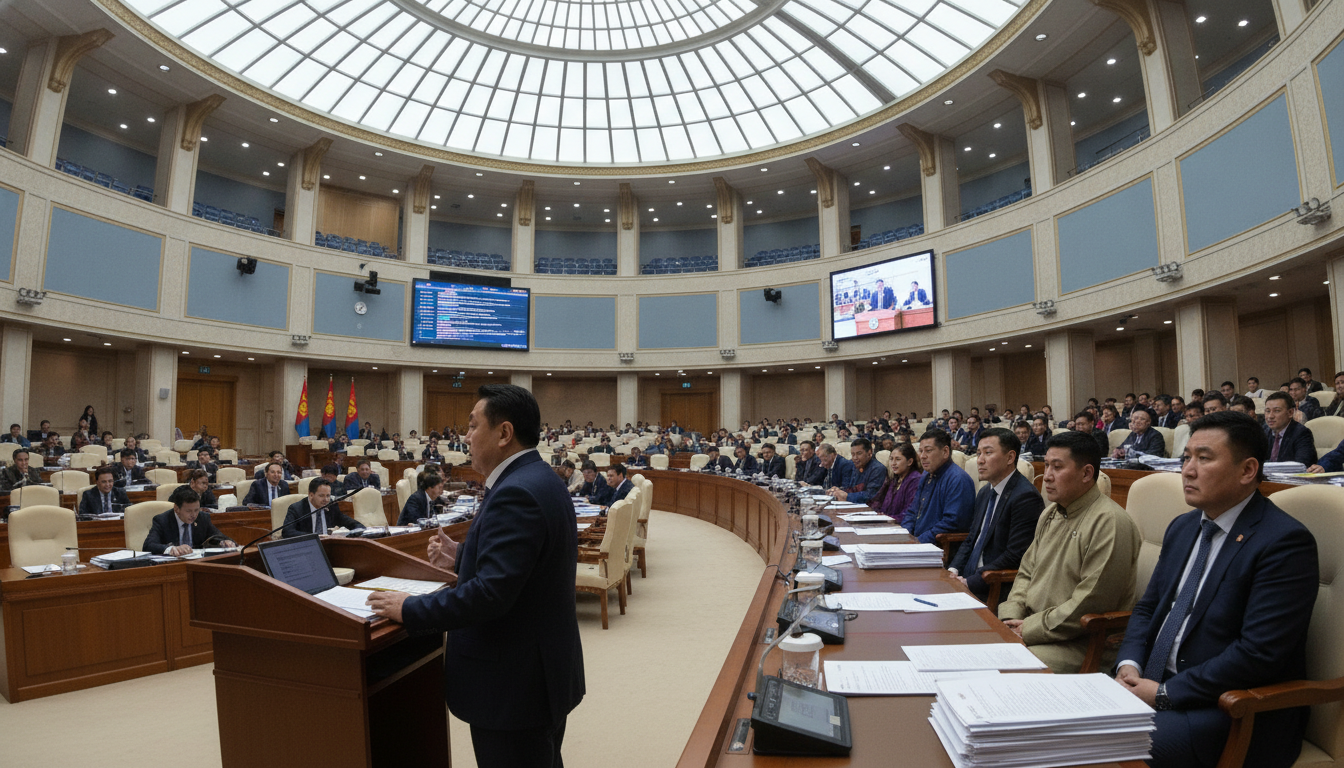
Mongolia political reforms spur inclusion, as lawmakers push to tighten party and electoral rules
Mongolia’s political reforms opened space for outsiders, but a new push seeks tighter party and electoral rules ahead of parliament debates on inclusion.
When Saranchuluun Otgon, one of Mongolia’s first two lawmakers with a disability, toured Ulaanbaatar with the mayor to test public accessibility last year, it underscored how rapidly the political landscape has shifted and why the question of who can stand for office is now central to national debate. (kas.de)
Accessibility test with Ulaanbaatar mayor
Otgon’s wheelchair tour through the capital, conducted with the city’s mayor, was part symbolic and part technical: a public demonstration of barriers that still block ordinary participation for people with disabilities. The inspection highlighted broken pavements, inaccessible bus stops and public buildings that remain difficult to navigate despite recent policy commitments. (mongolia.gogo.mn)
Her personal account — that “people in power seemed too far to reach” — has been cited by disability advocates as evidence that representation alone is not sufficient without concrete changes to infrastructure and services. That message has fed into wider discussions in the State Great Khural about the shape of electoral and party regulations. (mongolia.gogo.mn)
How reforms opened space for outsiders
A series of legal and party-level reforms over recent years made it easier for non-traditional candidates and civil-society figures to enter politics, in some cases through party lists designed to improve inclusivity. International analysts and local foundations note that measures intended to broaden participation helped elect activists, professionals and people with disabilities who previously had little access to political office. (kas.de)
Those changes were deliberate: parties and reformers argued that opening candidate lists and experimenting with nomination rules would refresh a system long dominated by a narrow political elite. Voters rewarded some newcomers with seats, signaling appetite for change across urban and provincial constituencies. (kas.de)
Lawmakers propose tighter party and electoral rules
The success of outsiders has prompted a countermovement in the legislature: lawmakers from established blocs are advancing proposals to tighten rules around party registration, candidate vetting and the mechanics of party lists. Proponents say the measures aim to strengthen accountability, curb opaque financing and prevent opportunistic candidacies that could fragment governance. (parliament.mn)
Opponents of tighter restrictions warn that new requirements could have the opposite effect, raising administrative barriers that squeeze out the same independents and civic leaders whom recent reforms brought into the system. Parliamentary debates, including initiatives under the “Open Parliament” reform agenda, are expected to test that balance in coming sessions. (parliament.mn)
Civil society warns of exclusion risks
Non-governmental organisations and rights groups have urged caution, saying legal tightening should not undercut representation for marginalised groups, including people with disabilities. Local assessments and international partners have called for safeguards—clear, proportionate criteria and robust oversight—to ensure any new rules do not become tools for exclusion. (opengovpartnership.org)
Several civil-society actors are pushing for complementary measures: improved accessibility standards, targeted capacity-building for new lawmakers from civil society, and transparent financing rules that level the playing field rather than erect new entry barriers. These stakeholders intend to press their case during public consultations and committee hearings. (opengovpartnership.org)
Practical barriers to participation and next steps
Beyond legal entry, practical obstacles remain large. Independent reporting and UN-linked assessments show that only a small share of public-transport vehicles in Ulaanbaatar meet accessibility standards and that many children with disabilities still lack access to schooling — problems that lawmakers from disability communities say undercut genuine political participation. (asianews.network)
Advocates argue that fixing those gaps would do more to broaden political life than any change to party statutes: accessible transport, accessible parliamentary procedures, and funded support for constituency work would allow newly elected outsiders to do their jobs effectively. Parliament’s forthcoming sessions will determine whether legislators prioritise such investment alongside any tightening of electoral rules. (asianews.network)
Mongolia now faces a classic democratic dilemma: how to institutionalise the gains of recent reforms without allowing the system to be gamed by moneyed or entrenched interests, while at the same time preventing new regulations from closing the door on the fresh voices that voters have begun to send to the legislature. The outcome of the debates in the coming months will shape whether the country’s opening continues to expand political participation or whether technical changes recalibrate who can cross the threshold into formal power.

