
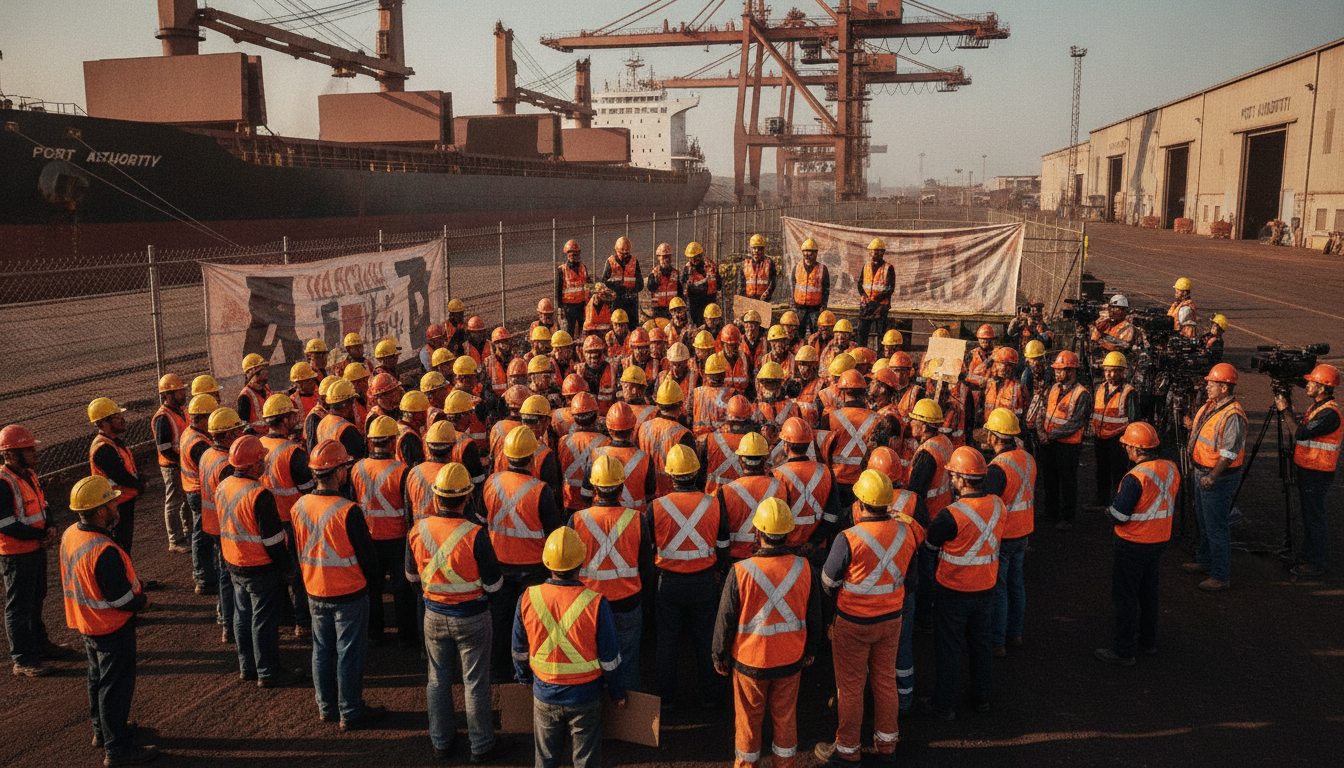
Iron ore strike set to hit world’s largest export hub as workers demand pay and career paths
Workers at the world’s largest iron ore export hub will stage a 48-hour strike this weekend seeking pay increases and clearer career progression, drawing concern from BHP.
Sydney — Workers at the world’s largest iron ore bulk export hub are set to begin a 48-hour strike this weekend in a dispute over wages and career advancement, union representatives said. The planned stoppage comes after months of negotiations that workers say have failed to address long shifts, extreme heat on site and extended periods away from family. Management at major mining firms, including BHP, has described the talks as “frustrating” as both sides brace for disruption to shipments and operations.
Scope of the planned stoppage
Union officials confirmed the action will affect loading and port activities at the export hub for two consecutive days, with the expectation that operations will be curtailed rather than fully halted. The strike is intended to pressure employers to present concrete offers on pay increases and establish a clearer path for skills-based promotion. Organizers emphasized the action is time-limited but strategic, aimed at securing negotiations rather than triggering a prolonged industrial conflict.
Workers’ grievances and working conditions
Workers told union leaders that current pay levels do not adequately compensate for physically demanding roster patterns and extreme environmental conditions. Long shifts and sweltering heat were highlighted as recurring grievances that compound fatigue and time away from family, undermining worker wellbeing. Representatives have also pressed for formal progression frameworks that allow staff to advance based on certification and on-site experience, rather than ad-hoc arrangements.
Company response and negotiation stance
BHP’s management said it had been “frustrated” with negotiations concerning wages and working conditions, indicating a stalemate on key demands. Company spokespeople have reiterated a willingness to continue talks but have warned that unilateral actions could complicate arrangements for contractors and clients. Management also signalled concern about precedent-setting offers that could ripple across the broader mining sector and supply chain.
Operational and export risks
Port operators and shipping companies are preparing contingency plans to limit delays and prioritise critical cargo, though analysts warn a sustained stoppage could slow exports and create bottlenecks. The export hub in question handles high volumes of iron ore that feed steelmaking facilities worldwide, so even a short interruption may force logistical re-scheduling and increased demurrage costs. Firms that rely on just-in-time deliveries could face supply squeezes if the strike affects multiple loading windows.
Broader market and political implications
Commodity market watchers say a 48-hour disruption may have limited immediate impact on global iron ore prices but could amplify concerns if the dispute escalates or spreads to other sites. Policymakers and regional authorities are likely to monitor the situation closely, given the export hub’s importance to employment and regional economic activity. Unions may also leverage public sympathy by highlighting safety and family separation issues, framing the dispute in social as well as economic terms.
Next steps and possible resolutions
Both sides have signalled a preference for returning to the table, with union leaders saying they are open to negotiated settlements that produce tangible improvements in pay scales and clear professional pathways. Companies have reiterated that any agreement must be sustainable across operations and not compromise safety or contractual obligations. Observers expect mediators or government labour agencies could be invited to facilitate talks if the strike places significant pressure on exports or regional services.
The strike, while short in duration, underscores persistent tensions in labour relations across resource-intensive operations and highlights worker calls for pay and career structures that reflect the physical and personal costs of the job.

