
South Korean cosmetics industry taps ODMs to accelerate product launches and exports
South Korean cosmetics industry uses contract manufacturers and ODMs to speed product launches, boosting exports and shaping global beauty trends worldwide.
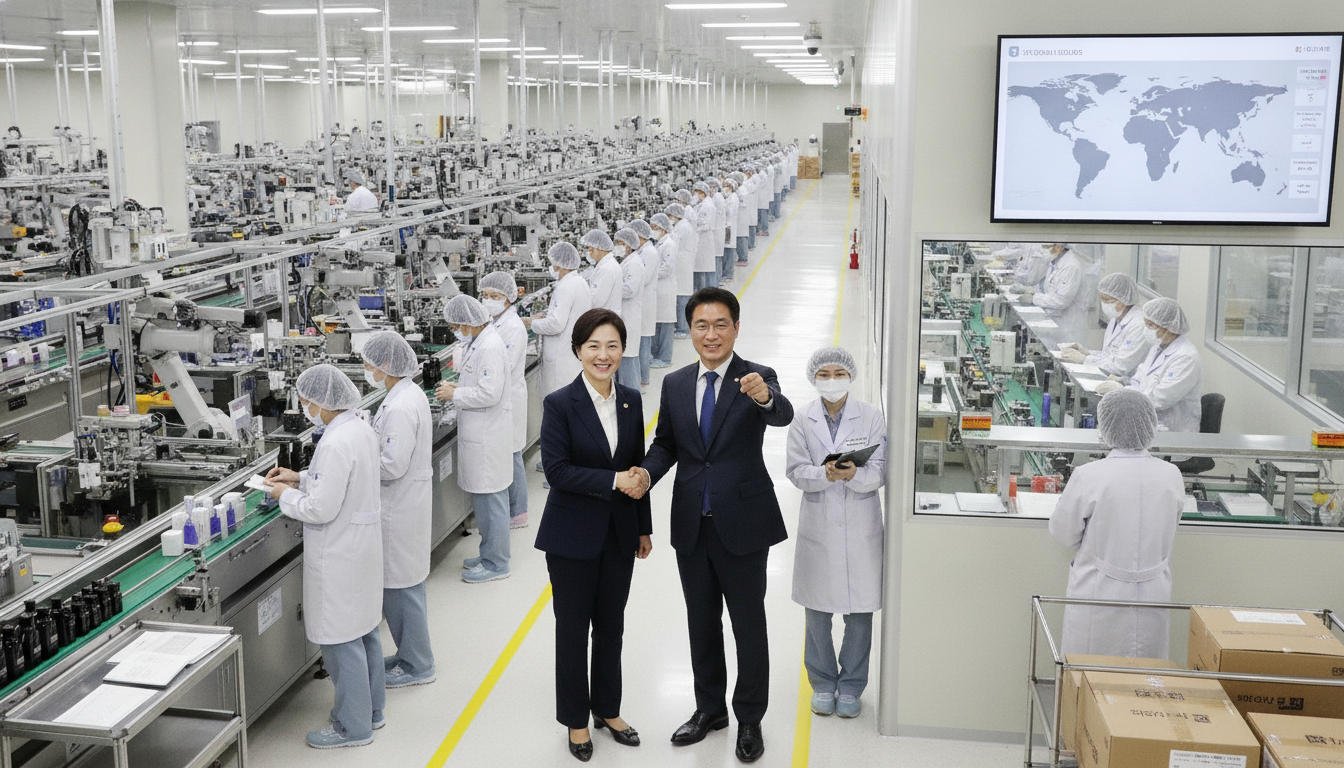
The South Korean cosmetics industry has increasingly leaned on original design manufacturers (ODMs) and contract makers to shorten product development cycles and expand exports. Companies that do not carry brands of their own focus on research, formulation and large-scale manufacturing, enabling brand owners to introduce trends and variants rapidly. This division of labor has been credited with helping South Korea become one of the world’s top exporters of beauty and personal-care products.
ODM Firms Accelerate Product Launches
ODM companies act as the technical engine for many Korean beauty brands, taking concepts from idea to shelf-ready products in dramatically less time than in-house teams. By pooling R&D resources and manufacturing capacity, these firms can test formulations, scale batches and iterate quickly to match fast-moving trends.
Kolmar and similar contract manufacturers concentrate on formulation science, regulatory compliance and production logistics rather than brand building. That focus allows smaller and larger brands alike to outsource complex steps and bring new variants to market with fewer capital investments.
Division of Labor Between Brands and Manufacturers
Brand owners increasingly concentrate on marketing, design and channel strategies while outsourcing technical development and production. This separated model lets cosmetics labels devote resources to packaging, influencer partnerships and geographic expansion without duplicating laboratory and production infrastructure.
The model also creates specialization: certain ODMs develop expertise in serums and ampoules, others in pigments or clean-beauty formulations. That specialization shortens development cycles because companies already possess validated processes, ingredient libraries and regulatory pathways.
R&D Investment and Speed-to-Market Strategies
High levels of R&D investment at contract manufacturers underpin rapid product rollouts and quality control. Firms maintain testing facilities and pilot lines that enable faster reformulation and scale-up when a brand requests a tweak or a new active ingredient.
The speed-to-market advantage is amplified by agile production scheduling and close coordination with packaging suppliers and logistics partners. This end-to-end readiness reduces the lead time from concept validation to mass production, helping brands capitalize on fleeting viral trends.
Trade Momentum and Export Growth
The collaborative model between brands and ODMs has contributed to strong export performance, positioning South Korea among the top global suppliers of beauty products. Streamlined manufacturing and agile product cycles help Korean brands meet demand across diverse international markets, from Southeast Asia to Europe and the Americas.
Exports are further supported by optimized supply chains and a reputation for innovation in skincare science. Buyers abroad often seek Korean formulations for their novel textures, active ingredients and consumer-driven packaging, driving sustained overseas orders.
Operational Risks and Regulatory Pressure
The fast-paced development environment creates operational risks, including quality control lapses and supply-chain bottlenecks when demand spikes unexpectedly. Rapid launches without sufficient testing can expose both manufacturers and brand owners to recalls or consumer complaints.
Regulatory scrutiny also grows as new ingredients and claims enter global markets. ODMs and brands must invest in safety testing, documentation and transparent labeling to meet evolving standards in export destinations, which can slow some product introductions despite the model’s inherent speed.
Brand Strategy and Global Competitiveness
For many Korean brands, the ODM-based approach has been a competitive differentiator that allows firms to experiment with limited runs and respond to social-media trends. Brands can pilot variations regionally and scale successful items quickly without extensive upfront manufacturing commitments.
This agility supports long-term competitiveness by lowering barriers to international entry and enabling continuous product refreshment. As global consumers embrace niche categories and shorter trend cycles, the ability to iterate fast becomes increasingly valuable.
Industry observers say the current structure—where specialized manufacturers shoulder R&D and production while brands focus on market-facing activities—creates a resilient ecosystem for innovation. The partnership model has helped South Korea convert laboratory advances into commercially successful products at a pace few other countries match.
Demand for Korean formulations shows no immediate sign of abating, but sustaining growth will require continued investment in safety, sustainability and supply-chain resilience. Manufacturers and brands alike face the task of balancing speed with rigorous controls to preserve the industry’s hard-earned global reputation.
Consumer appetite for novel textures, targeted actives and environmentally conscious packaging will shape the next phase of development. The interplay between nimble ODMs and brand-focused marketing teams will likely remain central to how South Korean beauty companies compete and expand on the world stage.

