
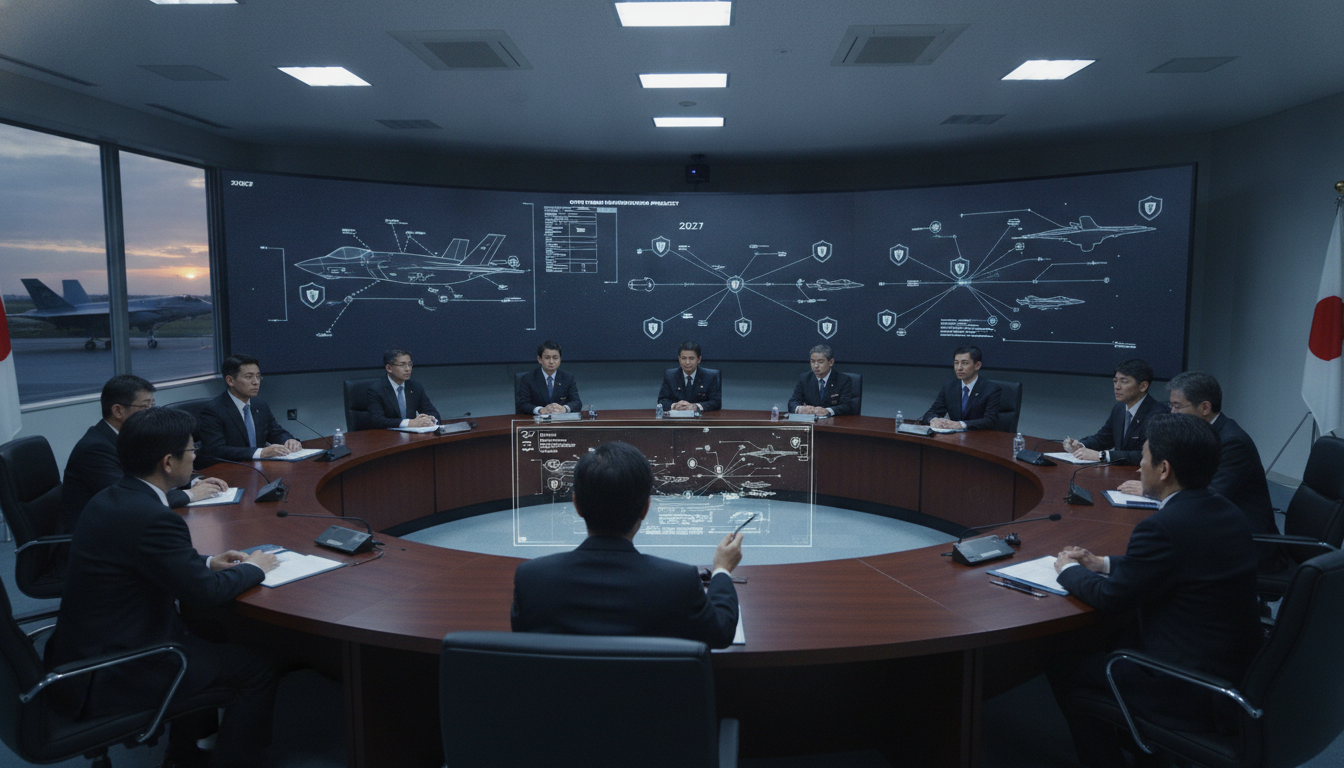
Japan to Fit Cybersecurity Software to Air Self-Defense Force Radars and Jets by 2027
Japan’s Defense Ministry plans to integrate cybersecurity software into Air Self-Defense Force radars, fighter jets, and related equipment as early as 2027 to counter increasingly sophisticated cyber threats.
Japan’s Ministry of Defense will begin a program to bolster Air Self-Defense Force cybersecurity by installing protective software across radar sites, aircraft systems, and ground equipment, Nikkei reported. The initiative is intended to harden critical air-defence sensors and platforms against intrusions and tampering ahead of a phased rollout starting in 2027.
Defense Ministry Plan and Timeline
According to the report, the Ministry intends to prioritize systems judged most at risk and begin installation work in 2027, with further stages to follow over subsequent fiscal years. Officials expect the effort to proceed in phases, combining rapid deployments for high-risk assets with longer validation cycles for complex platforms.
The timeline reflects a balance between urgency and safety, as the ministry must certify that new cybersecurity software does not degrade operational performance. Deployment schedules will likely be tied to budget approvals and testing milestones inside the ministry and the Self-Defense Forces.
Systems Targeted for Cyber Upgrades
The upgrades will cover ground-based radar installations, mission systems aboard fighter jets and associated communications and support equipment, according to the reporting. Radar towers in Okinawa and other strategic locations are singled out as early candidates for software hardening because of their role in early warning and airspace surveillance.
On aircraft, protections are expected to focus on avionics networks, data links and onboard sensors where malicious code or data manipulation could directly affect flight safety or mission effectiveness. Ground systems supporting maintenance, logistics and air-traffic coordination are also in scope because they form part of the operational ecosystem.
Rising Cyber Threats to Military Systems
The move comes amid a global trend of increasingly capable cyber operations directed at military and critical infrastructure targets. Defense analysts say adversaries have sharpened tools that probe supply chains, exploit legacy software flaws and attempt to seize control of sensor feeds or degrade command-and-control links.
Recent years have seen militaries worldwide reassess how to protect interconnected platforms, prompting investments in intrusion detection, endpoint protection and faster patch management. Japan’s decision aligns with a broader recognition that traditional physical defenses must be supplemented by persistent cyber resilience.
Technical and Operational Challenges
Retrofitting cybersecurity software into legacy radars and aging avionics presents technical hurdles, including integration with proprietary systems and ensuring electromagnetic and real-time performance are not compromised. Certification procedures for flightworthy software are lengthy, and any updates must pass rigorous safety and interoperability tests before being fielded on operational aircraft.
Operationally, the Self-Defense Forces will need to manage installation windows without disrupting readiness, which could require staggered maintenance rotations or temporary capability gaps. The ministry will also have to strengthen its incident response and monitoring capabilities to detect and remediate any successful intrusions after deployment.
Budget and Procurement Pathway
The ministry is expected to seek appropriations in upcoming fiscal budgets to fund software purchases, testing and system integration work. Procurement officials will face decisions over buying off-the-shelf cybersecurity suites, commissioning bespoke solutions from domestic contractors, or combining both approaches to meet national-security requirements.
Collaboration with Japan’s defence industry and technology firms is likely, with potential for partnerships aimed at certifying products to military standards. The process will include competitive bidding, technical evaluations and phased contracts that tie payments to successful trials and interoperability tests.
Implications for Regional Security
Upgrading Air Self-Defense Force cybersecurity strengthens Japan’s ability to maintain situational awareness and deter escalation in a region where airspace incursions and gray-zone confrontations have increased. Hardened sensors and more resilient communications reduce the risk that an adversary could blind or mislead commanders during a crisis.
The emphasis on radar sites in Okinawa and other forward positions underscores the link between cyber resilience and territorial defence posture. By reducing vulnerabilities in critical nodes, Tokyo aims to bolster both deterrence and the credibility of its air-defence response options.
Japan’s planned integration of cybersecurity software into Air Self-Defense Force radars, jets and associated equipment marks a deliberate effort to modernize defence posture for a digital era. With deployment slated to begin as early as 2027, the ministry will face technical, logistical and procurement challenges as it seeks to protect sensors and platforms that are central to national and regional security.

