
Benefit-linked tax credit (給付付き税額控除): Framework Agreed but Key Parameters Remain Undecided
Government presents outline for benefit-linked tax credit; lower eligibility tied to social insurance threshold, but who receives how much and phase-out points are still unresolved.
Opening summary of council decision
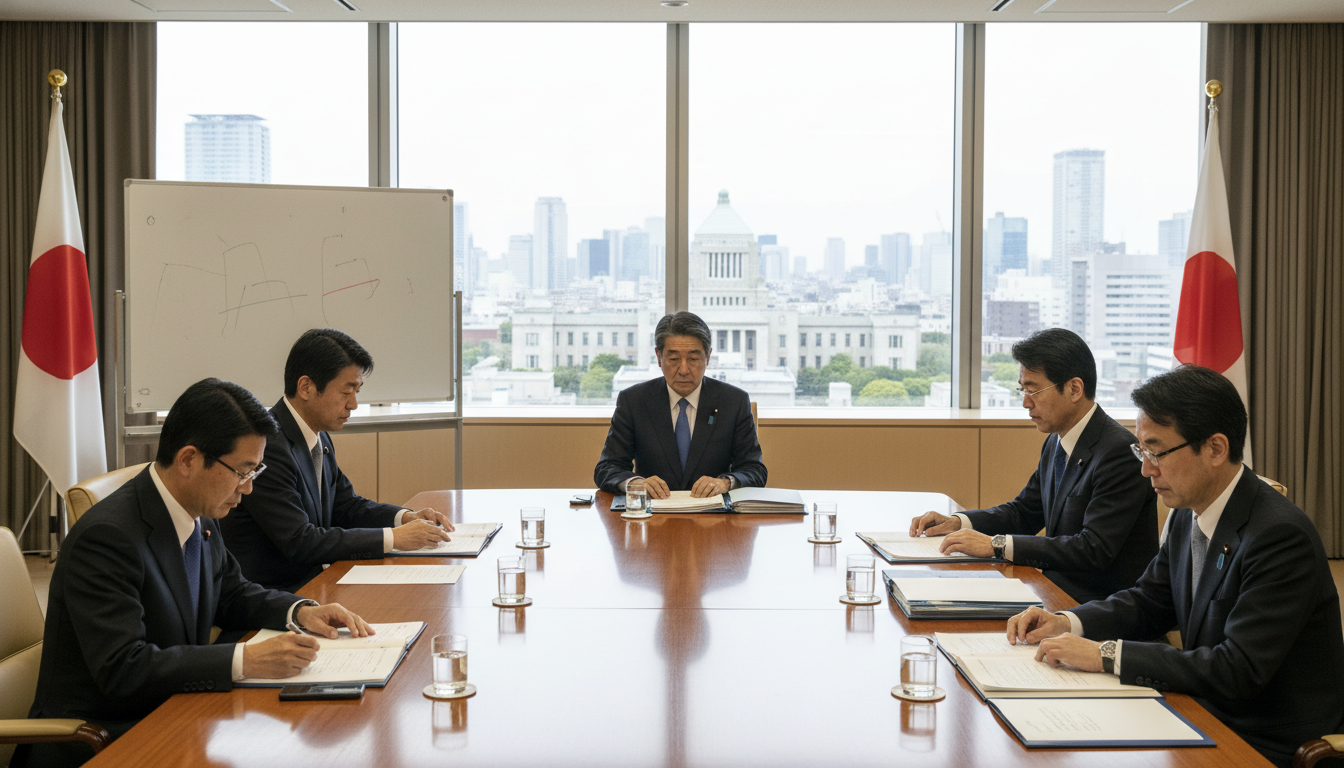
On May 27, 2026, the Social Security National Council’s working group reached agreement on the basic framework for a benefit-linked tax credit (給付付き税額控除) intended to support middle- and low-income households.
The meeting clarified the overall design principles and policy objectives, but left undecided the critical details of income thresholds and the exact amounts beneficiaries would receive.
Officials framed the measure as aimed at removing disincentives to work created by social insurance “income walls” and at bolstering support for families, while noting further analysis is required before final decisions.
Government ties lower eligibility to social insurance payment threshold
Materials presented by the government at the May 27 meeting used the start of social insurance contributions as an example lower bound for eligibility, citing annual incomes just over ¥1.06 million.
That marker is intended to capture households that begin to see take-home pay reduced when social insurance premiums kick in, and the government argued the credit should help smooth those abrupt net-income drops.
Policy documents indicated the aim is to preserve incentives to enter and remain in the labor market while avoiding sudden loss of net earnings at defined income points.
International comparisons signal where support may phase out
In analysis submitted on May 15, the government compared combined tax and social insurance burdens in Japan with averages from the United States, Germany and France.
The study found the largest burden gap for a dual-income couple with two children at a household income of ¥3.75 million, where Japan’s families face roughly ¥270,000 more in charges than the three-country average.
The ¥3.75 million figure equals about 70% of Japan’s average salary of ¥5.4 million, and the government noted that in many other countries support tends to phase out around roughly half the average income—an illustrative upper bound, not a decided cutoff.
Benefit levels and phase-out points left to further study
While the council set general principles for the benefit-linked tax credit, it did not determine precise benefit amounts or the income ceiling at which support would end.
Government materials indicated those parameters would be set “with reference to differences with other countries,” suggesting the international comparison would inform but not dictate final values.
Lawmakers and stakeholders were told more detailed distributional simulations and cost estimates are required before the cabinet can present a legislative proposal.
Private-sector and party simulations show divergent fiscal impacts
Outside analysts and some political parties have already produced their own simulations of how much different income tiers would receive and what the fiscal cost would be.
The centrist Team Mirai and policy research institutes such as the Tokyo Foundation have modeled various benefit schedules, yielding a range of budgetary requirements that underline the trade-offs between generosity and sustainability.
Those independent estimates will likely factor into parliamentary debate, with parties using differing projections to argue for more or less expansive designs.
Political and fiscal considerations to shape next steps
Designing a benefit-linked tax credit touches on politically sensitive issues: targeting, cost control and labor-market incentives.
Supporters emphasize the credit’s potential to reduce poverty among working households and to eliminate “cliffs” that deter additional work, while opponents warn of long-term fiscal pressures and the risk of insufficiently focused benefits.
Ministry officials told council members that any final plan must balance immediate relief for households with medium-term budget discipline, and that accompanying reform measures could be needed to finance the scheme.
Japan’s social-demographic challenges and pressures on family incomes add urgency to the timetable, but the government’s willingness to anchor eligibility to social insurance thresholds signals a pragmatic approach to avoiding perverse incentives.
As simulations and party negotiations proceed, the central questions remain: which income brackets will be eligible, how generous the payouts will be, and where the benefit will phase out.
The council has left those determinations to later stages, with further analysis expected to feed into decisions ahead of formal legislative drafting.
The next rounds of the Social Security National Council and ministry-led working groups will publish detailed distributional tables and cost estimates, setting the stage for debates within the Diet later this year.

