
May events in Tokyo: Golden Week, Sanja Matsuri, fireworks and a month-long festival guide
Explore May events in Tokyo: Golden Week highlights, Sanja Matsuri, Zushi and Adachi fireworks, Thai Festival, Azuma Odori, Greenroom and visitor tips.
Spring heats up as Tokyo moves into May, bringing a packed calendar of public holidays, religious processions, seaside fireworks and cultural festivals. This guide to May events in Tokyo summarizes the major happenings, dates and practical advice for residents and visitors preparing plans between late April and the end of May. Whether you want traditional shrine processions, outdoor markets, or early-summer firework displays, the city and nearby prefectures offer a concentrated burst of activity before the rainy season begins.
Golden Week across Tokyo (April 29–May 6): citywide events and travel impacts
Golden Week is the longest cluster of national holidays in Japan and is the busiest travel period of the year for domestic tourism. Many Tokyo attractions run special programming, from local markets to themed exhibitions, drawing both families and day-trippers from across the country. Expect higher demand for transport and accommodations throughout April 29 to May 6, and plan extra time for trains and major tourist sites.
Local governments and venue operators often stage parades, outdoor stages and community festivals during Golden Week to capitalize on the larger audiences. Street food vendors and temporary stalls proliferate in parks and shrine precincts, offering a mix of international and traditional Japanese fare. For visitors, staying in one neighborhood to sample local events can be more manageable than attempting long-distance day trips during the peak days.
Retail and travel sectors frequently introduce limited-time promotions and special services, so look for event calendars from ward offices, major public parks, and station information centers. If you must travel between wards or beyond Tokyo during Golden Week, reserve seats and accommodations early and use off-peak times where possible to avoid the busiest travel windows.
Sanja Matsuri processions at Sensōji, Asakusa (May 15–17): rites, mikoshi and public atmosphere
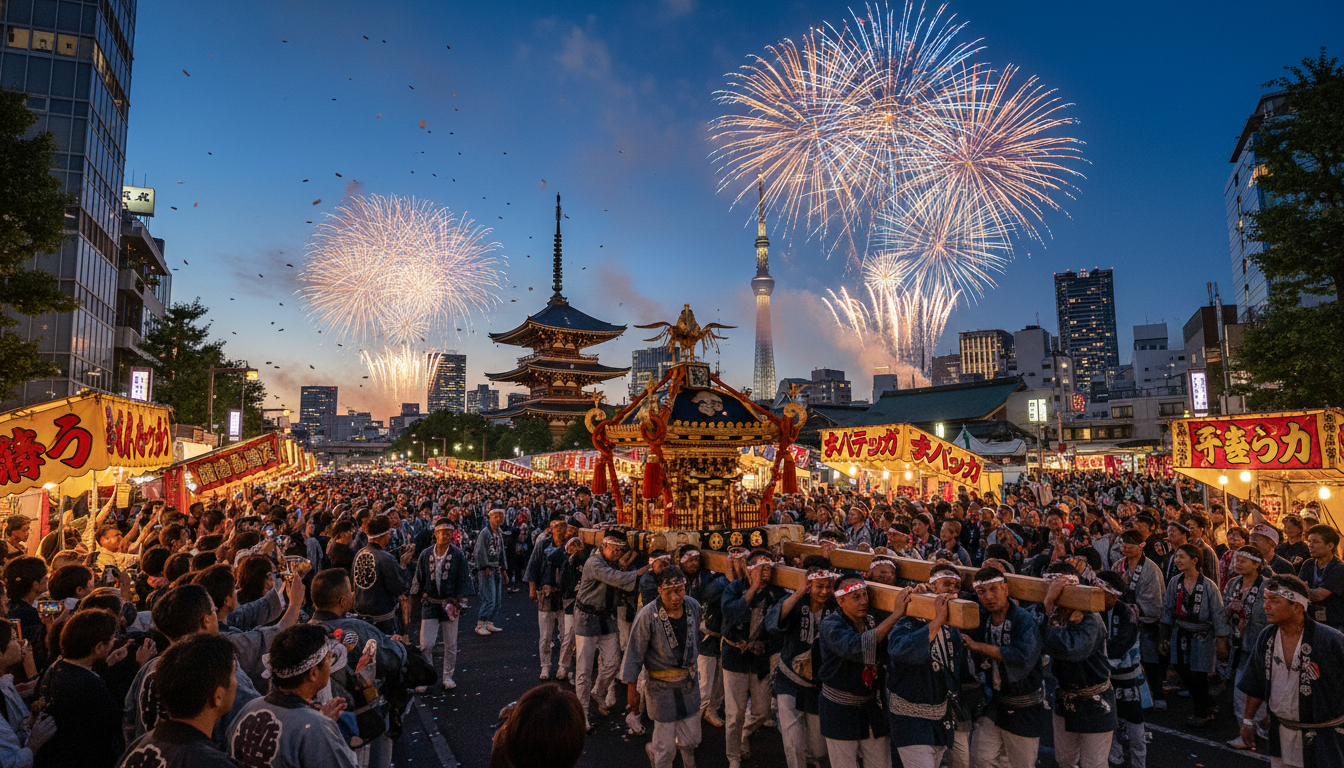
Sanja Matsuri is one of Tokyo’s most visceral religious celebrations, centered at Sensōji Temple in Asakusa from May 15 to May 17. At the festival’s core are the three principal mikoshi — portable Shinto shrines — that are borne through the neighborhood by shouting carriers and accompanied by drummers and flutes. The processions are loud, physical and communal, giving spectators a raw and kinetic experience of an urban matsuri.
Beyond the mikoshi, visitors will find taiko drum ensembles, classical dance pieces and ritual performances by miko, or shrine attendants, staged within and around the temple grounds. The festival also draws strongman displays and ostentatious tattooed figures; historically visible members of Tokyo’s organized groups have been known to appear, adding to the event’s rough-edged reputation. Crowds are dense near the main thoroughfares and by Kaminarimon gate, so position yourself early for procession viewing.
Practical arrangements for Sanja Matsuri include staggered procession times and temporary traffic restrictions; local authorities publish schedules on ward websites and at station kiosks. Food stalls and souvenir vendors line the streets, making the district a lively place to sample snacks and pick up festival memorabilia between processions. Respectful behavior inside temple precincts is expected: photography is common, but quiet observation during ritual moments is appreciated.
Zushi Beach and Adachi River fireworks (May 21 & May 30): early-summer pyrotechnics by sea and river
May presents an early taste of Japan’s hanabi season with major fireworks displays at Zushi Beach on May 21 and the Adachi Fireworks Festival along the Arakawa River on May 30. Zushi’s seaside fireworks typically run for about 45 minutes beginning in the evening, and organizers stage several thousand shells with a particularly intense final sequence in the concluding quarter-hour. The beachside location offers an expansive skyline, but popular vantage points can fill quickly as sunset approaches.
The Adachi Festival, held near the Nishiarai Bridge green spaces along the Arakawa, has shifted from summer to late May in recent years to escape mid-summer heat and storm risk. Spectators at Adachi can expect a large-scale display of roughly 13,000 fireworks, making it one of the more sizable early-season events close to central Tokyo. Paid seating zones are offered for a fee, while limited free viewing areas remain available for those who arrive early and scout riverside spots.
For both displays, public transport schedules and local traffic flow are adjusted on festival nights, and organizers often recommend arriving well before the start time to secure a place. Bring a small folding chair or picnic sheet and be prepared for post-event congestion when train services resume normal operation. Weather contingencies are typically announced on the event day, so check municipal or event social channels for last-minute changes.
Thai Festival and Tokyo Night Market in Yoyogi (May 9–24): food, culture and evening markets
Yoyogi Park is a focal point for international and culinary festivals in May, hosting the Thai Festival on May 9–10 and the Tokyo Night Market along the Zelkova avenue from May 20–24. The Thai Festival brings a concentrated array of Thai cuisine stalls, cultural demonstrations and live performances, including traditional dance and martial arts exhibitions. It is a top destination for visitors seeking authentic regional dishes, workshops and stage programming by Thai artists and artisans.
The Tokyo Night Market turns the park perimeter into an evening marketplace where independent vendors sell street food, craft goods and beverages under the late-spring sky. Music performances on the market stage frequently include DJs, local bands and pop idol acts, creating a festival atmosphere that carries past sunset. The combination of food stalls, craft vendors and on-stage entertainment makes the night market a favorable setting for casual gatherings and short evening visits.
Both events are free to enter, though food and some performances may require purchase or advance reservation. If you plan to sample popular stalls during the Thai Festival, consider arriving at opening hours to avoid long queues for signature dishes. For the night market, bring cash as not all vendors accept cards, and be mindful that pathways can be narrow when the market is crowded.
Azuma Odori geisha performances and Greenroom Festival in Yokohama (May 22–25 & May 23–24): stage arts and music for different audiences
Azuma Odori, staged at the Shimbashi Enbujō theatre from May 22 to May 25, is an annual showcase by the geisha of the Shimbashi hanamachi. The multi-act program presents classical Japanese dance and music framed within a theatrical environment, and the intermissions recreate an intimate dining-house mood with food, sake and memorabilia available to patrons. Tickets for Azuma Odori vary by seating category, typically ranging from around ¥3,000 to ¥12,000 depending on act and seating location.
At the opposite end of the cultural spectrum, the Greenroom Festival at Yokohama’s Red Brick Warehouse on May 23–24 combines live music, visual art and environmental programming under the banner of ocean conservation. Since its inception, Greenroom has paired international and domestic performers with an arts and market component, and the event typically attracts a younger, festival-oriented crowd. Ticket prices for the Greenroom Festival tend to reflect its scale and lineup, with multi-day passes and tiered pricing options.
Both events emphasize different aspects of cultural life in the Tokyo metropolitan region: Azuma Odori highlights traditional performance and refined hospitality, while Greenroom spotlights contemporary artistic expression and environmental advocacy through music and marketplace exchanges. Attendees should check seating requirements and festival access notes in advance; Azuma Odori performances may sell out quickly, and Greenroom ticket tiers will determine access to particular stages and areas.
Logistics and safety: ticketing, transport, weather and etiquette for May events in Tokyo
May festivals bring concentrated crowds, and transport systems respond with denser schedules and altered operations during peak times. For traveling between venues, expect increased numbers on local trains during Golden Week and on event nights for fireworks and major festivals. If you can, avoid peak commute hours and consider using alternative routes or arriving early to secure a comfortable position at parades and displays.
Ticketing varies by event: many festivals and markets are free, while theatre shows, certain seating for fireworks and multi-stage music festivals require paid admission or reserved seating. Buy official tickets through event organizers or vetted vendors, and verify refund or postponement policies in case of weather changes. Keep confirmations on your phone and, when possible, take screenshots of QR codes or e-tickets in case of intermittent connectivity.
Weather in late May can be changeable as the season edges toward the tsuyu rainy period; organizers typically post contingency plans but short-notice cancellations are possible. Pack a lightweight rain jacket and an umbrella, and bring sun protection for daytime events. For crowded environments, maintain awareness of exits and follow instructions from event staff and local police who manage pedestrian flows during processions and fireworks.
Respect local customs at religious sites and cultural performances: photography may be allowed in public procession areas but not during certain ritual moments inside shrines and theatres. Dispose of litter in the many public bins at official venues, or take it with you if bins are full. Finally, keep noise and disruptive behavior to a minimum in residential areas adjacent to festival sites, particularly late at night after outdoor performances end.
Planning checklist: reservations, connectivity and accessibility
Reserve transportation and lodging early for Golden Week and major weekend events to avoid premium pricing and sold-out schedules. If you rely on mobile data, consider arranging an eSIM or local data plan before arrival to ensure ticket confirmations and maps remain accessible. Many festival sites provide limited accessibility accommodations, but it is best to check specific venue guides for wheelchair access, viewing platforms and assistance services.
Carry small Japanese yen notes for food stalls and local vendors, as many smaller operators at markets and shrine fairs prefer cash over cards. Bring a portable battery pack for long days out, and wear comfortable shoes for standing or walking long distances between stages and viewing areas. If you are traveling with children or older companions, identify a meeting point near major landmarks in case group members get separated during crowded moments.
For international visitors, learning a few basic Japanese phrases for greetings and directions will ease interactions with stallholders and event staff. Official event information is commonly published in Japanese, but major festivals often provide English signage or volunteer guides at central information points. Keep an eye on ward and event social channels in the days leading up to each festival for any last-minute instructions or route advisories.
May events in Tokyo offer a concentrated seasonal window of communal celebration and cultural programming that rewards advance planning and situational awareness. Whether you choose the noisy procession routes of Asakusa, the seaside panoramas at Zushi, the riverside spectacle at Adachi, or the international flavors in Yoyogi, each event presents a distinct way to experience the city in late spring. Check official event pages and local announcements for updates on schedules and access, and allow extra time for transport and entry during the busiest days.
If you plan to build an itinerary around the May calendar, prioritize events that require reservations and stagger visits to avoid back-to-back peak days. Combining a traditional festival morning with an evening market or a daytime theatre show with a fireworks night can spread crowds and give a fuller sense of Tokyo’s seasonal rhythm. Above all, carry valid ID, respect local customs at sacred sites and arrive early to make the most of Tokyo’s busy but rewarding May events.

