
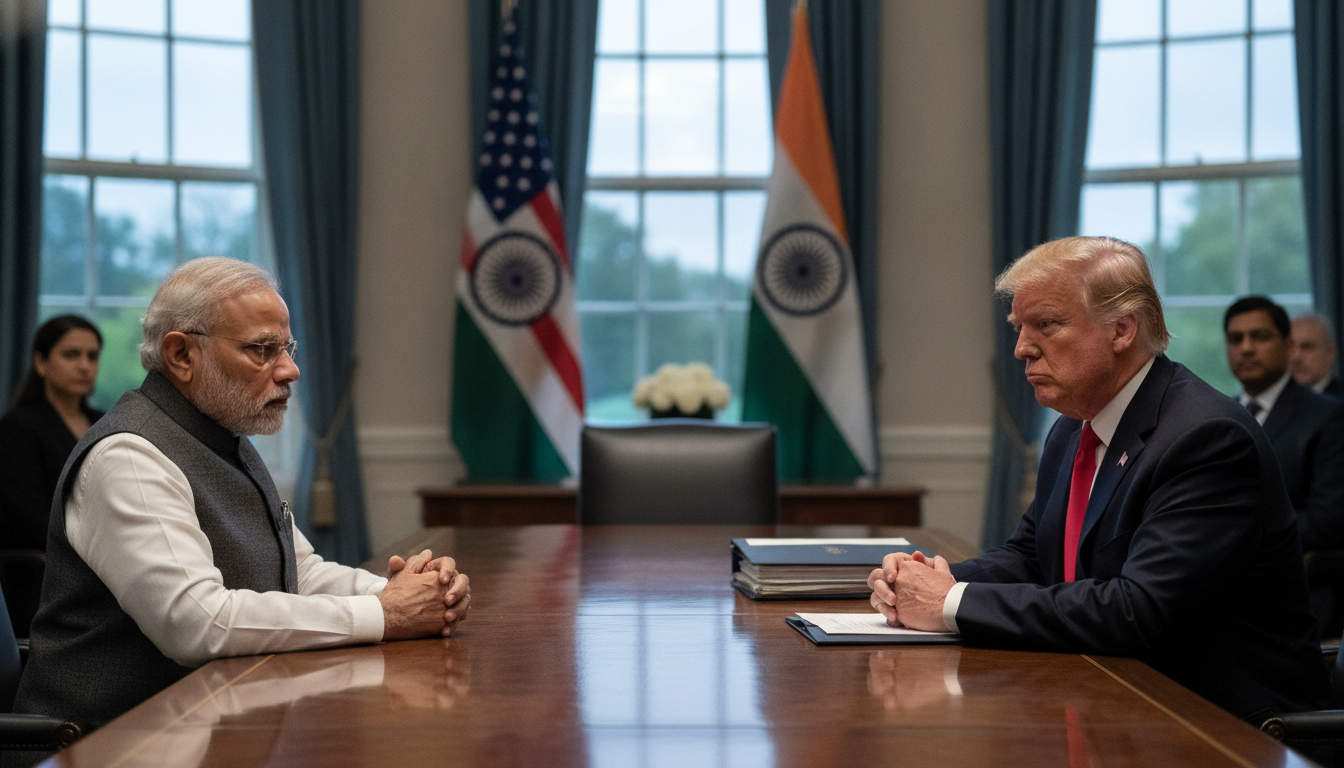
Trump-Modi meeting in Evian seeks to steady U.S.-India ties after Gulf strikes and command name restoration
Trump-Modi meeting in Evian on June 17 sought to steady U.S.-India ties after US strikes killed Indian sailors and Washington restored Indo-Pacific Command.
Leaders meet at G7 sideline in Evian
The Trump-Modi meeting on June 17 took place on the sidelines of the G7 summit in Evian-les-Bains as both capitals sought to calm a period of friction. The encounter aimed to reset bilateral communications after a string of incidents that heightened mistrust between New Delhi and Washington.
Both leaders framed the talks as constructive, but officials acknowledged that symbolism would not erase underlying irritants without concrete follow-up. The meeting underscored the importance each side places on the strategic partnership even as disagreements surface.
Killing of three Indian sailors complicates relations
In the days preceding the summit, U.S. strikes in the Gulf of Oman resulted in the deaths of three Indian sailors, a development that significantly strained ties. Indian officials expressed anger and demanded explanations, elevating the incident from a bilateral grievance to a diplomatic test.
New Delhi sought immediate answers on the circumstances of the strikes, including rules of engagement and target identification. Washington has faced pressure to provide transparent information while balancing operational security concerns.
Restoration of Indo-Pacific Command name draws diplomatic unease
Another contentious item was Washington’s restoration of the original name of its military command covering the region, a move that unsettled some Indian strategists. The renaming was seen in New Delhi as emblematic of shifting U.S. posture in the Indo-Pacific and prompted questions about consultation and regional intent.
Indian analysts noted that nomenclature carries diplomatic weight when it relates to military architecture and influence. Officials said the discussion in Evian touched on how both countries interpret regional strategy and the signals sent to neighbors.
Diplomatic damage control and immediate outcomes
Both sides used the Evian meeting to emphasize shared interests such as trade, defense cooperation, and counterterrorism, aiming to limit further erosion of trust. Senior officials reported that the leaders agreed to set up working groups to address the most sensitive subjects, including an investigation into the sailors’ deaths.
The meeting produced no dramatic joint statement, reflecting the pragmatic approach taken by negotiators to prioritize follow-through over grand declarations. Diplomats described the tone as professional and focused on restoring channels of communication.
Implications for defense and strategic cooperation
The incidents surrounding the talks have placed new focus on mechanisms for coordination between U.S. and Indian security forces operating in close proximity. Military-to-military communication lines, including notification protocols and incident deconfliction measures, are likely to become higher priorities in bilateral talks.
For New Delhi, the episode reinforces the need to balance strategic autonomy with deeper cooperation that carries operational risks. For Washington, it highlights the political cost of military actions that affect partners and the imperative of clearer engagement with regional allies.
Domestic political and regional reactions
The developments reverberated across Indian domestic politics, with opposition figures and some naval veterans calling for stronger accountability and reassurances. In Washington, lawmakers pressed for briefings on operational decisions that led to civilian and allied casualties.
Regional capitals watched closely, interpreting the incidents as indicators of how the U.S.-India partnership will handle crises in contested maritime spaces. Allies and rivals alike recalibrated their expectations of crisis management and crisis signalling between the two democracies.
The Trump-Modi meeting at Evian provided a brief but important opportunity to stem immediate fallout and recommit to dialogue, yet it also made clear that symbolism alone will not resolve disputes rooted in military action and strategic messaging.
Looking ahead, both governments face the practical task of translating the Evian exchange into verifiable steps that reduce the risk of similar incidents. The effectiveness of follow-up mechanisms, and whether transparent investigations satisfy Indian concerns about the deaths of its sailors, will determine whether the moment becomes a turning point or a temporary pause in growing bilateral friction.

