
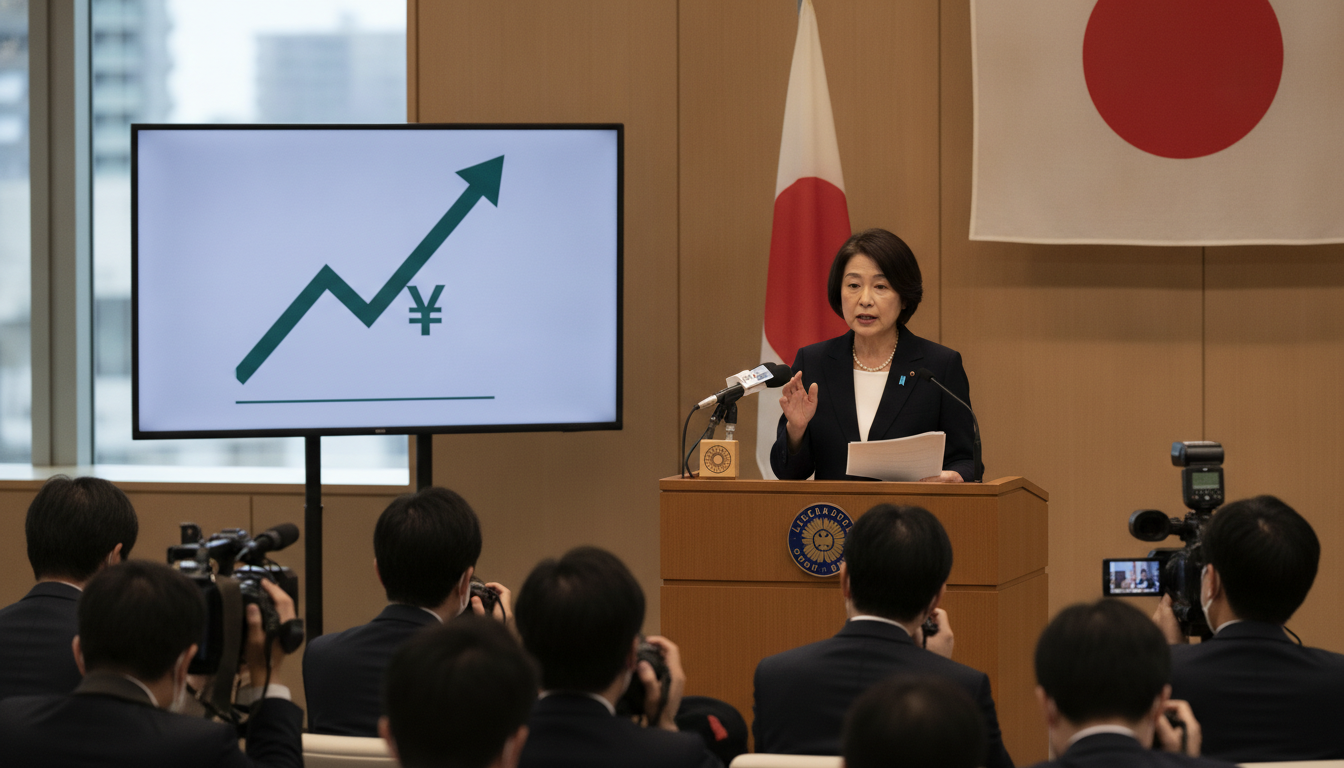
Yen Strengthens After Katayama Urges Pension Funds to Boost Domestic Investment
Japan moves to coax pension capital home as yen rallies and long-term yields soften following Finance Minister Satsuki Katayama’s July 10 statements on investment and central bank independence.
Japan’s yen strengthened on July 10 after Finance Minister Satsuki Katayama outlined plans to encourage pension funds, including the Government Pension Investment Fund (GPIF), to increase holdings of Japanese assets, and affirmed support for the Bank of Japan’s institutional independence. The comments came amid heightened market sensitivity to the policy mix between Tokyo and the BOJ, and were followed by a drop in long-term government yields. (ca.investing.com)
Katayama’s July 10 Remarks
The finance minister told reporters on July 10 that the government will explore ways to nudge pension funds and other institutional investors toward substantially greater investment in domestic financial assets.
Katayama framed the move as part of a broader plan to strengthen the domestic investor base and support Japan’s market resilience. (investing.com)
Currency and Bond Market Reaction
Following Katayama’s remarks, the yen gained ground against major currencies while long-term Japanese government bond yields retreated from recent highs.
Market participants said the combination of a pledge to mobilize domestic capital and reassurance on central bank independence reduced some near-term risk premia, prompting a modest flight back into yen assets. (ca.investing.com)
Scope of the Pension Fund Initiative
Officials singled out the GPIF, the world’s largest pension fund, as a key target for policies intended to increase allocations to Japanese stocks and bonds.
Analysts note that shifting even a small portion of the GPIF’s foreign holdings back into domestic assets would represent a large-scale reallocation with the potential to influence equity and bond markets. (investing.com)
Government Moves to Reassure on BOJ Independence
Tokyo has signaled it will clarify language in its annual economic blueprint to explicitly reference the Bank of Japan’s independence, a step aimed at quelling market concerns about political interference in monetary policy.
Ministers have reiterated that the government will not pre-empt or instruct BOJ policy decisions, saying any revision to the blueprint is intended to bolster confidence in the central bank’s autonomy. (marketscreener.com)
Investor and Market Responses
Institutional investors and foreign portfolio managers said the finance ministry’s plan to encourage repatriation of capital is being watched closely, but many stressed that any concrete reallocation would depend on changes in risk-adjusted returns and liquidity conditions in domestic markets.
Traders cautioned that statements alone may not produce sustained currency strength without accompanying shifts in monetary or fiscal signals, and some said they would wait for policy details and GPIF implementation steps. (japantimes.co.jp)
Potential Policy Tools and Risks
Authorities could use a mix of incentives — such as tax measures, guidance, or regulatory adjustments — to promote greater domestic investment by pension funds, though such tools may raise debates about market neutrality and the proper boundary between public policy and investment independence.
Analysts warn that aggressive political pressure on asset managers could create governance concerns and unintended market distortions, even as a managed repatriation of capital may offer a steadier buffer for the yen. (investing.com)
Markets are likely to sift statements from Tokyo for concrete policy proposals in the days ahead, particularly any measures that could steer the GPIF or other large institutional investors to alter portfolio mix.
For now, the yen’s rebound and the fall in long-term yields reflect both relief at renewed government support for domestic demand and lingering uncertainty about the pace of any structural shift in investment patterns.

