
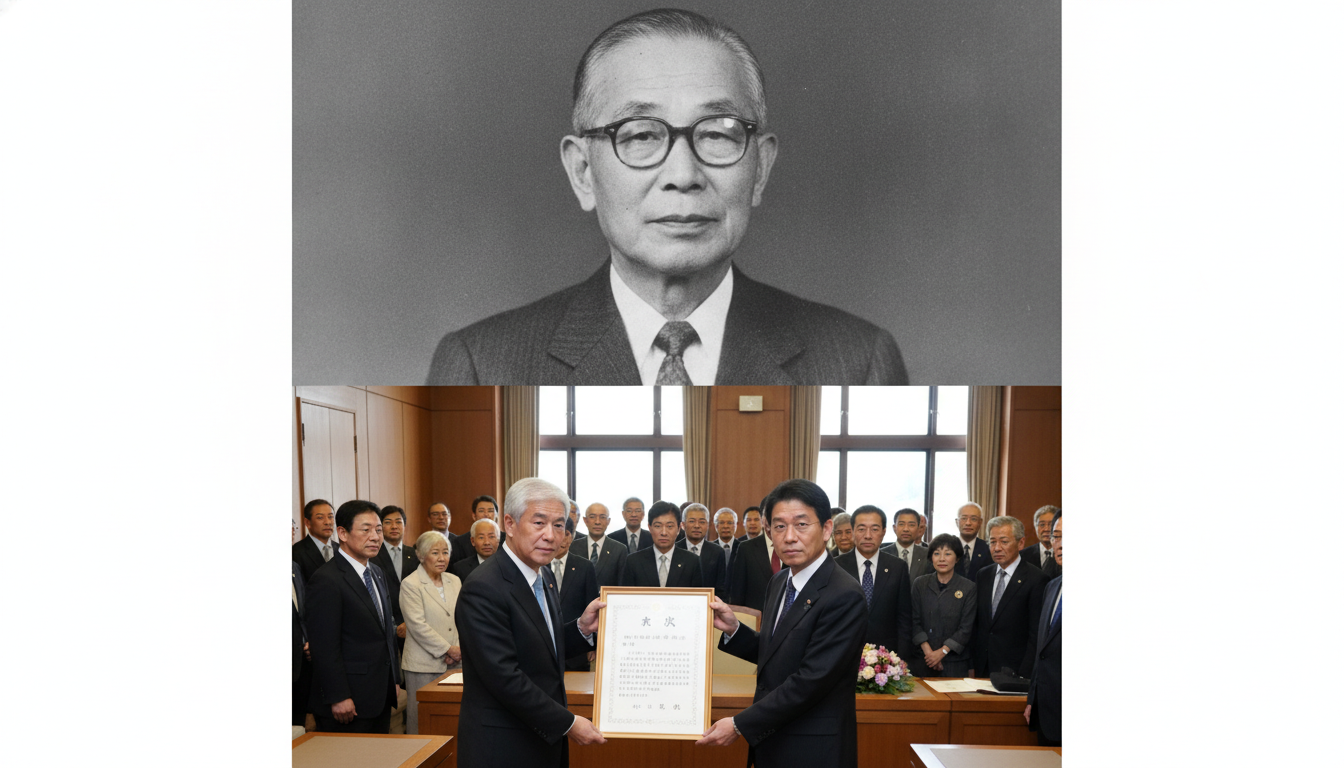
Former Health Minister Riki Sakaguchi Dies at 92, Remembered for Hansen’s Disease Appeal Decision
Former Health Minister Riki Sakaguchi, central to Japan’s 2001 Hansen’s disease appeal decision, died on August 7 in Takamatsu at age 92; Komeito announced a private funeral.
Strong opening summary
Riki Sakaguchi, a veteran Komeito lawmaker and former minister, died of natural causes on August 7 in Takamatsu, the party said on August 12. He was 92 and served 11 terms in the House of Representatives after first winning election in 1972. Komeito released a statement noting that his funeral and memorial rites were held privately with close relatives.
Announcement and funeral arrangements
The party announced Sakaguchi’s passing on August 12, providing few details beyond the date of death and that the funeral was private. Close associates and local officials in Takamatsu confirmed that long-standing friends and family attended the private ceremony. No public memorial schedule was released immediately, reflecting the family’s wish for a low-key farewell.
Parliamentary career and cabinet service
Sakaguchi was first elected to the Diet in 1972 and completed a total of 11 terms, building a long career in national politics. He rose through the ranks of Komeito to become the party’s vice representative and took senior roles in multiple administrations. Under Prime Minister Yoshiro Mori’s cabinet reorganization, he became the first minister of the newly formed Ministry of Health, Labour and Welfare and retained the portfolio into the subsequent Junichiro Koizumi administration.
Tenure as Minister of Health, Labour and Welfare
As the inaugural head of the merged ministry, Sakaguchi oversaw health and social welfare policy during a period of administrative change and public scrutiny. He served as minister for roughly three years and eight months, guiding the ministry through reforms and budgetary challenges. His time in office was marked by efforts to balance health services, labor issues and the growing needs of an aging society.
Role in Hansen’s disease appellate decision
Sakaguchi played a pivotal role in the government’s response to a landmark 2001 Kumamoto District Court ruling that declared Japan’s forced isolation policy for Hansen’s disease patients unconstitutional. Facing strong pro-appeal sentiment within the government, he advocated abandoning further appeals to acknowledge past policy wrongs and expedite relief for victims. His efforts influenced then-Prime Minister Junichiro Koizumi’s ultimate decision to halt the government’s appeal, a move that paved the way for official apologies and compensation.
Acknowledgment and apology to victims
Following the decision to drop appeals, Sakaguchi became the first health minister to visit a Hansen’s disease sanatorium and offer an apology on behalf of the government. He later reflected on meeting survivors, describing the experience as profoundly affecting and acknowledging the deep delay in addressing the suffering caused by past policies. Those visits and his public statements were seen by advocates and victims as important, if belated, steps toward reconciliation.
Early life and medical background
Born in Mie Prefecture, Sakaguchi trained as a medical doctor and earned a doctorate in medicine from Mie Prefectural University, now Mie University. His medical education informed both his political outlook and policy priorities, especially in public health and welfare. That background helped shape his approach to contentious issues such as sanatorium policy and the government’s responsibility to vulnerable populations.
Retirement and life in Takamatsu
Sakaguchi retired from politics in 2012 and spent his later years in Takamatsu, where the national sanatorium Oshima Seishoen is located offshore. He remained engaged with public health discourse and occasionally gave interviews reflecting on decisions made during his tenure. In a spring interview marking the 25th anniversary of the Kumamoto ruling, he reiterated that the choice to abandon the appeal had been right, while expressing regret it had not come sooner.
Riki Sakaguchi’s death closes a chapter on a long political life in which a physician-turned-legislator navigated complex moral and administrative questions about Japan’s past health policies and the state’s duty to those it once ostracized.

