
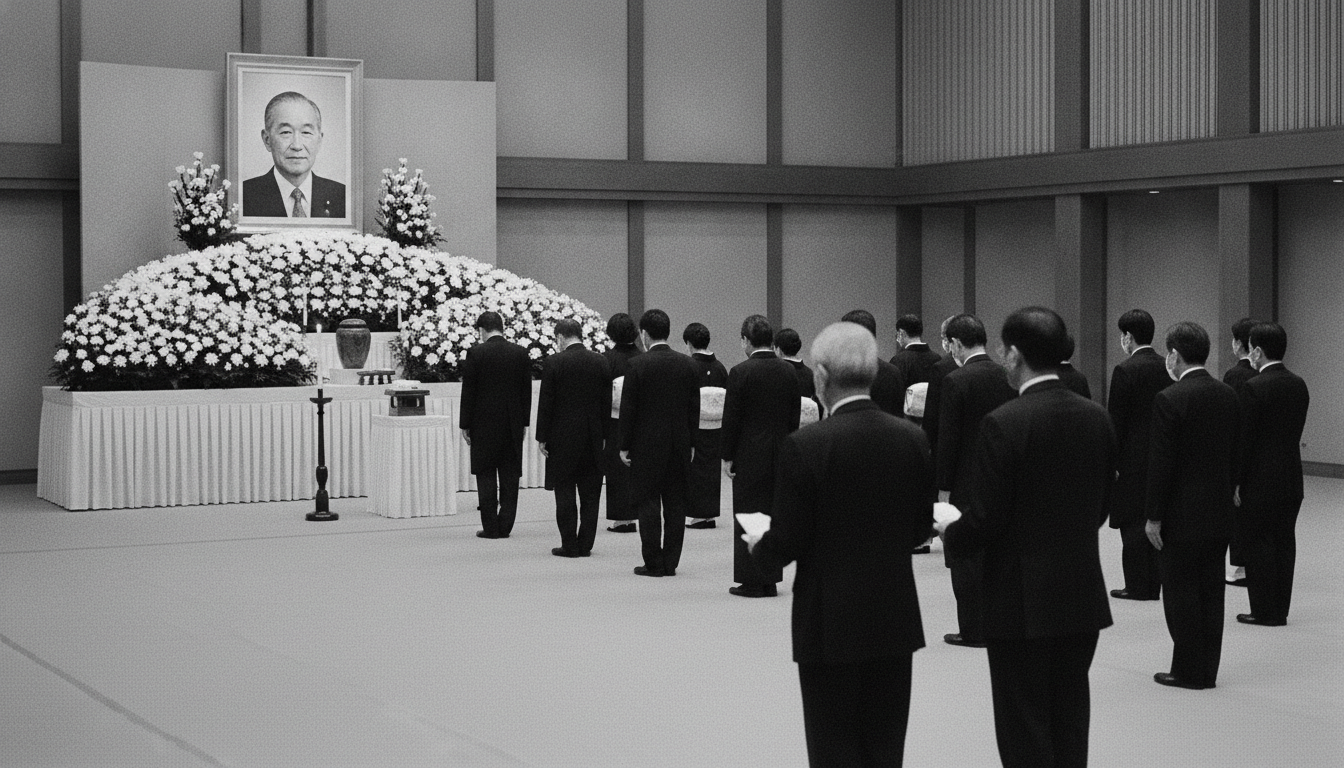
Hiroshi Okuda, former Toyota president and Japan Business Federation chair, remembered for reform drive
Hiroshi Okuda, former president of Toyota Motor and ex-chairman of the Japan Business Federation, has died; this obituary reviews his leadership, reform agenda and global impact.
Hiroshi Okuda, the former president of Toyota Motor and later chairman of the Japan Business Federation, was a prominent figure in Japan’s corporate world who drew international attention for his leadership and reform efforts. As head of the country’s principal business lobby, he aggressively pressed for change within Japan’s business practices and sought to position Japanese companies more firmly on the global stage. His public profile included high-profile initiatives such as Toyota’s entry into Formula One, a move that symbolized the company’s international ambitions.
Okuda’s career at Toyota placed him at the center of Japan’s postwar industrial ascendancy and its later efforts to adapt to a changing global economy. He rose through executive ranks during a period of rapid expansion for the automaker and later assumed the presidency, where he oversaw strategic initiatives intended to boost competitiveness. A widely circulated photograph from January 1999 shows him at a Tokyo news conference announcing Toyota’s foray into Formula One racing, underscoring his willingness to take bold steps to raise the company’s global profile.
Toyota leadership and global strategy
Okuda’s tenure at Toyota coincided with a phase when Japanese manufacturers were intensifying their international operations, and he was closely associated with that outward push. He supported investments in overseas production and brand-building efforts that aimed to diversify Toyota’s markets and technological partnerships. Those moves reflected a broader corporate strategy to make Japanese industry more resilient amid intensifying global competition.
Under his leadership, Toyota pursued not only market expansion but also a higher public profile for its technological and sporting efforts. The decision to enter Formula One was emblematic of a mindset that combined engineering ambition with a desire to elevate the company’s international reputation. That combination helped Toyota transition from a mass-market challenger to a brand recognized for engineering excellence on a global scale.
Role at the Japan Business Federation
After his tenure at Toyota, Okuda took on a central role in Japan’s business policymaking as chairman of the Japan Business Federation, often referred to as the country’s most influential corporate lobby. In that capacity he leveraged his industrial experience to press member companies and policymakers toward reform. His leadership was characterized by an insistence that Japan’s business community adapt to new economic realities at home and abroad.
Okuda’s stewardship of the federation placed him in frequent dialogue with government officials, industry leaders and international counterparts. He used the platform to advocate for measures aimed at improving corporate transparency, competitiveness and flexibility. His public statements and policy priorities often reflected a pragmatic view that long-standing practices needed modernization to sustain growth.
Push for corporate reform and modernization
Observers noted that Okuda was not content with preserving the status quo; he advocated structural and cultural changes within Japanese corporations. He urged companies to strengthen corporate governance, improve managerial accountability and embrace more performance-oriented practices. Those themes resonated with investors and reform-minded executives who argued that greater openness and efficiency were essential for long-term resilience.
His approach combined public exhortation with behind-the-scenes engagement, working both to shift corporate mindsets and to influence policy frameworks. While some of his proposals met resistance from entrenched interests, they contributed to an ongoing national conversation about how Japan’s corporate sector should evolve. Over time, elements of his reform agenda found footholds in governance codes and corporate behavior.
Reactions from the business and political communities
News of Okuda’s passing prompted reactions across business and political circles, where he was widely seen as a consequential leader who bridged industry and public policy. Corporate executives, trade associations and government figures acknowledged his role in promoting a more outward-looking and reform-oriented corporate sector. His ability to speak for both business and national competitiveness made him a prominent interlocutor on economic strategy.
Internationally, Okuda’s career was noted for elevating the visibility of Japanese industry and for seeking engagement with global institutions and markets. His initiatives—both at Toyota and within the federation—were frequently framed as part of a broader effort to ensure that Japan’s corporate sector remained influential and innovative on the world stage.
Enduring influence and institutional memory
Okuda leaves behind a legacy that extends beyond any single corporate decision or policy initiative. He is remembered for melding commercial ambition with a conviction that Japanese business must continually adapt. That combination of strategic boldness and institutional stewardship has become part of the narrative about Japan’s corporate evolution in recent decades.
Colleagues and successors within industry and the federation are likely to cite his tenure as a reference point for current debates over governance, globalization and corporate purpose. While the specifics of policy and corporate practice will continue to evolve, Okuda’s insistence on reform and international engagement will remain a benchmark for future leaders.
Details about funeral arrangements and memorials have not been announced. His death marks the end of a career that played a significant role in shaping modern Japanese corporate life and in steering firms toward a more global and reform-minded posture.

