
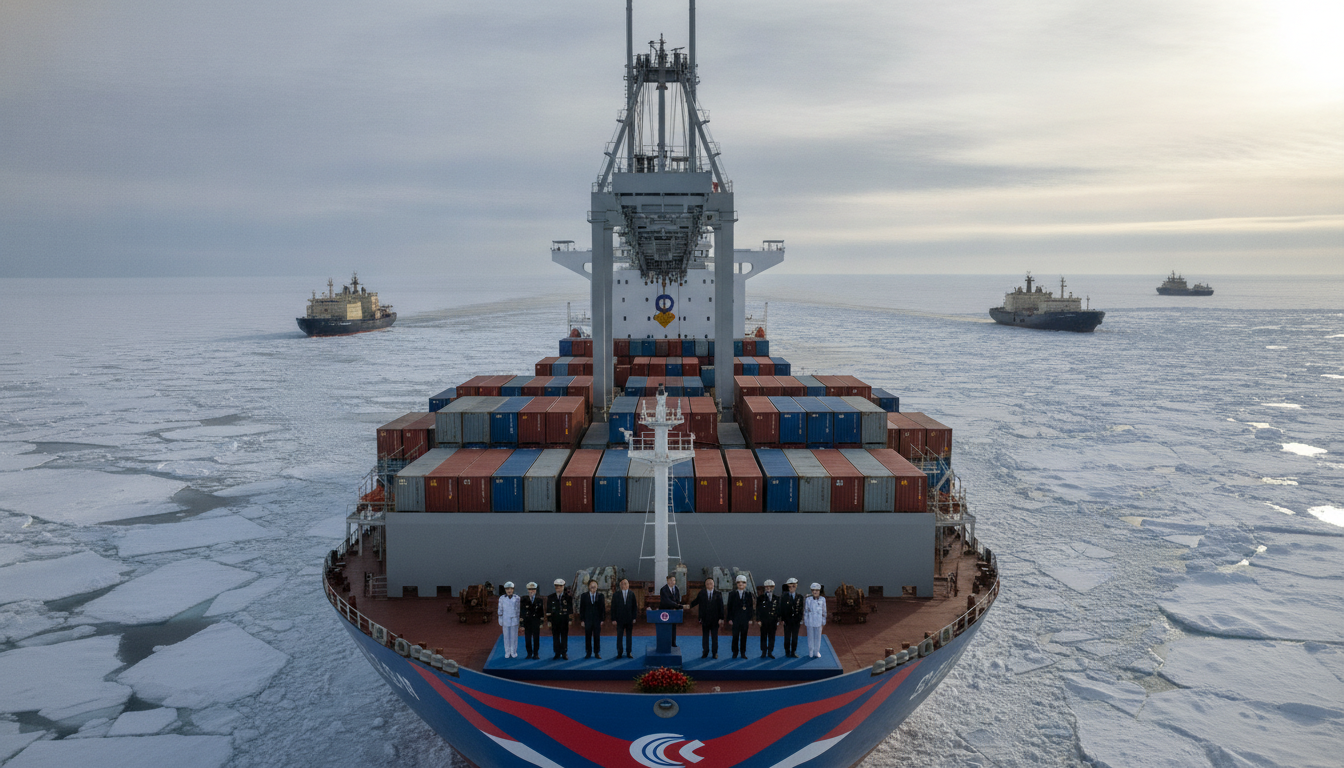
Chinese carrier to open first weekly China‑Europe Arctic shipping route as South Korean line pilots corridor
Chinese carrier to launch first weekly China‑Europe Arctic shipping route while South Korean line prepares a pilot voyage, raising trade, security and climate concerns. (158 characters)
A Chinese shipping company is set to begin the first weekly China‑Europe Arctic shipping route, and a South Korean carrier is preparing a pilot voyage to test the same northern corridor. The emergence of these services follows years of warming in the Arctic that have made longer stretches of the Northern Sea Route more navigable during parts of the year. The moves underline both commercial interest in shorter transit times and growing geopolitical and environmental tensions surrounding Arctic navigation.
Chinese carrier to launch regular China‑Europe Arctic service
A Chinese operator has scheduled a weekly container service linking Chinese ports with Europe via the Arctic, marking the first regular line of its kind. The carrier plans to capitalize on seasonal windows when ice retreat opens shipping lanes that can cut voyage distance compared with traditional southern routes. Industry sources say the service targets time‑sensitive cargo and seeks to diversify options after disruptions on established routes.
Shipping executives indicate the service will run subject to ice, weather and regulatory clearances, with sailings concentrated in months when the Northern Sea Route is most passable. The weekly frequency signals commercial confidence that demand and operational contingencies can sustain a standing schedule rather than isolated trial transits.
South Korean line to run pilot voyage along the northern corridor
A South Korean liner has announced a pilot voyage to test the Arctic corridor, aiming to assess navigational, insurance and logistical factors before deciding on a permanent schedule. The pilot will gather data on ice, fuel consumption, transit time and port connectivity to evaluate economic viability for container services. Carriers increasingly use such experiments to weigh costs against savings and to negotiate insurance and charter terms.
The test run will also inform contingency planning for delays and emergency response, including reliance on ice‑class vessels, icebreaker escorts and Arctic search‑and‑rescue capabilities. Results from the pilot will shape whether additional Asian carriers adopt the route commercially.
Commercial incentives and operational challenges
Shippers are attracted to the Arctic shipping route by the potential to shorten transit times between East Asia and northern Europe, which can reduce time‑in‑transit and free up vessel capacity. Shorter voyages can lower fuel burn and enable faster cargo turnover, advantages for high‑value or time‑sensitive goods. For some carrier networks, the northern corridor provides a strategic alternative when congestion, strikes, or geopolitical disruptions affect the Suez or Cape routes.
However, the route poses commercial uncertainties: higher insurance premiums, limited search‑and‑rescue coverage, seasonal variability and the need for ice‑class tonnage raise operating costs. Port infrastructure at either end must be coordinated for tight schedules, and diverted sailings for adverse ice conditions can erode the predicted time savings.
Climate change opening passages and environmental concerns
Rising Arctic temperatures and record‑low summer sea ice in recent years have expanded the navigable season and drawn commercial interest to high‑latitude passageways. Scientists and environmental groups warn that increased traffic risks harming fragile ecosystems through spills, emissions and black carbon deposition that accelerates ice melt. Conservationists say the physical and biological sensitivity of Arctic waters demands strict environmental controls before sustained commercial use grows.
Regulators face pressure to balance maritime access with protections, including stricter emissions standards, monitoring of fuel types and enhanced spill‑response capacity. Shipping experts note that without robust environmental safeguards the environmental cost could outweigh the short‑term logistical benefits for trade.
Geopolitical friction and Nordic government concerns
Northern European and Nordic governments have signalled alarm over the security and regulatory implications of expanded Arctic shipping, citing sovereignty, search‑and‑rescue gaps and the presence of military assets in the region. Much of the Northern Sea Route runs along or within Russia’s maritime jurisdiction, and sanctions, licensing requirements and geopolitical tensions complicate routine passage for foreign carriers. These issues have prompted Nordic capitals to call for clearer rules and cooperative frameworks for commercial navigation.
Insurance markets and charterers are watching closely, with some more cautious firms reluctant to underwrite voyages that transit contested or tightly regulated waters. The mix of commercial opportunity and political friction means growth of the Arctic shipping route could be uneven and contested.
Implications for Europe, Asia and global supply chains
If regular services take hold, the Arctic shipping route could reconfigure some freight patterns between Asia and Europe, offering alternative schedules and capacity that complement existing Suez and Mediterranean links. European importers may benefit from faster deliveries for certain goods, while Asian exporters could gain access to additional routing options during peak seasons. Yet broader adoption depends on predictable windows of navigability, insurer acceptance, port readiness and international coordination on rules.
Policy makers, carriers and shippers will need to negotiate standards for navigation, environmental protection and emergency response to make the corridor sustainable and commercially reliable. Absent such frameworks, growth is likely to remain incremental and concentrated among operators willing to absorb the higher short‑term costs and risks.
The unfolding experiments by Chinese and South Korean carriers mark a notable step in Arctic commerce that will test how fast commercial motives, climate realities and geopolitical constraints can be aligned around a new high‑latitude trade corridor.

