
USS Abraham Lincoln’s Long Deployment Sparks Family Complaints and Navy Repositioning
US carrier USS Abraham Lincoln faces scrutiny over extended deployment; Navy prepares USS George Washington from Yokosuka to relieve carrier amid morale and mental-health concerns.
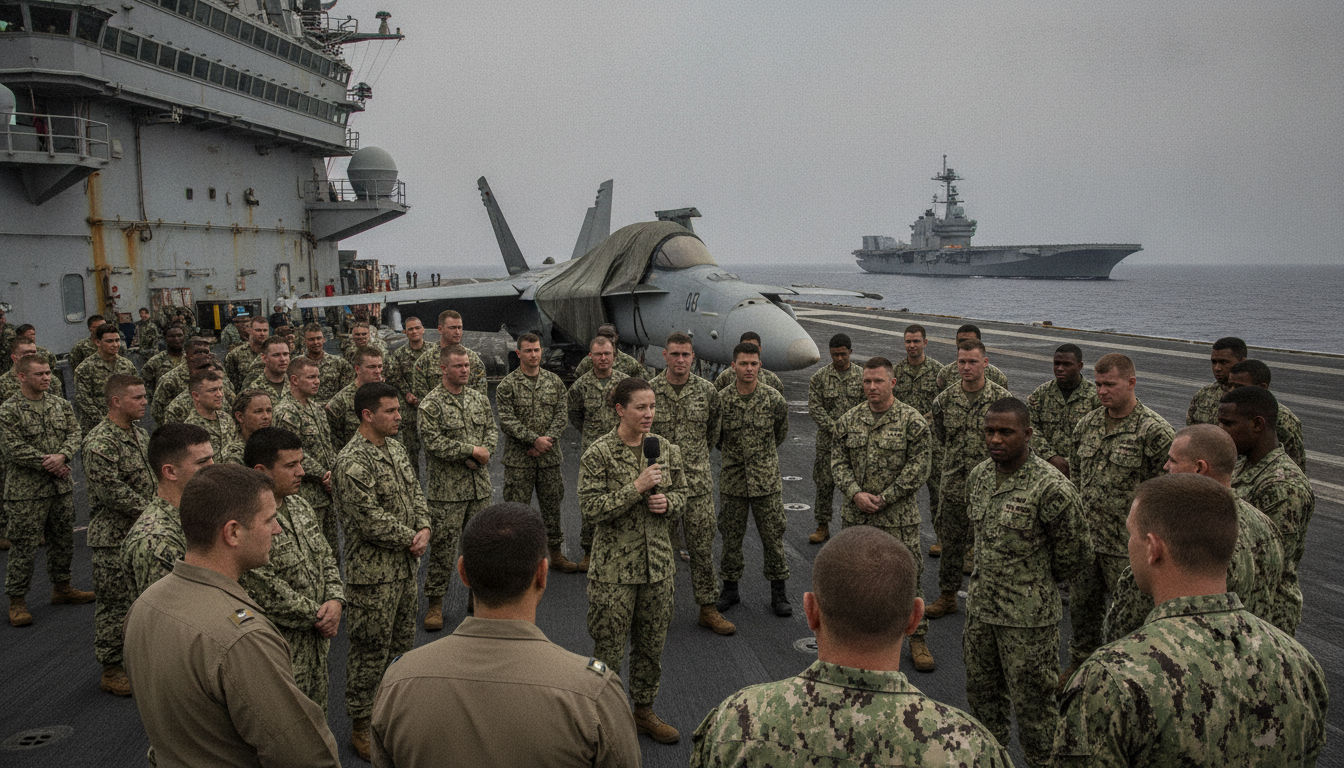
The USS Abraham Lincoln, central to U.S. operations against Iran, has remained at sea for an extended period — prompting family complaints, reports of mental-health strains among sailors and preparations to send the forward-deployed USS George Washington toward the Middle East to provide relief. Public reporting and military-family outreach this week say the Lincoln has recorded an uninterrupted period at sea measured in the hundreds of days, and that lawmakers and Navy leaders are now scrambling to address the consequences. (apnews.com)
Deployment Duration and Port Calls
The Lincoln departed its San Diego homeport in late November 2025 and has logged what military reporting describes as an unusually long at-sea period, with some accounts putting uninterrupted days at sea above 240 and the span without a substantive port call exceeding 200 days. Those figures have drawn attention from oversight officials and media outlets, which say the tempo is exceptional even by recent operational norms. (stripes.com)
Naval records and service briefings indicate the carrier’s only brief stop during the deployment was a short visit to Guam in December 2025, underscoring how sustained operations and limited resupply opportunities have compounded wear on personnel and systems. Extended time at sea limits routine maintenance cycles and reduces chances for crews to rest and reconnect with families, officials told reporters. (stripes.com)
Families and Mental Health Concerns
Families of sailors aboard the Lincoln have held meetings with Navy leaders and pressed for clearer information about conditions on board, citing anxiety over reduced shore leave, supply constraints and rising stress among service members. Relatives described seeing signs of mental strain and relayed accounts that have intensified public scrutiny and prompted congressional questions. (apnews.com)
Military-family advocates and clinicians caution that prolonged deployments without sufficient recovery time can increase risks of depression, burnout and other mental-health problems, particularly when personnel face unpredictable operational demands. Those risk factors, they say, can erode morale and performance if not addressed through rotation, counseling and restored quality-of-life measures. (stripes.com)
Senate Inquiry and Congressional Pressure
On Aug. 12, 2026, Sen. Richard Blumenthal and other lawmakers sent formal inquiries to Defense Department leadership seeking detailed answers about the Lincoln’s deployment length, the frequency of port calls, and the measures in place to protect sailors’ welfare. The written questions reflect growing bipartisan concern about force management and the operational costs of sustained maritime campaigns. (apnews.com)
Congressional staff and committee members have signaled that, beyond immediate relief for the affected crew, they will examine whether deployment policies and logistical planning adequately account for the human and material toll of protracted carrier operations. Oversight hearings or requests for briefings were described as likely next steps. (apnews.com)
Navy Response and Relief Plans
Navy officials acknowledged the strain on Lincoln sailors but pushed back against some public descriptions of onboard conditions, with Defense Secretary Pete Hegseth saying certain characterizations were “completely misrepresented” while also expressing urgency to return sailors to home port. At the same time, service leadership has accelerated relief measures, including the redeployment of the USS George Washington from its forward base in Japan toward the region. (apnews.com)
The George Washington, the Navy’s only carrier forward-deployed to Japan and based at Fleet Activities Yokosuka, has begun transits that place it on a course westward through Southeast Asian waters en route to the Indian Ocean and the Middle East. The movement is intended to provide rotational relief for Lincoln’s crew and preserve carrier availability in the theater. (airpac.navy.mil)
Operational Risks and Readiness
Defense analysts warn that stretching a carrier and its air wing for such long stretches raises maintenance and readiness questions, particularly when underway time limits scheduled depot work and component replacement. Naval aviation and engineering systems require periodic availability in port to perform inspections and repairs that are difficult to complete at sea. (stripes.com)
Commanders also face the challenge of maintaining sustained operations in a region where the strategic environment remains volatile, while balancing the long-term health of ship systems and crew welfare. The service must weigh immediate operational demands against the risk of degraded readiness for future contingencies. (stripes.com)
Regional Force Posture Implications
The decision to route a Japan-based carrier into the Middle East will temporarily change U.S. naval posture in the Western Pacific, leaving a gap in forward carrier presence that allies and partners will monitor closely. U.S. Pacific and Indo-Pacific commands have said they will manage rotational forces to mitigate any coverage shortfalls, but the adjustment underscores how conflicts in distant theaters can ripple through broader regional planning. (surfpac.navy.mil)
Allies in East Asia and regional security observers have noted that moving a carrier from a forward-deployed status to support distant operations complicates deterrence calculations and partnership reassurance, prompting Tokyo and other partners to seek clarifications on timelines and contingency coverage. Military planners say those discussions are ongoing. (surfpac.navy.mil)
As Navy leadership implements relief steps and Congress seeks answers, service officials say their priority remains restoring normal rotation and support for the Lincoln’s sailors while preserving operational commitments in the Middle East and the Indo-Pacific.

