
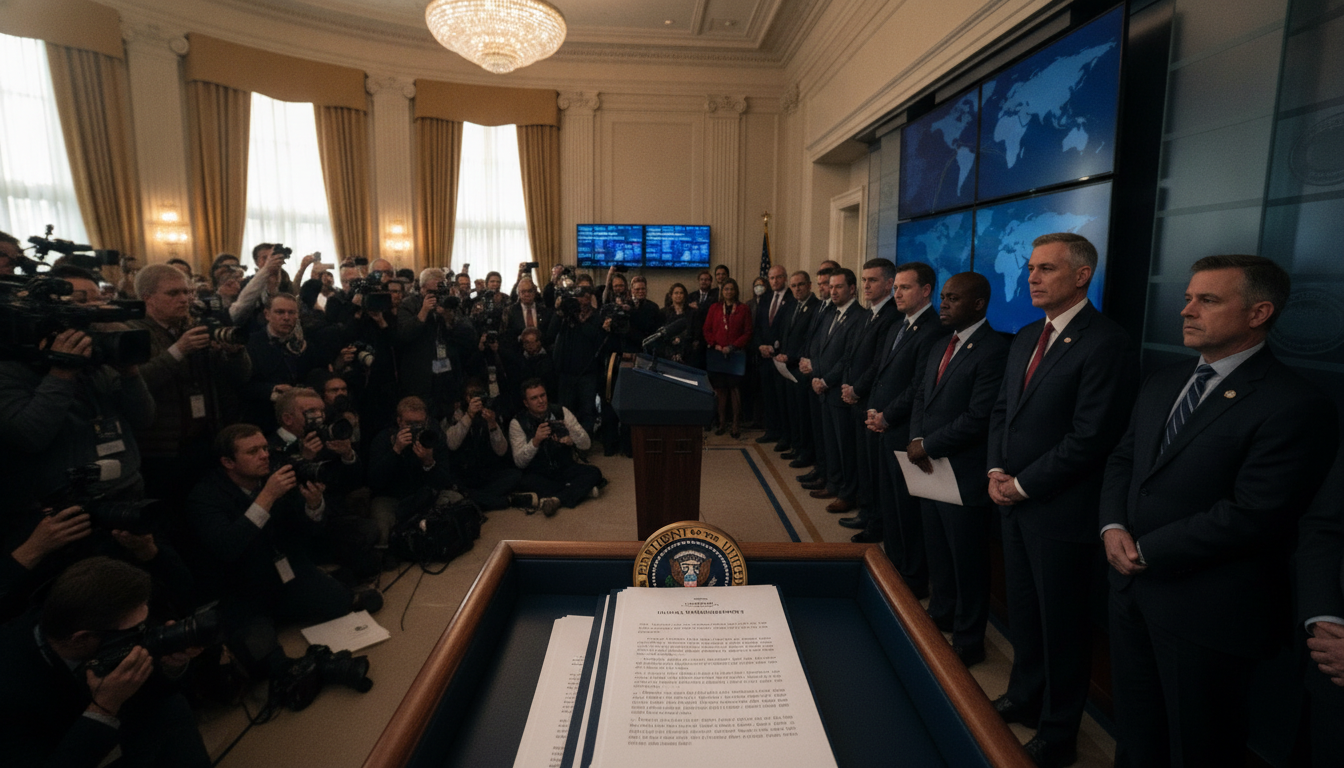
White House: Illegal Transshipment Costs U.S. Tens of Billions and Triggers AI Crackdown
White House report says illegal transshipment is costing the U.S. tens of billions in revenue and hundreds of thousands of jobs, prompting customs to deploy AI tools to detect rerouted shipments.
Report quantifies economic and job losses
A White House report released this month concludes that illegal transshipment is responsible for billions in lost tariff revenue and substantial job displacement across American industries. The document estimates annual losses in the tens of billions of dollars and attributes hundreds of thousands of employment impacts to the practice.
Officials cited patterns in which goods declared as originating outside China are in fact produced there and rerouted through third countries to evade U.S. tariffs and trade controls. The report frames the problem as both a fiscal shortfall and a threat to fair competition for domestic manufacturers and logistics firms.
Trade routes and concealment methods identified
Investigators found a range of concealment methods used to disguise origin, including false paperwork, relabeling of goods, and complex transshipment chains through Southeast Asia and other regions. The report emphasizes that these techniques exploit gaps in customs inspections and differing enforcement regimes among trading partners.
Customs agents and analysts highlighted the sophistication of some networks, which layer intermediate shipments and split consignments to reduce detection risk. These methods complicate traceability and impose significant investigative burdens on enforcement agencies.
AI deployed to detect anomalous shipping patterns
In response, U.S. customs authorities are increasingly turning to artificial intelligence to analyze shipping manifests, trade data and carrier movements for signs of illicit rerouting. Machine learning models are being trained to flag inconsistencies in declared origin, unusual port-to-port routing, and repetitive anomalies tied to specific exporters or intermediaries.
Officials say AI will not replace physical inspections but will prioritize high-risk shipments for closer scrutiny. The administration argues that predictive analytics can focus limited inspection resources more effectively and reduce manual casework.
Ports and supply chains under sharper scrutiny
Major U.S. ports, including the Port of Long Beach, have been cited as pressure points where enforcement and inspection activities are concentrated. The report notes that containerized trade hubs are both vulnerable and crucial for screening efforts because they handle vast volumes of imported goods.
Industry representatives warned that ramped-up checks could slow throughput and raise costs if not calibrated to avoid unnecessary disruption. Importers are likely to face more frequent documentation audits and more stringent origin verification as authorities act on flagged patterns.
Legal and enforcement hurdles remain significant
Despite technological advances, investigators say several legal and operational challenges limit the effectiveness of enforcement. Proving that goods were produced in a different country than declared often requires complex forensics, on-the-ground inspections abroad, and cooperation from foreign authorities.
The report calls for strengthened international cooperation, tighter documentation standards, and potential changes to liability rules for carriers and intermediaries. It also recommends targeted capacity-building in partner countries to reduce transshipment opportunities.
Trade and diplomatic implications for U.S.-China relations
The White House framing of illegal transshipment as a mechanism that undermines U.S. tariff policy adds another layer to an already fraught trade relationship with China. While the report stops short of proposing sweeping new tariffs, it indicates that enforcement will be intensified and that bilateral discussions could expand to include origin verification and export controls.
Beijing has previously denied widespread complicity in illicit rerouting, while exporters and logistics firms in third countries have pushed back against claims that their ports serve as simple conduits for circumvention. Greater enforcement could prompt diplomatic engagement to secure co-operation and information sharing.
The administration says it intends to combine technology, targeted inspections and international diplomacy to reduce revenue leakage and protect U.S. jobs. The coming months are likely to see more detailed operational plans from customs agencies and potential rule changes aimed at closing loopholes that enable illegal transshipment.

