
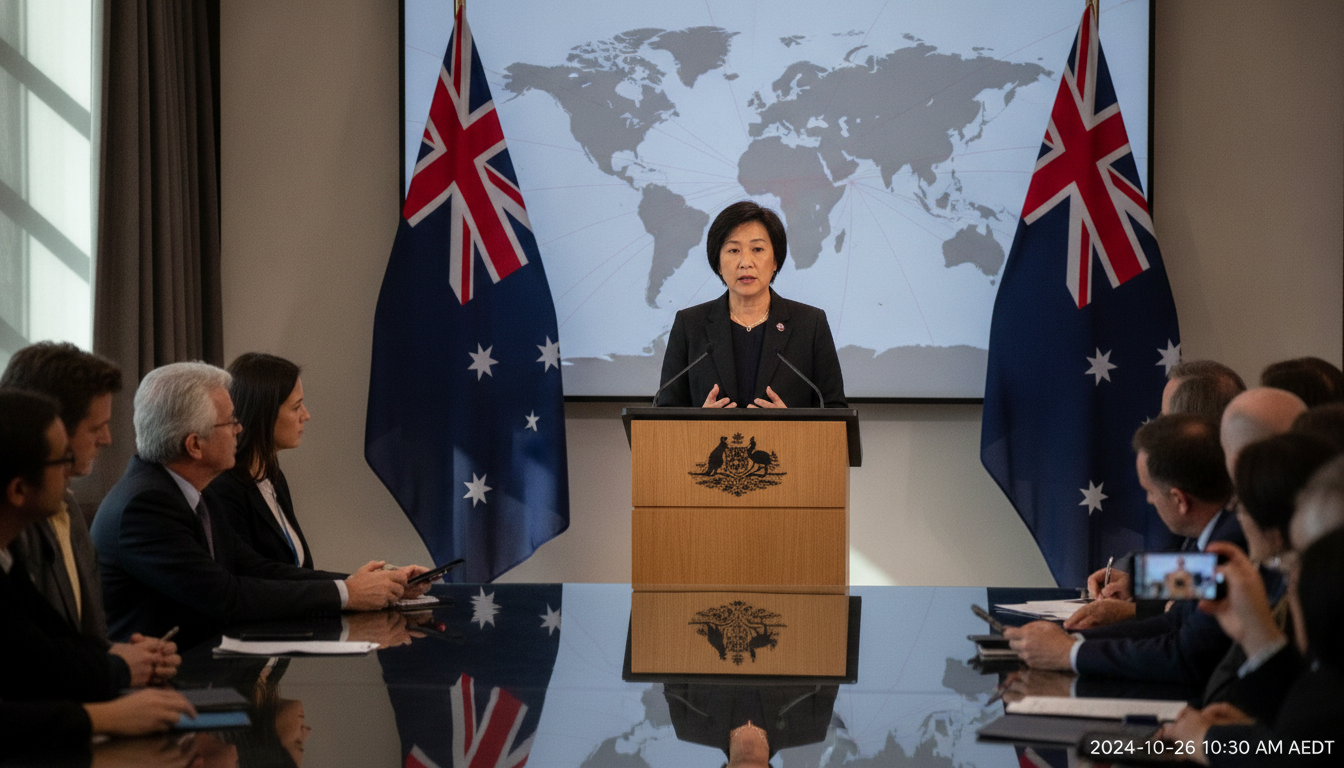
Penny Wong Warns One Nation Could Isolate Australia and Damage Alliances
Foreign Minister Penny Wong warned on August 14, 2026 that One Nation’s rise could isolate Australia, weaken alliances and jeopardize diplomatic ties across the Indo-Pacific region.
Australia’s foreign minister, Penny Wong, told an audience at the Lowy Institute that a possible resurgence of the One Nation party would risk leaving the country “lonely in a dangerous world,” and could undermine Canberra’s relationships with key partners. Wong framed the comments at the Allan Gyngell Lecture in Sydney as a warning about the international consequences of populist shifts at home. Her remarks came amid recent sharp comments from the leader of One Nation about regional counterparts, a development she said had tangible diplomatic costs.
Wong frames One Nation as a strategic risk
Wong argued that foreign policy is shaped as much by domestic politics as by formal agreements, and she singled out One Nation’s platform as a potential turning point for Australia’s international posture. She suggested that rhetoric targeting neighbours and allied leaders can translate into sustained damage to trust and cooperation. The minister emphasized that Australia’s security and prosperity depend on predictable partnerships rather than transactional or isolationist impulses.
In her lecture, Wong said that alliance networks and multilateral institutions rely on long-term credibility, which she said could be eroded by protectionist or nationalist policies. She cautioned that changes in tone and policy could prompt partners to recalibrate their own approaches to Canberra. The speech made clear that the government sees the domestic electoral landscape as directly linked to strategic calculations across the Indo-Pacific.
Context of the Allan Gyngell Lecture and timing
Wong delivered the remarks on August 14, 2026 at the Lowy Institute’s Allan Gyngell Lecture, a platform she used to underscore the stakes of current political debates. The timing coincided with heightened public discussion about the role of populist movements in established democracies. By choosing the lecture circuit, the foreign minister aimed to reach both policy audiences and wider public debate.
Her address referenced recent public statements by the One Nation leader that critics say were hostile toward regional figures and institutions. While she did not lay out a detailed policy confrontation, Wong framed her arguments as an appeal to the electorate and to fellow policymakers to consider long-term consequences. The speech blended diplomatic analysis with political warning, positioning foreign policy as a central theme in domestic decision-making.
Potential impact on alliances and regional diplomacy
Wong warned that an emboldened One Nation could complicate relations with traditional allies, including the United States, as well as with key Indo-Pacific partners. She argued that predictability, intelligence-sharing and defence cooperation require mutual confidence that policies will not shift abruptly. Disruptions in those areas, the minister suggested, would have direct implications for regional security architecture.
Observers note that strained rhetoric can feed into policy changes affecting trade, defence procurement and multilateral fora. Wong highlighted that diplomatic influence is often cumulative and that reputational damage is slow to repair. She urged that the preservation of institutional ties should be a bipartisan priority irrespective of short-term political gains.
Domestic politics and the electorate’s choice
Wong framed the debate as one that will ultimately be decided at the ballot box, urging voters to weigh international risks alongside domestic concerns when assessing parties. She described One Nation’s appeal as rooted in genuine grievances that merit attention, but she cautioned against conflating populist solutions with sound strategic judgement. The minister’s comments signal an attempt to nationalize foreign policy as an electoral issue.
Political strategists say the minister’s intervention could be intended to draw a clearer distinction between mainstream parties and populist movements on matters of security and global engagement. By linking domestic choices to foreign outcomes, Wong sought to broaden the scope of public discussion beyond immediate economic or social policy. Her remarks are likely to shape campaign narratives and media coverage in the weeks ahead.
Analysts assess long-term consequences for trade and security
Foreign policy analysts who attended the lecture characterized the address as a sober appraisal of long-term risks rather than a partisan attack. They point out that even rhetorical shifts can influence investor confidence and bilateral cooperation on issues ranging from supply chains to climate diplomacy. The loss of standing in regional institutions could also reduce Australia’s leverage on economic and security matters.
Trade partners tend to prefer stable interlocutors; sudden policy realignments can prompt precautionary measures or diversification. Wong’s warning underscores how reputational stock built over decades can be vulnerable to rapid change. Analysts expect continued debate among diplomats, business leaders and civil society about how best to balance domestic political pressures with external commitments.
Australia now faces a choice about how to reconcile domestic political currents with a foreign policy that depends on alliances and regional partnerships. Wong’s public admonition places the spotlight on One Nation’s rhetoric and on the potential costs of nationalist policies for Canberra’s international role. The coming months will test whether arguments about strategic risk resonate with voters and whether political leaders of all stripes treat alliance management as a central responsibility.

