
Brookfield’s ¥100bn Bet on Japan Residential Market Signals Surge in Overseas Investment
Brookfield’s purchase of a rental apartment portfolio for more than ¥100 billion underscores growing interest in the Japan residential market as global investors chase stable income and urban housing demand.
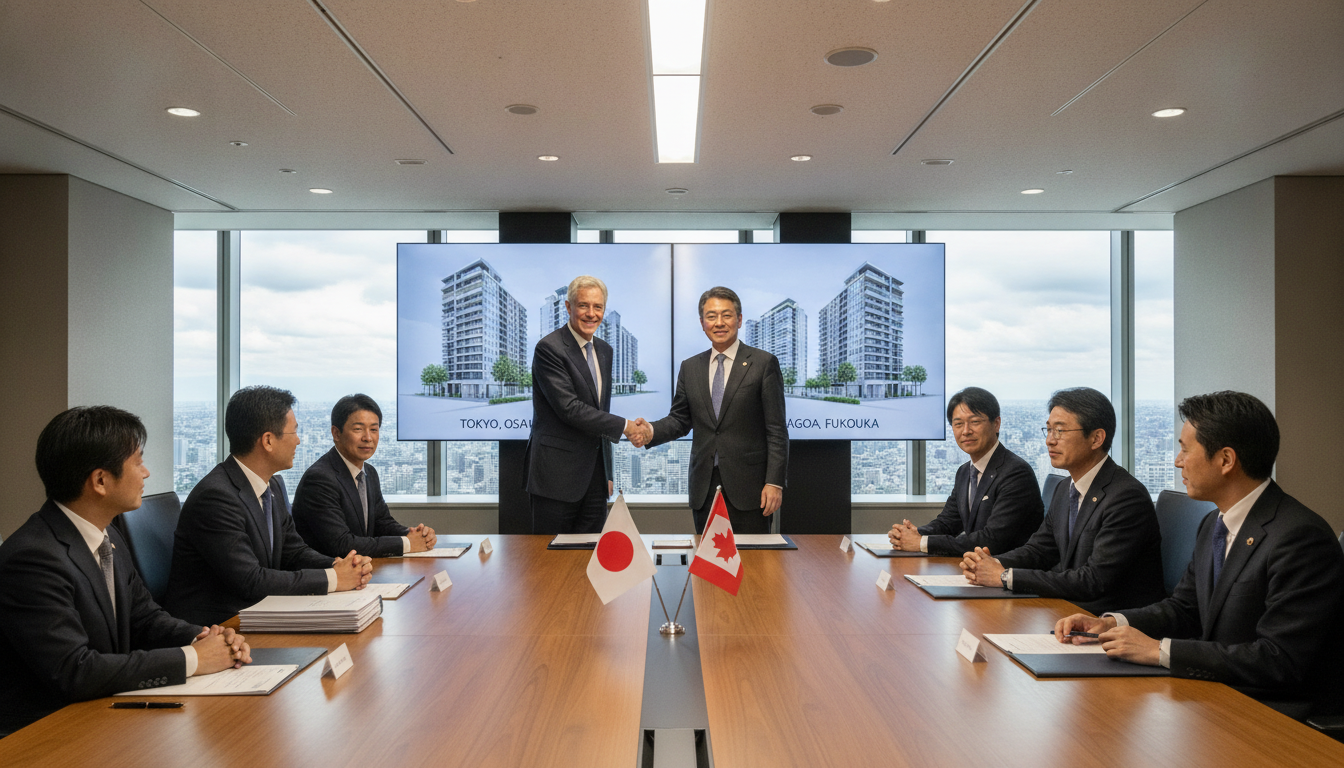
TOKYO — Canadian asset manager Brookfield has acquired a portfolio of rental apartment buildings across four of Japan’s major urban centres for more than ¥100 billion, marking the company’s first direct entry into the Japan residential market. The transaction, valued at roughly $627 million, highlights renewed appetite from overseas capital for Japanese housing assets that offer steady cash flow and potential for long-term appreciation. Market participants say the deal reflects both investor confidence in urban rental fundamentals and a search for yield amid volatile global markets.
Deal size and strategic significance
Brookfield’s purchase, exceeding ¥100 billion, is notable for both its scale and its timing, arriving as institutional interest in Japan’s housing sector intensifies. The acquisition represents a strategic pivot for the firm into residential rental assets in Japan, a market historically dominated by domestic owners and specialized local operators. By assembling a portfolio across multiple cities, Brookfield gains geographic diversification in rental incomes and exposure to differing local demand dynamics.
Composition of the acquired portfolio
The transaction covers multiple multi-unit rental properties located in four major metropolitan areas of Japan, providing a mix of unit sizes and tenant profiles aimed at urban renters. While the seller and full property list have not been publicly disclosed in detail, industry sources describe the holdings as conventional mid-rise rental buildings that cater to working professionals and small households. The assets’ operational setup and tenant base are expected to allow Brookfield to apply its large-scale property management and renovation playbook.
Why overseas capital is flowing into housing
Investors are increasingly viewing Japan’s residential sector as a defensive asset class that can deliver predictable cash flow, particularly in central urban locations where vacancy remains low. Low long-term yields in many Western markets have pushed institutional capital to seek higher-risk-adjusted returns in countries with stable rule of law and transparent property markets, and Japan fits that profile. In addition, the recent deal suggests foreign managers see opportunities to consolidate fragmented local ownership and realize efficiencies through professionalized asset management.
Local market conditions and tenant demand
Urban rental demand in Japan continues to concentrate around employment hubs, higher education institutions, and well-connected transport nodes, supporting occupancy for professionally managed stock. Demographic trends — an aging population offset by steady urban migration among younger cohorts — produce a persistent need for compact rental housing in cities. Rent growth has been uneven by region, but core metropolitan submarkets have shown resilience, attracting investors seeking a combination of income and potential upside from refurbishment and repositioning.
Regulatory and operational considerations for foreign owners
Foreign investors entering the Japan residential market must navigate local landlord-tenant laws, property tax regimes, and building regulations, and they often partner with domestic managers to handle day-to-day operations. Effective local partnerships are commonly cited as essential to manage leasing nuances, maintenance cycles, and resident relations in a market where service expectations are high. Policymakers and municipal governments also influence outcomes via zoning, safety standards, and incentives that affect renovation and redevelopment prospects.
Potential impacts on prices and the development pipeline
Large-scale acquisitions by overseas funds can exert upward pressure on asset prices in specific segments, particularly well-located rental stock with modern amenities or redevelopment potential. That dynamic may encourage local owners to sell, accelerating consolidation, while developers may respond by focusing on higher-end or specialized rental products to satisfy evolving demand. At the same time, sustained capital inflows could stimulate investment in refurbishment of older buildings, improving quality for tenants but also reshaping neighborhood supply profiles.
Brookfield’s move into Japanese rental housing adds an influential name to the roster of global investors active in the country and is likely to draw attention from both competitors and domestic stakeholders. Observers say the deal could prompt more cross-border transactions as managers seek scale in fragmented residential markets and attempt to apply institutional operating standards to long-standing local assets.
The long-term outcome will depend on how rent trajectories, demographic trends, and policy developments interact with investor appetite for Japan residential market assets, but Brookfield’s entry is already a clear signal that the sector is on the radar of major global capital sources.

