
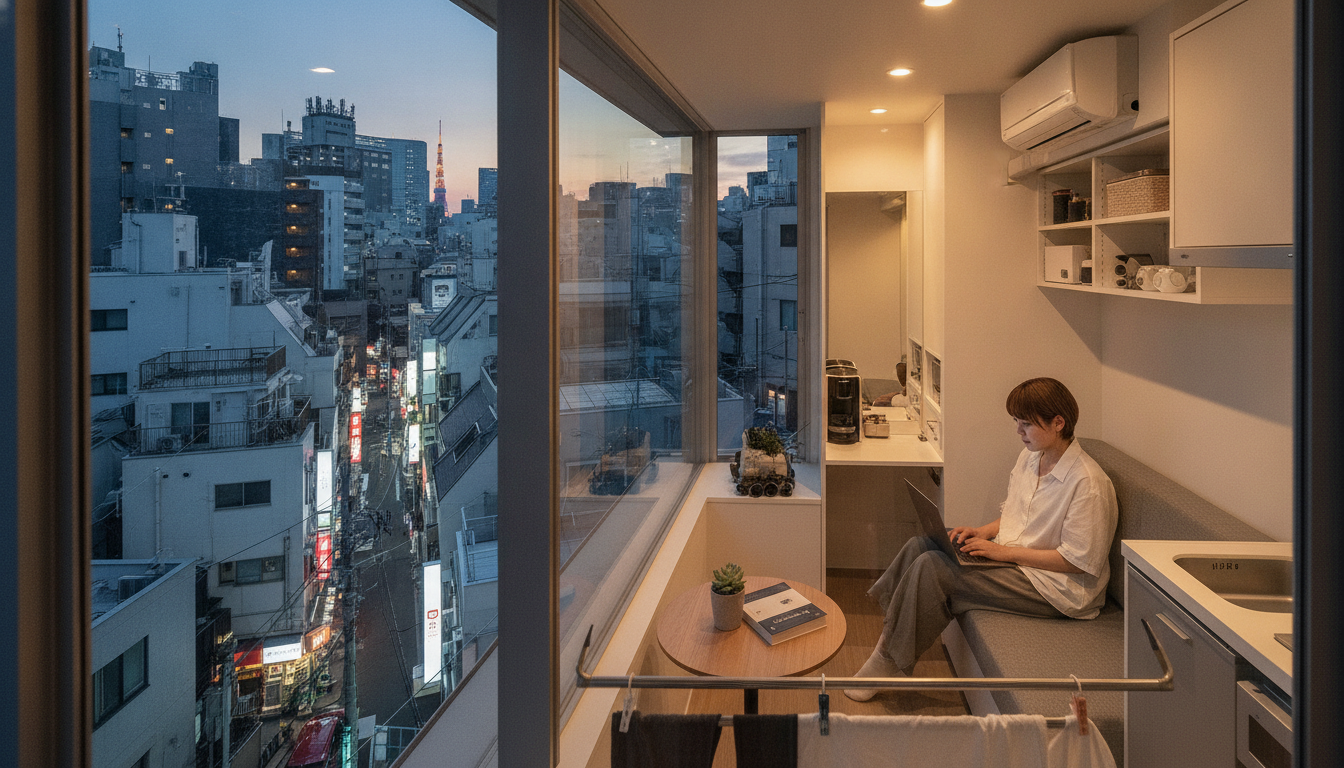
Japan’s Downsizing Trend Accelerates as Young Urbanites Embrace Micro-Living
Japan’s downsizing trend is reshaping urban life as young people opt for ever-smaller apartments, changing housing demand and city dynamics across Tokyo and other major cities.
Opening snapshot
The downsizing trend in Japan is intensifying, with a growing number of young urban residents choosing micro-apartments and compact living arrangements. These tiny units, sometimes the size of three tatami mats or roughly five square meters, are increasingly visible in dense neighbourhoods. The shift is concentrated in Tokyo and other metropolitan centers, where land scarcity and high rents push residents toward minimal footprints.
Tokyo’s micro-apartments multiply
Developers in central Tokyo have responded to demand by building more small, efficiently designed units that prioritize location over floor space. Many of these dwellings repurpose narrow plots and convert commercial buildings into compact residential units. The result is a proliferation of legally compliant micro-apartments marketed to singles, freelancers, and young professionals.
Demand for proximity to transport and amenities is a major driver of these developments. Residents often trade room size for shorter commutes and access to urban services, a pattern that reshapes neighbourhood composition. Landlords and investors are also drawn to higher per-square-meter returns in prime locations.
Young people driving the shift
Young adults, especially those in their 20s and early 30s, are the most likely to accept and even embrace tiny living spaces. Many cite affordability and mobility as primary reasons for choosing micro-apartments. Others view small units as temporary bases while they focus on careers, education, or frequent relocation.
Lifestyle preferences also play a role: compact homes encourage pared-down consumption and a focus on experiences over possessions. Social and economic pressures, including precarious employment and high fixed costs, make small, centrally located dwellings an attractive option for younger cohorts.
Economic and lifestyle drivers
A combination of rising urban rents, modest wage growth and changing household structures underpins the downsizing trend. Single-person households continue to rise, and marriage and fertility rates remain low, reducing demand for larger family homes in key urban areas. At the same time, e-commerce, shared services and efficient home technologies lower the perceived need for storage and large living areas.
Policy shifts and tax incentives affecting real estate ownership and rental markets have also influenced behaviour. Developers and investors respond to these incentives with products tailored to short-term tenancy and high-turnover markets. The economics of smaller units — lower absolute rent, higher turnover and lower maintenance per household — make them commercially viable.
Impact on housing market and developers
The market response includes not only more micro-apartments but also a diversification of product types, from capsule-style units to compact one-room apartments with multifunctional fittings. Some developers focus on quality compact design, offering communal areas and shared amenities to compensate for limited private space. Others target budget-conscious renters with basic, no-frills units.
This segmentation is reshaping investment patterns in urban real estate. Smaller units can generate competitive yields in sought-after wards, while peripheral areas see slower recovery in demand for traditional family-sized housing. The result is a spatial rebalancing of investment and a greater premium on centrally located real estate.
Urban planning, services and neighbourhood change
City officials and planners face new challenges as dwellers shrink their living spaces but maintain high expectations for public services. Increased concentrations of small households near transit hubs raise demand for waste management, public toilets, green space and local healthcare. Planners must reconcile the need for compact housing with livability standards and emergency preparedness.
Municipalities are experimenting with zoning adjustments, incentives for multifunctional buildings, and support for community facilities that serve micro-living populations. The concentration of young, transient residents also influences retail and service mixes, with more convenience-oriented shops and fewer long-term-use retailers in some districts.
Cultural contrast: larger bodies, smaller homes
The downsizing of living space occurs alongside other social perceptions, including the idea that Japanese people are getting taller or larger, influenced by the global visibility of professional athletes and performers. That contrast—physically larger public figures and shrinking private quarters—highlights how consumer images and everyday realities can diverge. While some physical measures have changed over decades, the housing stock and urban economics have followed a separate trajectory toward compactness.
The cultural implications are complex: smaller private spaces can intensify the value of public amenities and reshape norms around privacy, hospitality and household consumption. At the same time, design innovations seek to harmonize limited interior space with personal comfort and social life.
Small living units are already affecting lifestyle choices and market structures across Japan’s cities.
Policymakers, developers and community organisations will need to coordinate responses that balance affordability, quality of life and sustainable urban growth. The downsizing trend is likely to persist as long as urban land values and lifestyle preferences remain aligned with compact, centrally located living.
As Japan navigates this shift, the interplay between demographic change, economic pressures and urban design will determine whether micro-living becomes a long-term feature of city life or a transient adaptation to current market conditions.

