
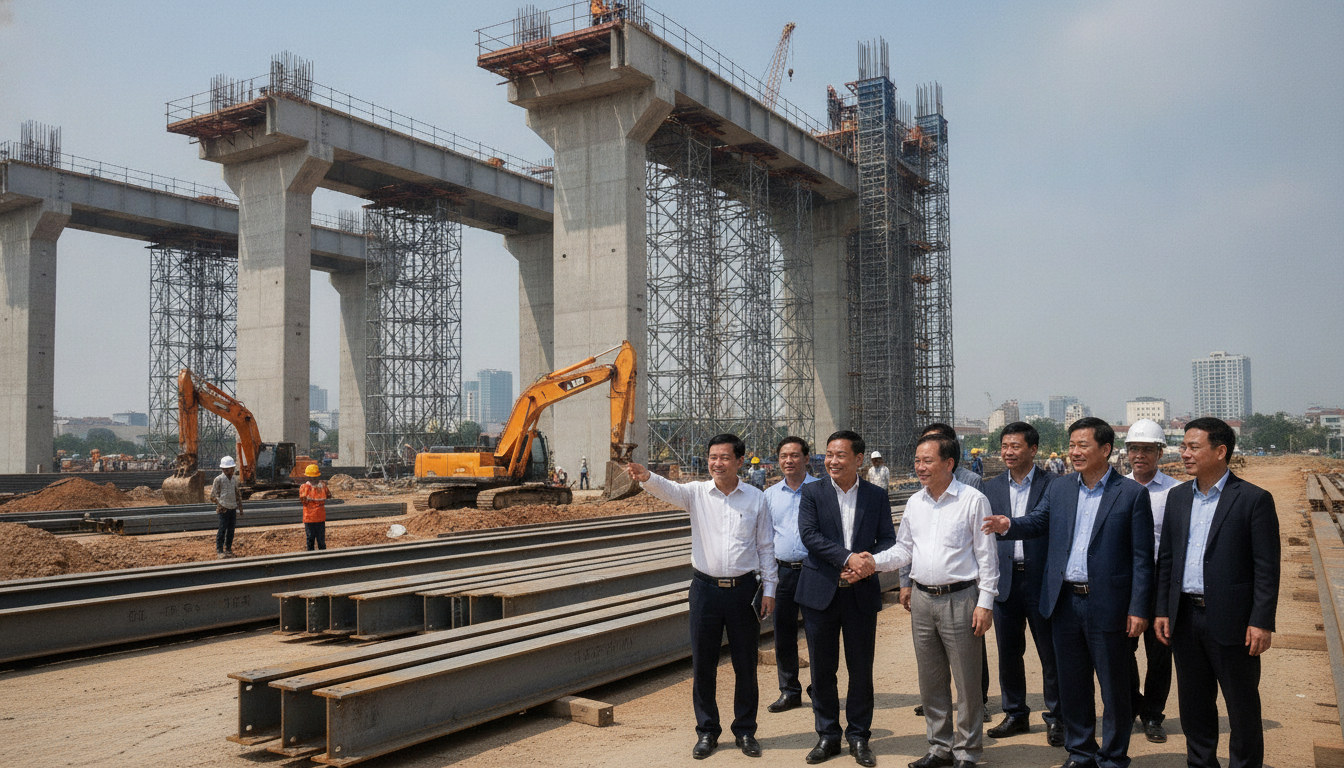
Vietnam public investment surge doubles steel profits, lifts materials and infrastructure firms
Vietnam public investment surge lifts materials and infrastructure earnings; the top steelmaker doubled first-half profit as construction demand strengthens.
HANOI — Vietnam public investment has accelerated sharply in 2026, bolstering demand for construction materials and lifting profits across the infrastructure sector. The country’s largest steelmaker reported its first-half net profit doubled year-on-year, and companies supplying cement, aggregates and construction services have posted double-digit earnings growth so far this year. Rising state-funded projects in cities such as Hanoi are driving a near-term boom in orders and factory utilization.
Surge in public investment drives construction activity
Public spending on roads, bridges and urban upgrades has been stepped up at both national and provincial levels to support recovery and long-term growth. Municipal projects in Hanoi and other major cities have seen renewed approvals and faster disbursement of budgets, increasing the flow of contracts to domestic builders and materials suppliers.
Local governments are prioritizing transportation links and flood-mitigation works that require large volumes of steel and cement. That combination of scale and urgency is shortening procurement cycles and prompting some firms to ramp up production and hiring.
Top steelmaker reports doubled first-half profit
The country’s top steelmaker said its first-half net profit doubled from the previous year, a gain the company attributed to stronger domestic demand and improved operational efficiency. Higher utilization rates at mills and better margins on certain product lines contributed to the jump in earnings.
Executives and analysts point to tighter control of energy and raw-material costs, as well as favorable pricing in some segments, as factors that supported profitability. Export markets provided an additional outlet for surplus capacity, easing pressure on domestic margins in early 2026.
Materials and infrastructure firms post double-digit earnings growth
Beyond steel, leading firms in cement, concrete and construction services reported double-digit revenue and profit growth for the period. Increased orders from public-sector projects have helped smaller suppliers reduce idle capacity and negotiate longer-term contracts with builders.
Equipment makers and logistics providers serving the construction chain have also seen order books lengthen, supporting investment in machinery and fleet expansion. Banks and capital markets have taken note, with several issuers placing bonds to finance working capital and new plants.
Government spending priorities and project pipeline
Authorities have prioritized projects that promise broad economic spillovers, including highway upgrades, urban transit extensions and rural connectivity schemes. Officials say quicker project approvals and improved budget execution are central to sustaining the investment push through the rest of the year.
Analysts say the timing of disbursements and the composition of projects will determine whether gains in the materials sector are sustained. Projects that require extensive steel and concrete inputs will continue to support domestic producers if implementation proceeds on schedule.
Market response and investor sentiment
Equity investors have reacted positively to the sector’s performance, with materials and construction stocks outperforming broader market indices during the recent rally. Foreign portfolio inflows into listed construction and industrial names have increased as global investors seek exposure to the growth linked to public works.
Credit markets have shown greater appetite for corporate bonds from infrastructure-related companies, enabling some issuers to refinance short-term debt and fund capacity expansions. Still, analysts caution that investor optimism will hinge on transparency in procurement and the pace of public spending.
Risks from supply chains, inflation and execution delays
Despite the uplift, companies face several headwinds that could temper gains if not managed carefully. Global commodity volatility can push up input costs for steel and cement, squeezing margins if price pass-through to customers is constrained.
Project execution risks remain significant, including land clearance, environmental approvals and contractor capacity, which can delay cash flows and increase financing costs. Companies with concentrated exposure to a limited number of large projects may see earnings become lumpy if timelines slip.
The near-term outlook for Vietnam’s materials and infrastructure sector is constructive, anchored by an active public investment program and strong domestic demand. How quickly projects move from contract to construction will shape whether the current earnings momentum becomes a durable trend for companies and investors alike.

