
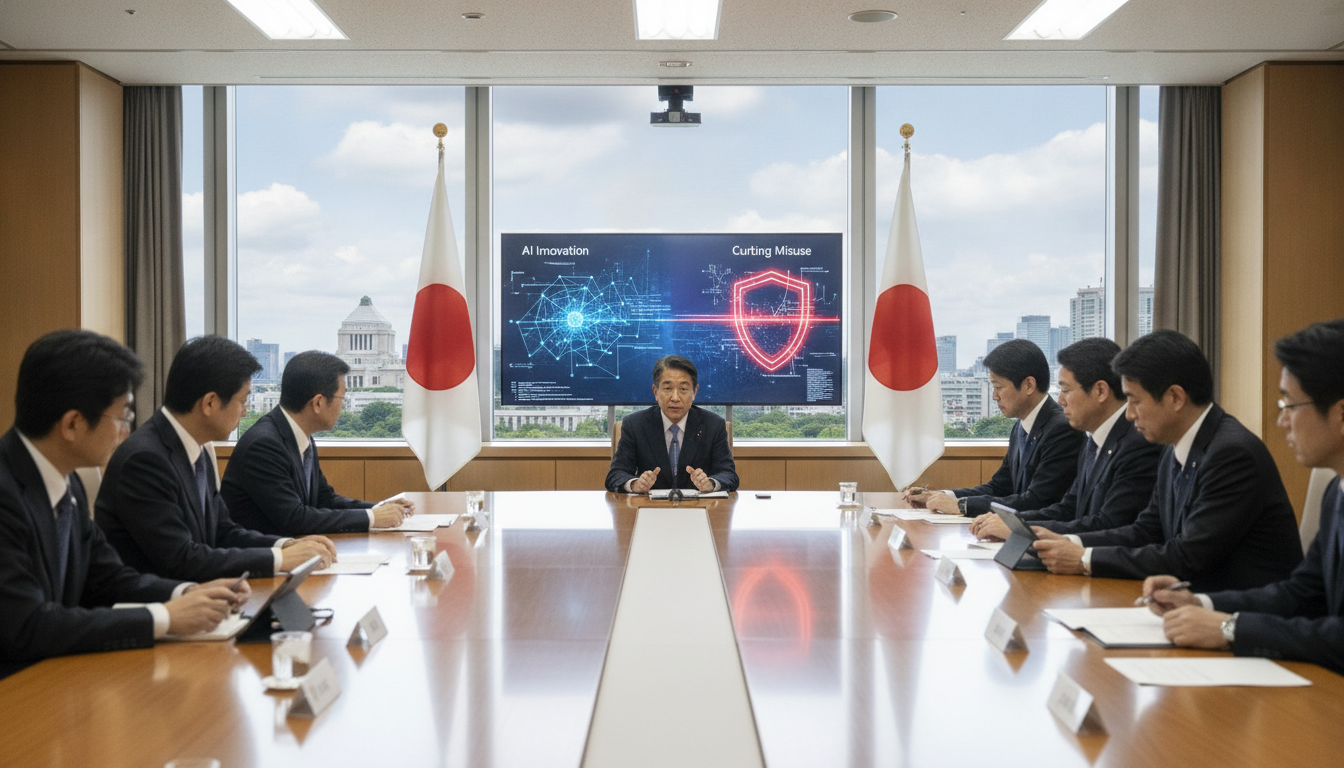
Japan’s AI measures to balance innovation and misuse as government prepares comprehensive rules
Japan’s AI measures are set to encourage domestic innovation while guarding against misuse, the government announced as it prepares a package of rules and guidance on August 14, 2026.
Government announces plan for comprehensive AI measures
The Japanese government said it is preparing comprehensive AI measures to promote development and prevent harm. Officials framed the initiative as a dual effort to bolster research and industry competitiveness while strengthening safeguards against misuse and security risks.
The move comes amid rapid advances in generative and defensive systems that have expanded both commercial opportunity and potential for abuse. Policymakers described the package as intended to coordinate ministries, set baseline expectations for developers, and guide public agencies in procurement and deployment.
Key priorities include safety, security and accountability
Government sources indicated safety and security will be central priorities of the forthcoming measures. Expected elements include guidance on testing protocols, risk assessments, and mechanisms for rapid response to incidents caused by AI systems.
Accountability measures are also under consideration, with proposals that could require clearer reporting lines within companies and stronger oversight of systems that affect public safety or critical infrastructure. Officials said the emphasis will be on reducing harm without unduly stifling technological progress.
Models with advanced capabilities drive urgency
Recent advances in large AI models have raised urgency for regulatory action, according to officials and researchers. Models such as Claude Mythos, which security experts say can more readily identify system weaknesses, illustrate how quickly capability and associated risk are evolving.
That technical leap has prompted calls for routine security testing — including so-called red-teaming exercises — and for developers to document limitations and known vulnerabilities. The government signaled it may promote or require standardized testing to improve transparency for users and purchasers.
Industry and academia urge clarity and support
Industry groups and academic researchers generally welcomed the signal that the government will set clear rules, while urging careful calibration to avoid hampering innovation. Business representatives said certainty on compliance and procurement rules would help firms plan investments and international collaboration.
Researchers emphasized the need for funding and regulatory flexibility to support safe experimentation and public interest projects. Universities and startups called for clearer pathways to certify models for deployment in sensitive contexts such as healthcare and transport.
Legal tools and enforcement options being evaluated
Officials are weighing a mix of legal, administrative and voluntary instruments to implement the measures. Options under discussion reportedly range from non-binding guidance and industry codes of conduct to more prescriptive rules for high-risk applications.
Enforcement mechanisms could include compliance audits for public contracts, disclosure requirements, and coordinated oversight across ministries. Government sources said any rules would be designed to align with existing laws on privacy, cybersecurity and intellectual property while filling gaps specific to AI.
International alignment and export considerations highlighted
Tokyo signaled it will seek alignment with international counterparts to avoid fragmentation of rules that could hinder trade and collaboration. Officials pointed to the need for common testing standards and information-sharing on risks posed by new models and misuse techniques.
Export controls and cross-border data flows were noted as areas requiring careful handling to balance national security concerns with the global nature of AI research and supply chains. The government indicated it will engage partners to harmonize approaches where possible.
The package is framed as part of a broader strategy to position Japan as a responsible and competitive AI hub. By combining guidance, testing expectations and targeted regulatory tools, policymakers aim to give developers clearer rules of the road while protecting citizens and critical systems.
Public consultations and stakeholder briefings are expected as ministries finalize details, with government officials saying the measures will be released in stages to allow industry and civil society time to adapt. The approach underscores Tokyo’s intent to act swiftly but thoughtfully as AI capabilities continue to advance.
Japan’s AI measures therefore seek a pragmatic balance between stimulating innovation and managing the real risks posed by powerful new models. The government’s next steps will determine how effectively that balance is achieved and how Japan positions itself in the rapidly evolving global AI landscape.

