
Democratic Action Party votes to remain in Anwar coalition after internal referendum
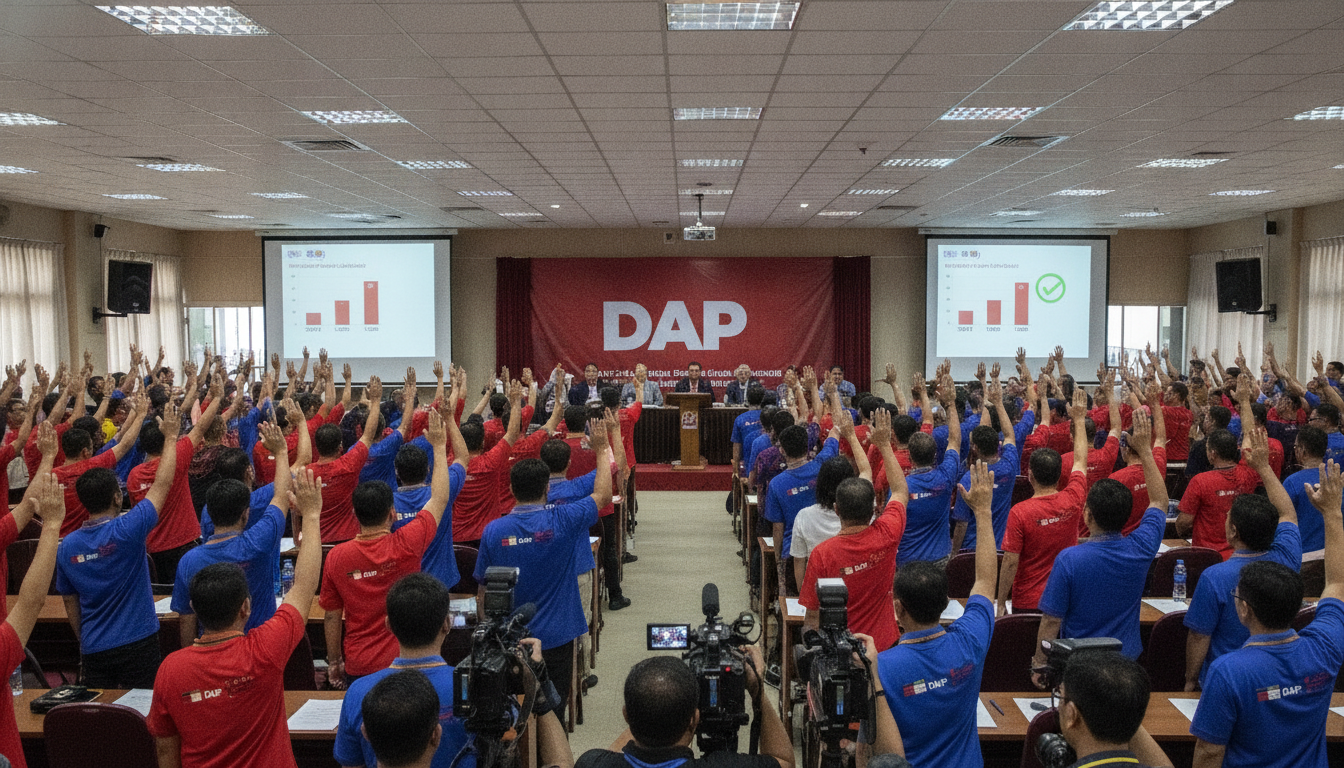
The Democratic Action Party voted overwhelmingly on August 16, 2026 to remain in Prime Minister Anwar Ibrahim’s ruling coalition, easing immediate concerns about the government’s stability after recent regional setbacks.
Key vote at Putrajaya congress
Delegates at the party’s annual congress at the Putrajaya International Convention Center approved the motion on Sunday by an overwhelming margin.
The referendum followed a period of internal debate triggered by disappointing results in three recent state elections.
Party leaders framed the decision as a mandate to continue working within the coalition while pressing for reforms.
Anthony Loke’s address to members
Anthony Loke, the DAP secretary-general, spoke directly to attendees during the congress and urged unity among delegates.
He emphasized the party’s role in the coalition and described the referendum outcome as a clear signal of member support for staying in government.
Loke called for renewed focus on policy delivery and grassroots engagement to restore public confidence.
Immediate impact on government stability
The vote removes an immediate source of uncertainty for Prime Minister Anwar Ibrahim’s administration.
Coalition partners welcomed the reaffirmation, saying it reduces the risk of an abrupt collapse that could have followed a formal withdrawal.
Officials stressed that while stability has been reinforced for now, political pressures from opposition forces and public sentiment remain factors to monitor.
Roots of the referendum: state election defeats
The decision to hold a referendum was prompted by losses in three state elections that exposed vulnerabilities in the ruling coalition’s support.
Those setbacks intensified calls within the party for either strategic recalibration or a break from the government, prompting leadership to put the question to rank-and-file members.
Members debated whether continued participation would allow DAP to influence national policy or whether it would further erode the party’s standing ahead of a potential general election.
Election timing and speculation
The referendum result reduces immediate momentum for an opposition-triggered reshuffle, but it does not remove speculation about an early general election.
Analysts and party figures have suggested that further regional contests and opinion polling will shape any decision on national election timing.
For now, the coalition has more breathing room to try to reverse electoral losses and present a united front to voters.
Policy priorities and party strategy moving forward
Following the vote, DAP leaders signalled plans to refocus on key policy areas that resonated with voters in recent polls.
They said the party will press the coalition to deliver on economic measures, governance reforms, and local concerns that contributed to the state defeats.
Party strategists also highlighted the need to strengthen grassroots networks and improve messaging ahead of future contests.
The referendum marks a consequential moment for Malaysia’s ruling coalition: a clear decision by Democratic Action Party members to remain inside government while demanding tangible policy results and organizational renewal.

