
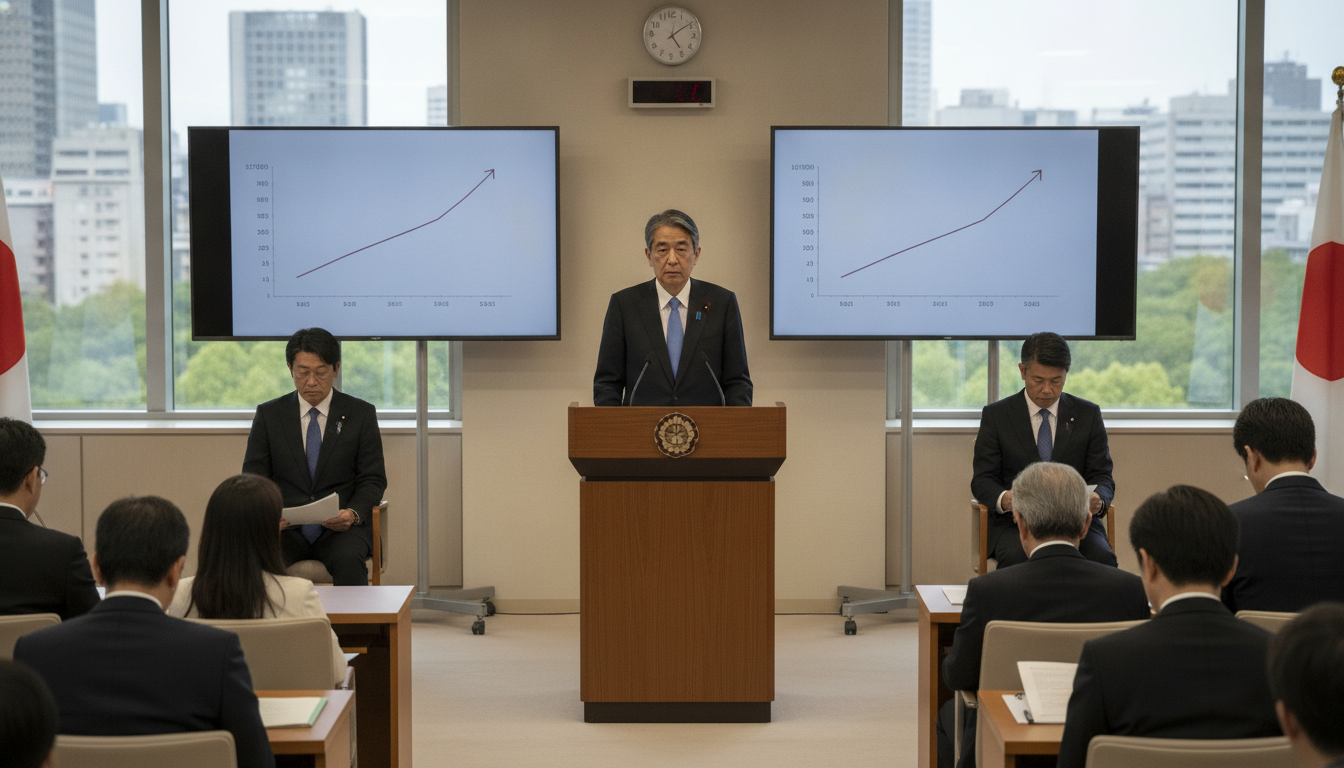
Japan GDP Rises 0.3% in April–June but Falls Short of Market Expectations
Japan GDP grew 0.3% quarter-on-quarter in April–June (annualized 1.1%), marking a third straight quarter of expansion but missing market forecasts, Cabinet Office data show.
Japan’s economy expanded by 0.3% in the April to June quarter, the Cabinet Office reported on Monday, signaling a modest continuation of growth after two prior quarters of positive activity. The April–June GDP reading, equivalent to an annualized pace of roughly 1.1%, fell short of many market expectations and highlights a slower momentum in the recovery. Policymakers and investors are weighing the implications as inflationary pressures rise and households face uneven spending conditions.
April–June Growth Figures and Context
The Cabinet Office’s release shows the economy continued to expand, but at a softer rate than some forecasters had predicted. The 0.3% quarter-on-quarter gain represents the third consecutive quarter of positive growth, a sequence that underscores underlying resilience despite global and domestic headwinds. Analysts point to the modest pace as an indication that recovery remains fragile and uneven across sectors.
Official figures translated into an annualized growth rate of 1.1%, a number that is useful for international comparison but which understates volatility in quarterly activity. Seasonal adjustments and one-off factors can affect short-term readings, so economists emphasize looking at a range of indicators rather than a single quarter. The Cabinet Office’s update will feed into revisions of year‑end projections by government and private-sector forecasters.
Shortfall Against Market Expectations
Market watchers had anticipated a stronger rebound following earlier quarters of expansion, making the Cabinet Office’s numbers a disappointment for some investors. The gap between consensus forecasts and the actual outcome reflects persistent uncertainty around consumer behavior and corporate spending. Markets responded cautiously, with commentary noting that growth remains positive but lacks a decisive pickup.
Economists say the miss against expectations may prompt some reassessments of growth forecasts for the rest of the year. If the softer trend continues, it could both weigh on corporate earnings and temper investor appetite for riskier assets tied to domestic demand. Policymakers will monitor incoming data closely for signs that the economy is firming or weakening further.
Inflation and Corporate Pass-Through of Costs
The GDP release comes as businesses increasingly pass higher input costs onto consumers, a dynamic that is expected to push inflation higher in coming months. Retail and food-service firms have begun adjusting prices to protect margins, and those adjustments are being watched for their impact on household real incomes. Rising prices could erode purchasing power if wage growth does not keep pace.
For households, the combination of price rises and cautious wage growth creates a squeeze on discretionary spending, which has been a central driver of the economic recovery. Consumer activity remains a critical variable for the trajectory of GDP in the second half of the year. Policymakers face the challenge of balancing support for growth with control of inflationary pressures.
Monetary and Fiscal Policy Implications
The Cabinet Office figures add nuance to the policy debate around the Bank of Japan’s stance and government fiscal measures. While the economy is growing, the modest pace and inflation dynamics complicate decisions over tightening or further support. Central bank officials will likely cite multiple data points, including labor market conditions and price indices, before altering policy.
On the fiscal side, the government may consider targeted measures to bolster household incomes and cushion vulnerable sectors if the recovery shows further signs of weakening. Any intervention would need to be calibrated to avoid stoking volatile inflation while supporting sustainable demand. Officials have emphasized flexibility in responding to shifting economic signals.
Sector and Household Outlook
Industry-level data suggest uneven performance across services, manufacturing and exports, leaving some firms stronger than others. Service-sector recovery has been helped by easing pandemic-era restrictions and a rebound in tourism, while manufacturing faces global supply and demand uncertainties. These divergent trends mean that aggregate GDP growth can mask substantial variation beneath the surface.
Household finances remain a focus for policymakers given the potential for higher prices to sap consumption. Wage developments, savings behavior and job security will determine whether consumer spending can sustain the recovery into the coming quarters. Businesses are also watching demand trends closely to plan investment and hiring.
Looking ahead, the pace of Japan’s recovery will hinge on how inflation, wages and external demand evolve in tandem. The Cabinet Office’s April–June GDP report confirms continued expansion but underlines that momentum is fragile and subject to change. Observers will be watching subsequent releases for clearer signs that growth is becoming self-sustaining.

