
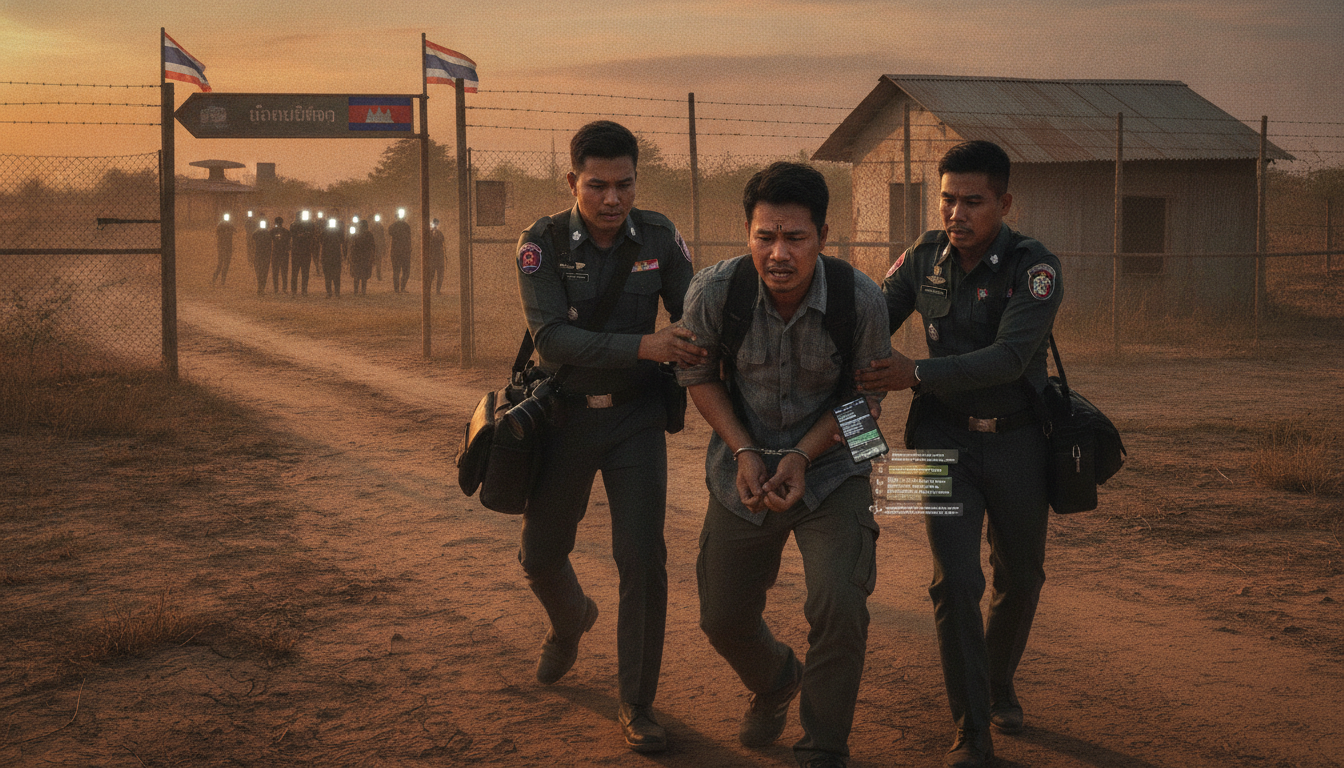
Thailand-Cambodia Border Conflict Spurs Arrests and Online Intimidation
Arrests and online intimidation linked to the Thailand-Cambodia border conflict are chilling public debate, halting businesses and alarming rights groups.
Om Sarath and her husband, Pheap Pheara, put plans to start a small duck-roasting business on hold after he was detained over material posted online amid the Thailand-Cambodia border conflict last year. The couple had planned to take a $10,000 loan to buy equipment while Pheara attended classes to learn the trade, but his detention interrupted both their livelihood and their everyday life. Their case is one among a growing number of incidents that rights groups and local observers say show the conflict’s effects stretching far beyond the fighting at the frontier.
Journalist Detained After Social Media Posts
Authorities detained Pheara after content he posted on social media drew scrutiny during a period of heightened tensions along the border. Family members describe the arrest as sudden and disruptive, canceling financial plans and leaving the couple uncertain about how to proceed with their business and loan. The detention has become a focal point for local journalists and advocacy organizations concerned about the use of legal measures against those who express views online.
Reports of Increasing Legal Pressure
Media watchdogs and civil society groups report a rise in complaints, investigations and detentions tied to online commentary about the border situation. They say legal instruments and criminal procedures are being used in some cases to target journalists, activists and ordinary citizens who post or amplify contentious material. While officials argue that prosecutions are necessary to curb misinformation and preserve security, critics say the measures risk suppressing legitimate reporting and debate.
Online Intimidation and the Chilling Effect
Alongside arrests, online intimidation — including harassment, doxxing and coordinated attacks — has intensified, creating a climate of caution among commentators and news outlets. Social media platforms have become front lines where amplified rhetoric and threats circulate quickly, prompting many users to self-censor or withdraw from discussions about the conflict. Observers note that the chilling effect is not confined to the pages of local feeds but extends into community meetings, academic spaces and the small businesses that depend on public exchange.
Border Communities Feel Immediate Impact
Border towns and villages, where trade and daily interaction cross national lines, are feeling the concrete consequences of the dispute and its offshoots. For households like that of Om Sarath, the combination of detention and online pressure means stalled investments, missed income and stress over loan obligations. Business owners and traders report fewer customers and disrupted supply chains as visitors and vendors avoid areas perceived as volatile, compounding economic uncertainty for families on both sides of the boundary.
Security Responses and Diplomatic Signals
In response to the clashes and the tense atmosphere they have created, officials in both capitals have emphasized patrols and tighter border controls, citing the need to protect civilians and maintain order. Diplomatic channels have been used intermittently to reduce immediate risks, while security establishments publicly underscore the connection between online information flows and potential on-the-ground incidents. Analysts say those measures may address short-term safety concerns but do little to resolve the underlying political and historical disputes that fuel recurring flare-ups.
Calls for Press Freedom and Clear Legal Standards
Local and international rights groups are urging governments to adopt clearer standards for distinguishing illicit acts from legitimate expression, and to ensure that responses to online content do not unduly constrain press freedom. Advocates say transparency in investigations, access to legal counsel for detainees and safeguards against arbitrary enforcement are essential to preventing abuses. They also call for dialogue between officials, media organizations and civil society to rebuild trust and allow responsible reporting to continue even amid security concerns.
The human toll of the Thailand-Cambodia border conflict, activists warn, is measured not only in military movements but in the livelihoods interrupted, the debates silenced and the uncertainty that follows detentions and intimidation. As residents in border provinces and urban centers navigate a fraught information environment, many are left weighing whether to speak out, plan a business or simply keep their heads down until tensions abate.
In the absence of clearer protections and de-escalatory diplomacy, ordinary people like Om Sarath face difficult choices about how to move forward with modest investments and daily life. Their experiences underscore a broader reality: when conflict spills into courts and feeds into online hostility, the repercussions reach far beyond the frontier, reshaping communities and public discourse in ways that may persist long after the immediate clashes end.

