
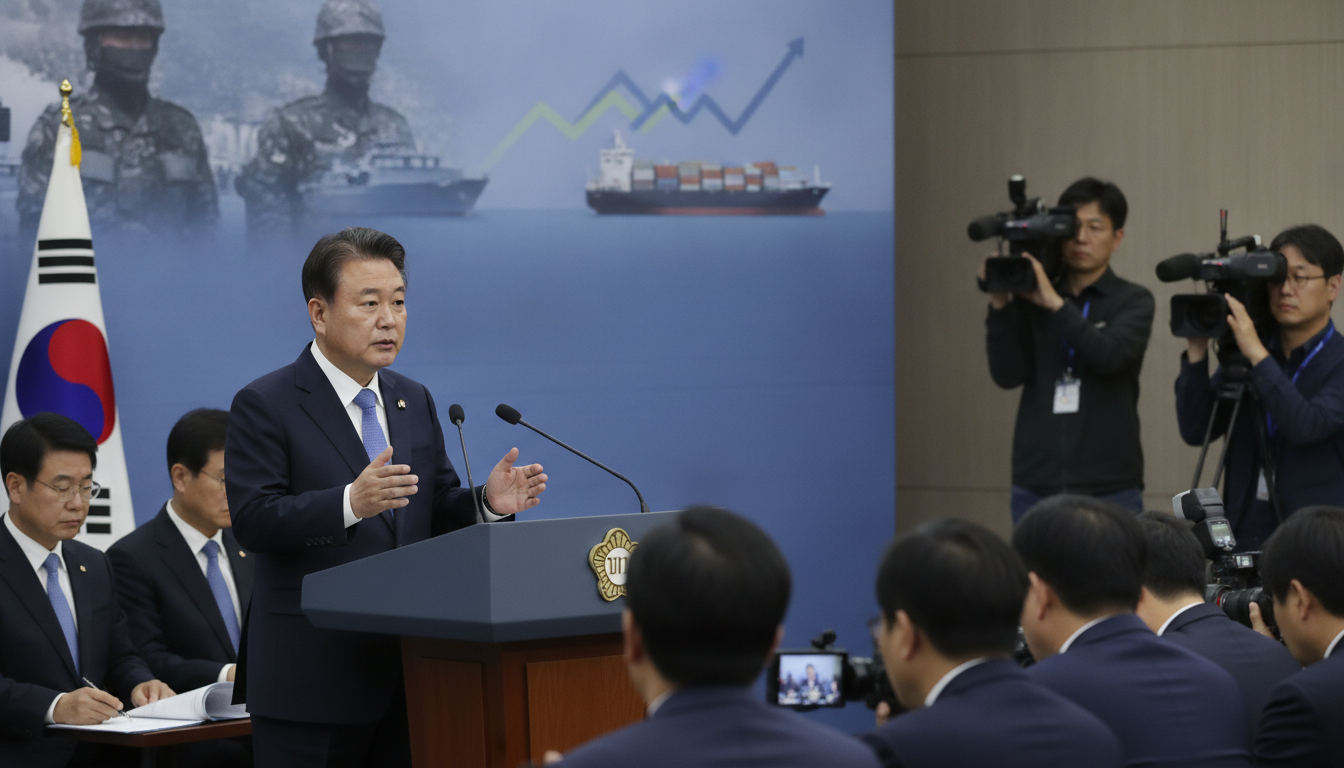
South Korea Gives Guarded Response to Trump Decision to Scale Back Joint Military Exercises
Seoul responded cautiously on August 17, 2026 after President Trump’s move to scale back joint military exercises, raising trade and alliance concerns.
South Korea issued a measured reply on August 17, 2026 after Washington announced a decision to scale back joint military exercises with its allies in the region. The Lee Jae Myung administration described the step as a development that would be evaluated carefully as officials weigh both security commitments and broader bilateral ties. Analysts warned the move increases pressure on Seoul to make further concessions in trade and economic talks with the United States.
Seoul’s Initial Response
Seoul framed its reaction in restrained diplomatic language, stressing the importance of the U.S.–Republic of Korea alliance while calling for continued consultation. Government spokespeople emphasized that military readiness and coordination would remain priorities even as exercises are adjusted. Officials said they would seek clarifying discussions with Washington to understand the operational scope and timeline of the change.
Washington’s Announcement and Rationale
U.S. officials characterized the decision to scale back joint military exercises as part of a broader effort to recalibrate regional deployment and alliance practices. The move was presented as aimed at reducing routine large-scale drills while preserving rapid-reaction capabilities through alternative arrangements. Senior American sources indicated the shift was also intended to create diplomatic space for negotiations on security and economic matters.
Trade Leverage and Diplomatic Pressure
Analysts in Seoul and abroad interpreted the timing of the announcement as a leverage point in bilateral trade and economic discussions. They argue that trimming joint military exercises could be used implicitly to press the Lee administration on market access and investment terms. Several policy experts warned that conflating military cooperation with commercial bargaining risks complicating both defense planning and economic diplomacy.
Seoul faces a delicate balancing act: maintaining alliance credibility while protecting domestic economic interests and political stability. Government negotiators now confront intensified expectations to demonstrate reciprocity in talks with U.S. counterparts. The possible linkage between security gestures and trade outcomes has prompted debate among lawmakers and business leaders at home.
Military Readiness and Exercise Planning
Military planners in Seoul have begun contingency reviews to ensure operational readiness if routine drills are reduced or reshaped. The armed forces are exploring more modular and focused training options, including smaller bilateral exercises and combined staff planning. Defence analysts say such adjustments can preserve interoperability but require increased emphasis on intelligence-sharing and logistics.
Commanders also flagged the need to reassure conscripted personnel and service members that preparedness levels will not be materially degraded. Training calendars may be revised to incorporate alternative simulated and live-training elements that maintain readiness without large-scale troop movements. The Ministry of National Defense indicated it would coordinate closely with U.S. counterparts to sustain deterrence posture.
Domestic Political Stakes for Lee Jae Myung
Domestically, the development complicates President Lee Jae Myung’s political landscape as he navigates competing demands from security hawks and economic stakeholders. Opposition figures have called for clear guarantees of alliance commitment, while some business groups express concern about pressure to make additional concessions in trade talks. The president must manage public expectations and parliamentary scrutiny as officials seek to define the parameters of any reciprocal measures.
Public opinion is likely to react to perceived shifts in alliance dynamics, especially in the lead-up to forthcoming policy debates and legislative sessions. Lee’s administration must articulate a coherent strategy that links national security priorities with economic diplomacy. How Seoul frames the negotiations will be critical to maintaining both domestic legitimacy and international credibility.
Regional Security and Alliance Signaling
The decision reverberates across the region and is being watched closely by neighbouring governments and security partners. Tokyo, Beijing and other capitals are monitoring how changes to joint military exercises affect deterrence and crisis-response arrangements on the peninsula. Allies stress that changes in routine training should not undermine collective readiness for contingencies.
Experts caution that signaling matters: reductions in visible joint drills can be interpreted in multiple ways by adversaries and partners alike. Seoul and Washington will need to manage public messaging to avoid unintended strategic ambiguity. Continued coordination on intelligence, cyber defence and maritime operations will be essential to sustain a credible alliance posture.
The coming days are likely to bring intensified diplomacy as Seoul seeks clarification from Washington while preparing its own domestic and military responses. Observers say the balance Seoul strikes between security assurances and trade concessions will have implications for alliance cohesion and the broader strategic environment in East Asia.

